
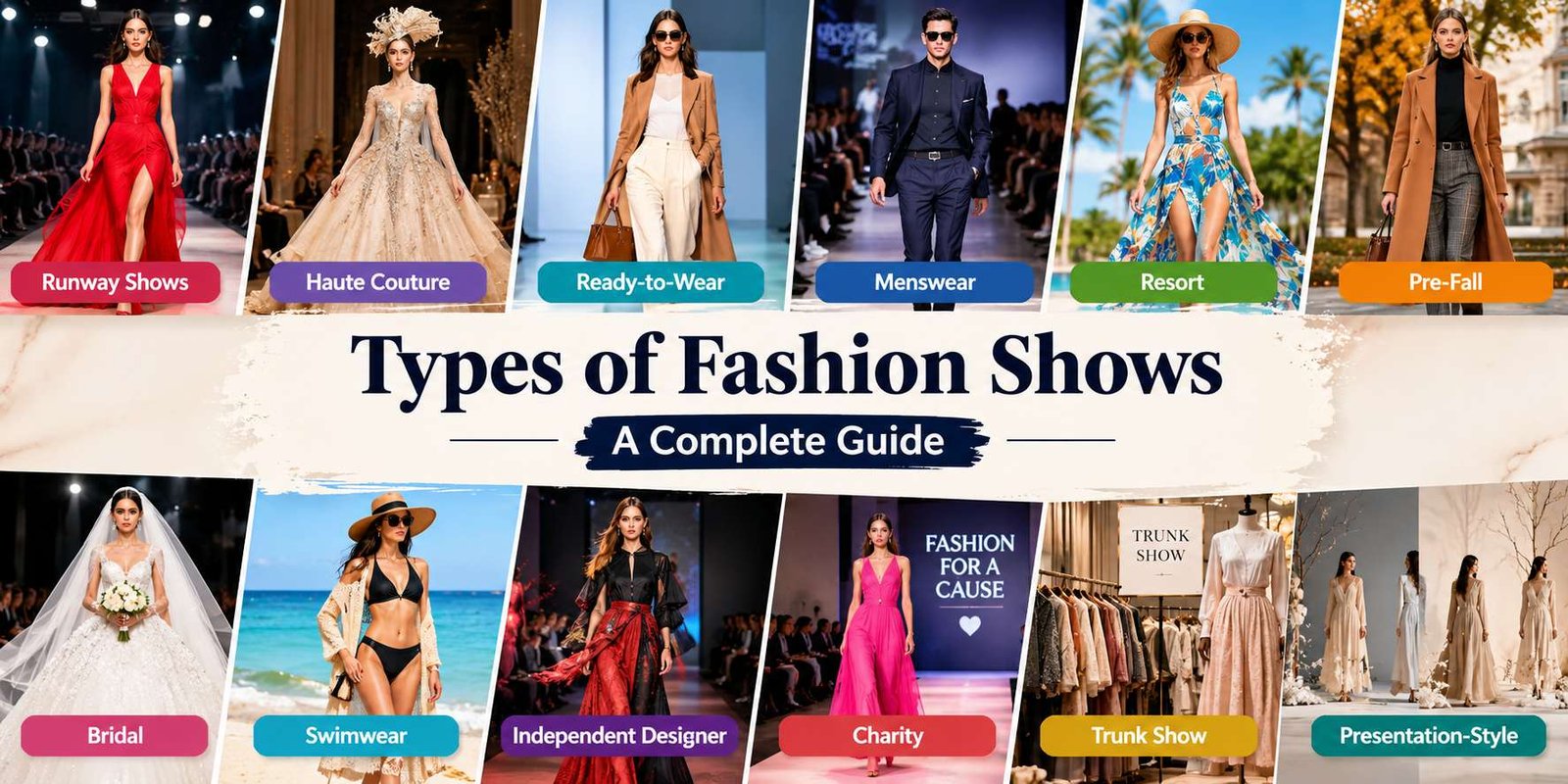
Types of Fashion Shows: A Complete Guide
Types of Fashion Shows : are more than models walking down a runway. They are carefully planned events where designers and brands present clothing, accessories, creative ideas, and upcoming collections to an audience.
Different events have different goals. Some focus on practical clothing that can reach stores, while others highlight craftsmanship, creativity, seasonal collections, or a particular category such as bridal fashion.
What Is a Fashion Show?
Types of Fashion Shows : is an organized presentation where clothing or accessories are displayed to an audience. Models usually present complete looks in a planned sequence so viewers can see how the collection moves and works as a whole.
Types of Fashion Shows can be categorized by the type of clothing, season, audience, purpose, and presentation format. Traditional fashion calendars commonly include Spring/Summer and Fall/Winter collections, while other presentations such as resort and pre-fall can also appear.
1. Ready-to-Wear Fashion Shows
Ready-to-wear, also known as prêt-à-porter, is one of the most important categories in modern fashion.
Types of Fashion Shows : present clothing designed in standard sizes for a broader market rather than garments made individually for one customer.
What Makes Ready-to-Wear Shows Different?
The collections generally focus on a balance between design and wearability. A designer can introduce new colors, silhouettes, fabrics, and styling ideas while keeping the clothing suitable for real wardrobes.
Ready-to-wear shows are a major part of fashion weeks and seasonal fashion calendars.
2. Haute Couture Fashion Shows
Haute couture shows represent a highly specialized side of fashion. The clothing is associated with exceptional craftsmanship, detailed construction, and highly individual designs.
Why Is Couture Special?
Couture pieces can require extensive handwork and careful attention to detail. Instead of focusing mainly on everyday practicality, these collections often demonstrate a designer’s artistic vision.
The result can be dramatic gowns, unusual silhouettes, elaborate embroidery, and creative construction techniques.
3. Menswear Fashion Shows
Menswear shows focus primarily on clothing designed for men. They allow designers to present collections such as tailoring, casualwear, outerwear, knitwear, and contemporary menswear.
What Can You See at a Menswear Show?
A collection might include:
- Suits
- Trousers
- Shirts
- Jackets
- Knitwear
- Coats
- Casual separates
- Accessories
Some fashion calendars also present menswear alongside or close to other seasonal collections.
4. Resort or Cruise Fashion Shows
Resort and cruise collections were originally connected with clothing for travel and vacation periods. Today, they can include a much broader range of seasonal pieces.
Resort Fashion Highlights
You may see:
- Lightweight dresses
- Vacation separates
- Swimwear
- Relaxed tailoring
- Travel-friendly layers
- Resort accessories
These collections can bridge the gap between major seasonal presentations and offer designers another opportunity to introduce new ideas.
5. Pre-Fall Fashion Shows
Pre-fall collections are designed to arrive between major seasonal periods. They give fashion brands another opportunity to introduce clothing before the main fall collections.
Why Do Pre-Fall Shows Matter?
Pre-fall collections often combine practical pieces with seasonal trends. They can include jackets, trousers, knitwear, dresses, and transitional clothing.
For shoppers, this type of collection can be especially useful because the clothing often works across changing weather conditions.
6. Bridal Fashion Shows
Bridal fashion shows focus on wedding-related clothing and accessories. Designers use these events to present gowns, veils, formalwear, and other pieces intended for weddings and related celebrations.
What Appears in a Bridal Show?
Depending on the designer, a bridal collection may feature:
- Wedding gowns
- Reception dresses
- Veils
- Bridal separates
- Bridesmaid outfits
- Formal accessories
Bridal presentations can range from traditional designs to modern minimalist and fashion-forward collections.
7. Resort and Swimwear Shows
Some fashion presentations focus specifically on warm-weather clothing and swimwear.
Common Pieces
These shows may feature:
- Swimsuits
- Cover-ups
- Beach dresses
- Shorts
- Lightweight shirts
- Vacation accessories
The presentation often uses styling, locations, and music that complement a summer or vacation theme.
8. Independent Designer Fashion Shows
Independent designers may organize smaller runway events to introduce their collections and build recognition.
What Makes Independent Shows Interesting?
Smaller shows can give emerging designers more freedom to experiment. Their collections may feature unusual materials, original silhouettes, handmade details, or unconventional styling.
These events can also provide opportunities for new models, photographers, stylists, and creative teams.
9. Charity Fashion Shows
Charity fashion shows combine fashion with fundraising or awareness campaigns.
Designers, models, retailers, sponsors, and event organizers may work together to support a cause through ticket sales, donations, auctions, or other fundraising activities.
Why Are Charity Shows Important?
They give fashion professionals an opportunity to reach an audience while supporting a social or community goal. The format can range from a small local presentation to a large professionally produced event.
10. Trunk Shows
A trunk show is a more intimate fashion presentation, often connected with a boutique, designer, or retailer.
Instead of a large runway production, selected pieces may be displayed directly to customers or buyers.
What Happens at a Trunk Show?
Visitors may have the opportunity to:
- View a new collection
- Meet a designer or representative
- Ask questions about garments
- Try selected pieces
- Place orders
- Discover limited designs
This format creates a more personal connection between the brand and its audience.
11. Formal Runway Fashion Shows
A formal runway show follows a structured presentation format. Models walk along a defined runway while lighting, music, styling, and choreography support the collection.
The order of looks is usually planned carefully so that the presentation communicates a particular creative direction.
Why Is the Runway Important?
Clothing looks different when it is moving. A runway allows viewers to see how fabrics fall, how garments behave while walking, and how individual pieces work together as a collection.
12. Presentation-Style Fashion Shows
Not every designer chooses a traditional catwalk. Some brands present collections through stationary models, installations, rooms, performances, or other creative formats.
How Does This Format Work?
Instead of watching models walk past in sequence, guests may move through a space and examine the clothing more closely.
This approach can be useful when a designer wants the setting, artwork, music, or storytelling to become an important part of the collection.
How Are Fashion Shows Organized?
A successful show involves much more than choosing clothing.
Collection Planning
Designers first establish the collection’s theme, colors, silhouettes, materials, and overall direction.
Model Casting
Models are selected according to the collection and the designer’s presentation needs.
Styling and Makeup
Hair, makeup, shoes, accessories, and garment styling help create a complete visual identity.
Runway Production
Lighting, music, stage design, seating, timing, and choreography all contribute to the final experience.
Modern fashion presentations can also be designed to create strong digital content. Fashion shows increasingly function as both live events and visual media experiences, with front-row attention and social platforms contributing to a show’s reach.
Why Are Fashion Shows Important?
Fashion shows play several roles in the fashion industry.
They Introduce New Collections
Designers can reveal new clothing lines and show how individual pieces fit into a broader creative concept.
They Influence Fashion Trends
Runway collections can introduce colors, silhouettes, materials, and styling ideas that later influence wider fashion.
They Create Brand Identity
A memorable show can communicate what a brand represents. The location, music, models, styling, and clothing can all contribute to that message.
They Connect the Industry
Fashion shows bring together designers, buyers, editors, stylists, models, photographers, influencers, and other creative professionals.
What Is the Difference Between a Fashion Show and Fashion Week?
A fashion show is an individual presentation.
Fashion Week is a larger scheduled event or series of presentations held within a particular fashion market. Major fashion weeks include New York, London, Milan, and Paris, with seasonal collections presented across their calendars.
In simple terms, a fashion show can be one event, while Fashion Week can contain many shows and presentations.
Which Type of Fashion Show Is Best?
There is no single best format. The right type depends on the designer, collection, audience, budget, and purpose.
A brand selling everyday clothing may benefit from a ready-to-wear presentation. A luxury designer may prefer couture. An emerging designer could choose a smaller independent show, while a charity organization may organize a fundraising fashion event.
The format should support the story the designer wants to tell.
Final Thoughts
The types of fashion shows are diverse because the fashion industry itself is diverse. Ready-to-wear, haute couture, menswear, resort, pre-fall, bridal, independent, charity, trunk, and presentation-style events all serve different purposes.
A fashion show is not simply about putting clothes on a runway. It is an opportunity to communicate an idea, introduce a collection, connect with an audience, and create a memorable experience.
Whether you enjoy fashion as a shopper, designer, student, or enthusiast, learning about these different formats can give you a better understanding of what happens behind the scenes of the fashion world.


One Comment