Types of Fashion Events: A Complete Guide
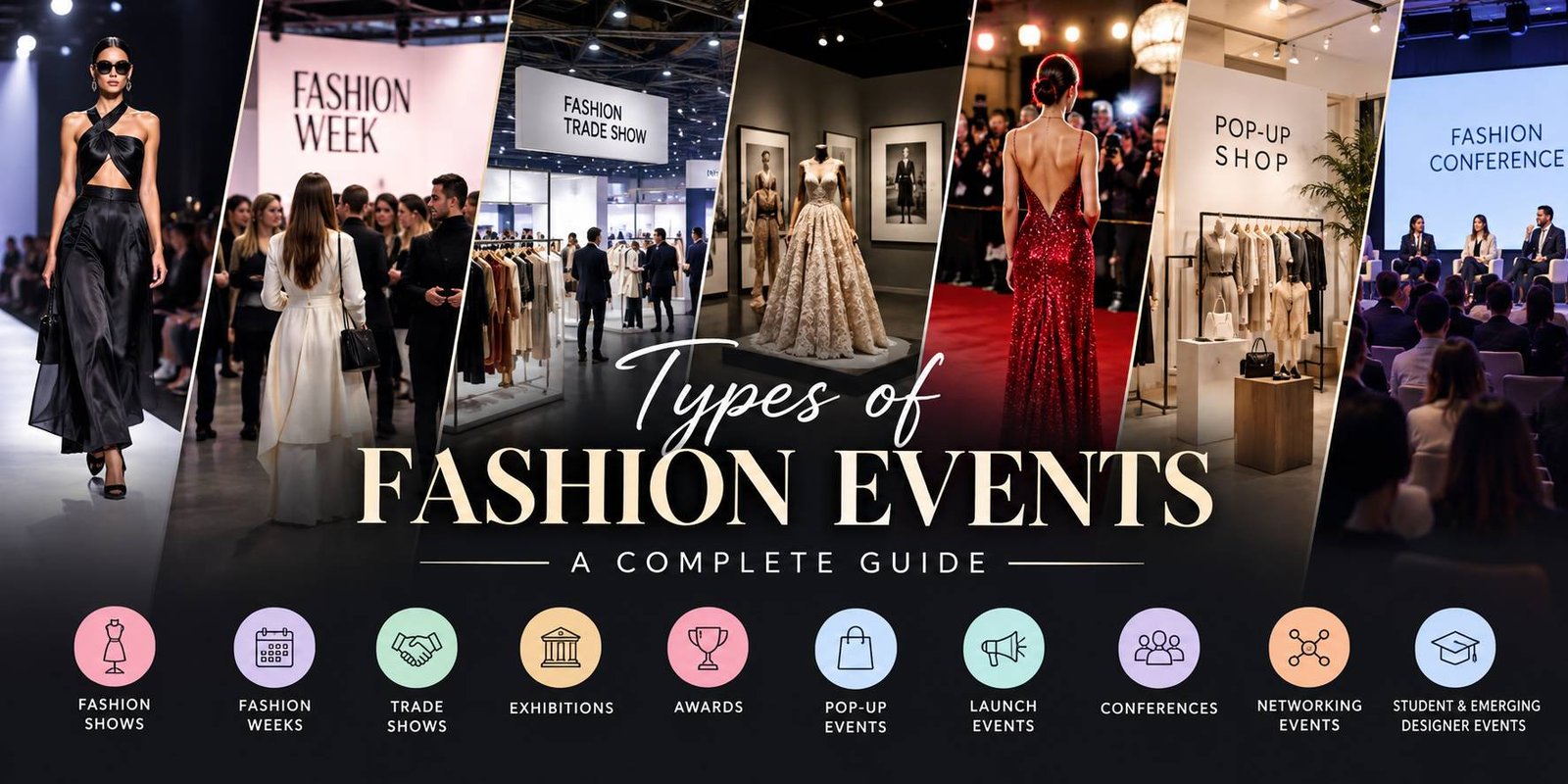
Understanding the types of fashion events can help you discover which events are focused on runway presentations, business networking, emerging designers, or public entertainment. Each format has its own purpose and atmosphere.
What Are Fashion Events?
Fashion events are organized occasions connected to clothing, accessories, design, beauty, and style. Some are created mainly for industry professionals, while others welcome the general public.
A fashion event might feature a runway collection, a designer presentation, an exhibition, a shopping experience, or an awards ceremony. The format usually depends on the audience and the goals of the organizers.
Types of Fashion Events
Types of Fashion Events: There are many ways to categorize fashion events. Some focus on new collections, while others are designed around business, education, entertainment, or cultural expression.
1. Fashion Shows
Fashion shows are among the most recognizable fashion events. Designers use them to present selected pieces from a new collection.
Models typically walk along a runway while guests watch the clothing from designated seating areas. The presentation may include music, lighting, set design, and styling that support the designer’s concept.
Fashion shows can range from small local productions to major international events.
2. Fashion Weeks
Fashion weeks bring several fashion-related activities together over a specific period. Designers may present upcoming collections through runway shows, presentations, and private appointments.
Major fashion weeks attract international attention because they can influence trends and generate media coverage. Smaller fashion weeks can also provide opportunities for regional designers and new creative talent.
3. Trade Shows
Trade shows are primarily business-focused events. They connect fashion companies with buyers, retailers, suppliers, manufacturers, and other industry professionals.
Instead of focusing only on runway presentation, trade shows often use booths or showroom-style spaces where businesses display products and collections.
For brands, these events can be useful for building professional relationships and finding new retail opportunities.
4. Fashion Exhibitions
Fashion exhibitions present clothing and accessories in a curated environment. They may explore the work of one designer, a particular period, a cultural influence, or an important fashion movement.
Unlike a traditional runway show, an exhibition allows visitors to examine garments more closely. Historical pieces may also be displayed alongside photographs, sketches, or other creative materials.
5. Fashion Awards
Fashion awards recognize achievements in areas such as design, modeling, styling, photography, and creative direction.
These events often attract designers, celebrities, editors, influencers, and other industry figures. The red carpet can become an important part of the occasion because guests often wear carefully selected outfits.
6. Designer Pop-Up Events
Pop-up fashion events are temporary experiences created around a brand, collection, or product launch.
A pop-up might take place in a retail space, gallery, hotel, or another temporary location. Brands can use this format to create a more personal experience for customers.
Some pop-ups also include styling sessions, limited-edition products, demonstrations, or opportunities to meet the designers.
7. Fashion Launch Events
A fashion launch event is organized to introduce a new product, collection, or brand to an audience.
These events can be private or public. A launch may include a presentation, product display, refreshments, photography areas, and opportunities for guests to interact with the new collection.
For a growing fashion label, a well-planned launch can help create attention around a new release.
8. Fashion Industry Conferences
Fashion conferences focus more on discussion and education than runway presentation.
Speakers may talk about design, retail, sustainability, marketing, technology, manufacturing, consumer behavior, or changes in the fashion industry.
These events are particularly useful for professionals, students, entrepreneurs, and anyone interested in understanding how the fashion business works.
9. Fashion Networking Events
Networking events give people in the fashion industry a chance to meet and develop professional relationships.
Attendees can include designers, photographers, models, stylists, makeup artists, retailers, content creators, and business owners.
The atmosphere is usually less formal than a runway show. The main goal is to create connections that may lead to collaborations or future opportunities.
10. Student and Emerging Designer Events
Fashion schools and creative organizations often organize events to showcase new talent.
Students and emerging designers can use these occasions to present their ideas and gain experience in front of an audience. These events can also help young creatives build portfolios and make industry connections.
For fashion fans, they offer a chance to discover designers before they become widely known.
Why Are Fashion Events Important?
Fashion events do more than display clothes. They create a meeting point between creativity, business, media, and consumers.
They Introduce New Ideas
Designers can use events to experiment with silhouettes, materials, colors, styling, and presentation.
They Support Designers
Events can give established and emerging designers exposure. A successful presentation may help a designer attract customers, buyers, media attention, or professional partnerships.
They Build Brand Awareness
A memorable event can give a fashion brand a stronger identity. The location, styling, presentation, and guest experience can all contribute to how people remember the brand.
They Connect Fashion Professionals
Many events create opportunities for people from different areas of the industry to meet. These relationships can lead to collaborations, jobs, partnerships, and new business opportunities.
How Are Fashion Events Different?
Not every fashion event serves the same purpose.
A fashion show is mainly focused on presenting clothing visually. A trade show is more business-oriented, while a fashion exhibition usually provides a curated look at clothing, design, or fashion history.
Fashion weeks combine multiple activities, and networking events place greater emphasis on professional connections. Choosing the right event depends on what you want to experience or achieve.
How to Choose the Right Fashion Event
If you want to attend a fashion event, start by considering your purpose.
For Fashion Inspiration
Look for runway shows, fashion weeks, and designer presentations. These formats can provide plenty of styling and design ideas.
For Business Opportunities
Trade shows, industry conferences, and networking events may be more useful if you work in fashion or want to build professional connections.
For Learning
Fashion exhibitions, conferences, and educational events can provide more background and context than a standard runway presentation.
For Shopping
Public pop-ups, brand launches, and fashion markets may be better choices if your goal is to discover and purchase products.
Final Thoughts
The types of fashion events available today cover much more than traditional runway shows. Fashion weeks, trade shows, exhibitions, awards, pop-ups, conferences, launches, and networking gatherings all play different roles within the fashion world.
Whether you are a fashion enthusiast, student, designer, business owner, or simply curious about style, understanding these event formats can help you find experiences that match your interests. Each event offers a different way to discover creativity, meet people, and explore the changing world of fashion.




One Comment