
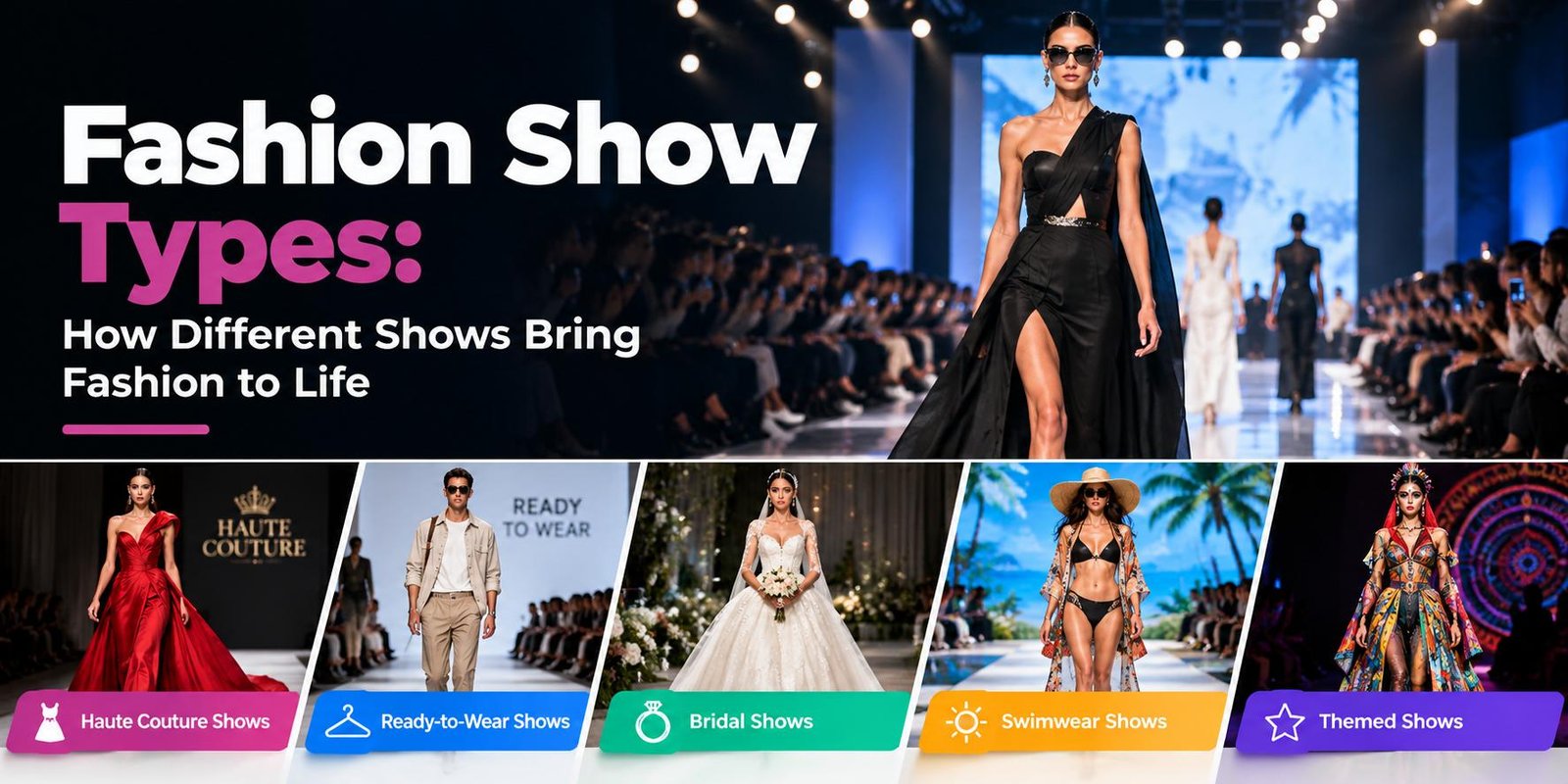
Fashion Show Types: How Different Shows Bring Fashion to Life
Fashion Show Types vary based on the clothes being presented, the audience, and the goal of the event. Some shows introduce everyday clothing for stores, while others display wedding dresses, luxury designs, or creative work from new designers. Each format gives people a different way to experience fashion.
Imagine attending a show where models present handmade gowns, then visiting another event that features sneakers, hoodies, and relaxed streetwear. Both are fashion shows, but their styles and purposes are quite different.
Understanding these differences helps fashion fans, students, shoppers, and new designers learn how the industry works. It also makes it easier to choose an event that matches your interests.
What Makes One Fashion Show Different From Another?
Fashion Show Types: A fashion show can be planned in several ways. The type of clothing is one factor, but the audience and setting also matter.
For example, a designer who wants to attract clothing buyers may arrange a professional runway event. A fashion school, however, might organize a student show to display work created during the year.
Three details can help explain the purpose of a show:
- The clothing: The event may feature casual outfits, formal wear, bridal gowns, or sportswear.
- The audience: Guests may include shoppers, buyers, fashion students, journalists, or invited clients.
- The format: Models might walk on a runway, present clothes in a room, or appear in a digital video.
These details often overlap. A bridal collection, for instance, can be presented on a traditional runway or through an online event.
Main Fashion Show Types to Know
The following fashion show types cover many of the ways designers and brands share their work. Some focus on a particular kind of clothing, while others highlight creativity, business, or technology.
1. Ready-to-Wear Fashion Shows
Ready-to-wear shows present clothing made for customers to wear in daily life. The pieces are usually produced in standard sizes and sold through shops or online stores.
A collection might include jeans, shirts, jackets, dresses, skirts, and coats. Designers can still experiment with color and shape, but the clothes are generally planned for real-world use.
For example, a brand may present a collection of work trousers, simple blouses, and light jackets for the coming season. Buyers can study the pieces and decide which items may suit their customers.
Ready-to-wear shows connect design ideas with the clothing people can purchase.
2. Haute Couture Fashion Shows
Haute couture shows focus on highly skilled clothing design and detailed craftsmanship. Garments may include hand-sewn decoration, careful embroidery, unusual shapes, and fabrics that need special handling.
Unlike mass-produced clothing, couture pieces often require many hours of work. Some are created for individual clients, while runway collections show the designer’s creative approach.
These events are useful for seeing what skilled makers can achieve. A gown with hundreds of carefully placed details, for example, can show the amount of work behind a single garment.
Couture is not mainly about everyday comfort or low prices. Its focus is often on design, craft, and artistic expression.
3. Bridal Fashion Shows
Bridal shows present clothing and accessories for weddings. Wedding dresses usually receive the most attention, but a collection may also include veils, bridesmaid dresses, shoes, and reception outfits.
Different designers take different approaches. One may create simple gowns with clean lines, while another may prefer lace, long trains, or decorative sleeves.
These events help couples explore styles before choosing wedding clothing. They can also give bridal shop owners ideas about what customers may want to see.
Because wedding plans vary, bridal shows often include more than one look. This gives visitors a chance to compare shapes, fabrics, and levels of detail.
4. Menswear Fashion Shows
Menswear shows feature clothing designed mainly for men. Collections can cover formal suits, casual shirts, denim, coats, sportswear, shoes, and accessories.
Some designers focus on classic pieces that can be worn for years. Others experiment with wide trousers, bright colors, unusual layers, or modern tailoring.
Consider a collection that pairs relaxed trousers with structured jackets. It may offer ideas for people who want clothes that look smart without feeling too formal.
Menswear events also help brands present new ideas for different seasons and customer needs.
5. Womenswear Fashion Shows
Womenswear shows display collections designed mainly for women. They may include dresses, skirts, tops, trousers, coats, eveningwear, and accessories.
The style depends on the designer. A collection might focus on practical work clothes, while another explores party outfits or bold runway looks.
For instance, one designer may combine soft fabrics with simple shapes for everyday wear. Another may use bright prints and dramatic sleeves to create a stronger visual effect.
These shows give shoppers, buyers, and fashion professionals a closer look at the designer’s direction.
6. Resort and Cruise Fashion Shows
Resort and cruise collections are designed around travel and warm-weather dressing. They often include light dresses, loose trousers, linen shirts, swimwear, sandals, and holiday accessories.
Comfort is important because the clothing is meant for relaxed settings. At the same time, designers may use strong colors, interesting prints, or smart details to make the pieces stand out.
Picture a collection created for a beach holiday: a linen shirt, wide-leg trousers, a light dress, and a sun hat. These items can work together without needing complicated styling.
Resort shows often help brands introduce clothes for vacation seasons.
7. Streetwear Fashion Shows
Streetwear shows focus on casual styles linked to urban life, music, sports, and youth culture. Common items include hoodies, sneakers, graphic T-shirts, cargo pants, denim, and caps.
The presentation may feel more relaxed than a formal runway show. Music, lighting, and the venue can also reflect the culture behind the clothing.
A designer might pair a loose hoodie with tailored trousers and bold sneakers. Another may use graphic prints to give basic clothing a stronger identity.
Streetwear shows demonstrate how everyday clothes can become part of a designer’s collection.
8. Children’s Fashion Shows
Children’s fashion shows present clothing for babies, children, and teenagers. The collection may include school outfits, party clothes, casual wear, jackets, shoes, and seasonal items.
In children’s clothing, comfort and movement matter alongside appearance. Soft fabrics, practical fastenings, and suitable fits can make garments easier to wear.
For example, a designer might present a school outfit that looks neat but still allows a child to move freely. A separate collection could feature colorful clothes for family celebrations.
These shows can help parents and retailers discover new clothing ideas.
9. Student and Graduate Fashion Shows
Student fashion shows give new designers a chance to present work created during their studies. They may be organized by fashion schools, colleges, or universities.
The collections can be experimental because students are learning to develop their own design approach. One student may work with recycled fabric, while another explores unusual shapes or traditional craft methods.
Planning a show also teaches students practical skills. They may need to prepare garments, style models, arrange fittings, and work with an event team.
For graduates, these events can become a way to introduce their work to employers and other fashion professionals.
10. Sustainable Fashion Shows
Sustainable fashion shows draw attention to clothing choices and production methods that aim to reduce harm to people or the environment.
Designers may present garments made with recycled materials, reused fabrics, or carefully chosen textiles. Some collections focus on repair, clothing reuse, and pieces designed to last longer.
For example, a designer might turn old denim into a new jacket instead of sending the material to waste. Another may show how one well-made outfit can be styled in several ways.
The term sustainable can cover many different practices, so the details matter. A show is more informative when it explains what materials were used and how the garments were made.
11. Vintage and Retro Fashion Shows
Vintage and retro shows explore clothing linked to earlier periods. A collection might draw inspiration from the 1960s, 1970s, 1980s, or 1990s.
A vintage show may feature original older garments. A retro show may instead present new clothes inspired by past styles.
For example, a presentation could include high-waisted trousers, old-school prints, and jackets influenced by an earlier decade. The goal is to show how past fashion can still inspire modern outfits.
These events can interest collectors, stylists, students, and people who enjoy fashion history.
12. Eveningwear and Formal Fashion Shows
Eveningwear shows focus on clothing for special occasions. Collections may include long gowns, cocktail dresses, formal suits, and dressy accessories.
Designers often pay attention to how the fabric moves, how the garment fits, and how small details change the final look.
A simple black dress, for example, may look very different when paired with a structured jacket, sparkling jewelry, or elegant shoes.
These shows can offer ideas for formal dinners, celebrations, parties, and other events that call for dressier clothing.
13. Swimwear Fashion Shows
Swimwear shows present clothing designed for pools, beaches, resorts, and warm-weather trips. Collections may include swimsuits, bikinis, cover-ups, beach dresses, and related accessories.
Designers consider more than appearance. Fit, fabric, comfort, and the intended use of each piece also matter.
Some collections use bright prints and bold colors. Others focus on simple shapes and neutral shades.
Swimwear events help brands display their seasonal collections and show how different pieces can be styled together.
Fashion Shows Based on Their Format
Not every show is defined by the clothing. The way the collection is presented can also make an event different.
Traditional Runway Shows
In a runway show, models walk along a planned path while guests watch from seats nearby. Each model presents one or more looks in a set order.
Music, lighting, and timing help create the mood. This format works well when a designer wants the audience to see the collection as a connected story.
Fashion Presentations
A fashion presentation may not use a traditional runway. Instead, models can stand in a room or move around a space while guests view the clothing.
This format may allow visitors to look more closely at fabrics, stitching, and small design details. It can also suit a smaller collection or a private event.
Virtual Fashion Shows
Virtual shows use online video, live streams, animation, or digital designs to present fashion. Viewers can watch from different places without attending the same physical venue.
This format can help brands reach people who cannot travel to an event. However, online viewers may not be able to inspect the fabric or fit as closely as guests who see the clothes in person.
Virtual presentations work best when the images, camera angles, and garment details are clear.
How to Choose a Fashion Show to Attend
The right event depends on what you want to see or learn.
If you enjoy luxury design, look for couture presentations. For wedding ideas, a bridal show may be more useful. Streetwear events suit people interested in casual urban clothing, while student shows can introduce fresh ideas from new designers.
Before attending, check a few practical details:
- Entry rules: Find out whether the event is open to the public or invitation-only.
- Ticket costs: Some shows require payment, while others may be free.
- Location and timing: Check the venue, start time, and travel arrangements.
- Photography rules: Some events limit photos or videos.
- Main focus: Read the event description to see what kind of collection will be shown.
A little planning can help you choose a show that matches your interests and budget.
What Happens Behind the Scenes?
A fashion show involves much more than the models walking in front of an audience. The team must prepare the clothes, schedule the models, arrange styling, and plan the order of each look.
First, the designer selects the collection. Next, models may attend fittings so the team can check how each garment sits and moves.
Stylists then choose shoes and accessories. Meanwhile, the production team handles the runway, lights, sound, seating, and backstage space.
Before the event begins, the team often rehearses the order of the show. Even a short presentation can require careful planning because clothing changes and model entrances need to happen on time.
How Fashion Show Types Influence Everyday Style
Runway collections can introduce ideas that later appear in everyday clothing. These may include new colors, shapes, prints, fabric choices, or ways to combine pieces.
However, not every runway look is designed for daily wear. Some outfits are created mainly to express an artistic idea or test the limits of design.
Retail brands may take one element from a collection and adapt it for a wider audience. For example, a dramatic runway coat might inspire a simpler coat that customers can wear to work or on weekends.
Fashion shows can therefore influence style without requiring people to copy a full runway outfit.
Frequently Asked Questions About Fashion Show Types
What are the main fashion show types?
Common types include ready-to-wear, haute couture, bridal, menswear, womenswear, streetwear, children’s, student, sustainable, vintage, resort, eveningwear, and swimwear shows. Events can also be grouped by format, such as runway, presentation, or virtual shows.
Are all fashion shows open to the public?
No. Some events sell tickets to the public, while others are intended for buyers, press, invited guests, or industry professionals. Always check the event’s entry rules before making plans.
What is the difference between ready-to-wear and haute couture?
Ready-to-wear clothing is generally made in standard sizes for sale to customers. Haute couture focuses on highly skilled craftsmanship and detailed designs, often made for individual clients or shown as creative collections.
Can students take part in fashion shows?
Yes. Fashion schools and universities often organize shows where students present their designs. These events help students practise design, styling, garment preparation, and teamwork.
Why do designers organize fashion shows?
Designers use shows to present collections, communicate their creative ideas, connect with buyers, and attract attention to their brands. The exact goal depends on the event and audience.
Final Thoughts
Fashion Show Types cover a wide range of events, from practical clothing collections to highly detailed couture presentations. Bridal, streetwear, student, sustainable, vintage, and virtual shows each offer a different view of fashion.
The best way to understand these events is to look at their purpose. Some help customers discover clothing they can buy, while others highlight craftsmanship, new talent, or fresh ideas.
Once you know what each format offers, it becomes easier to choose a show to attend, study a collection, or explore a particular part of the fashion industry.




One Comment