
Future of Fashion Technology: How Innovation Is Changing Style
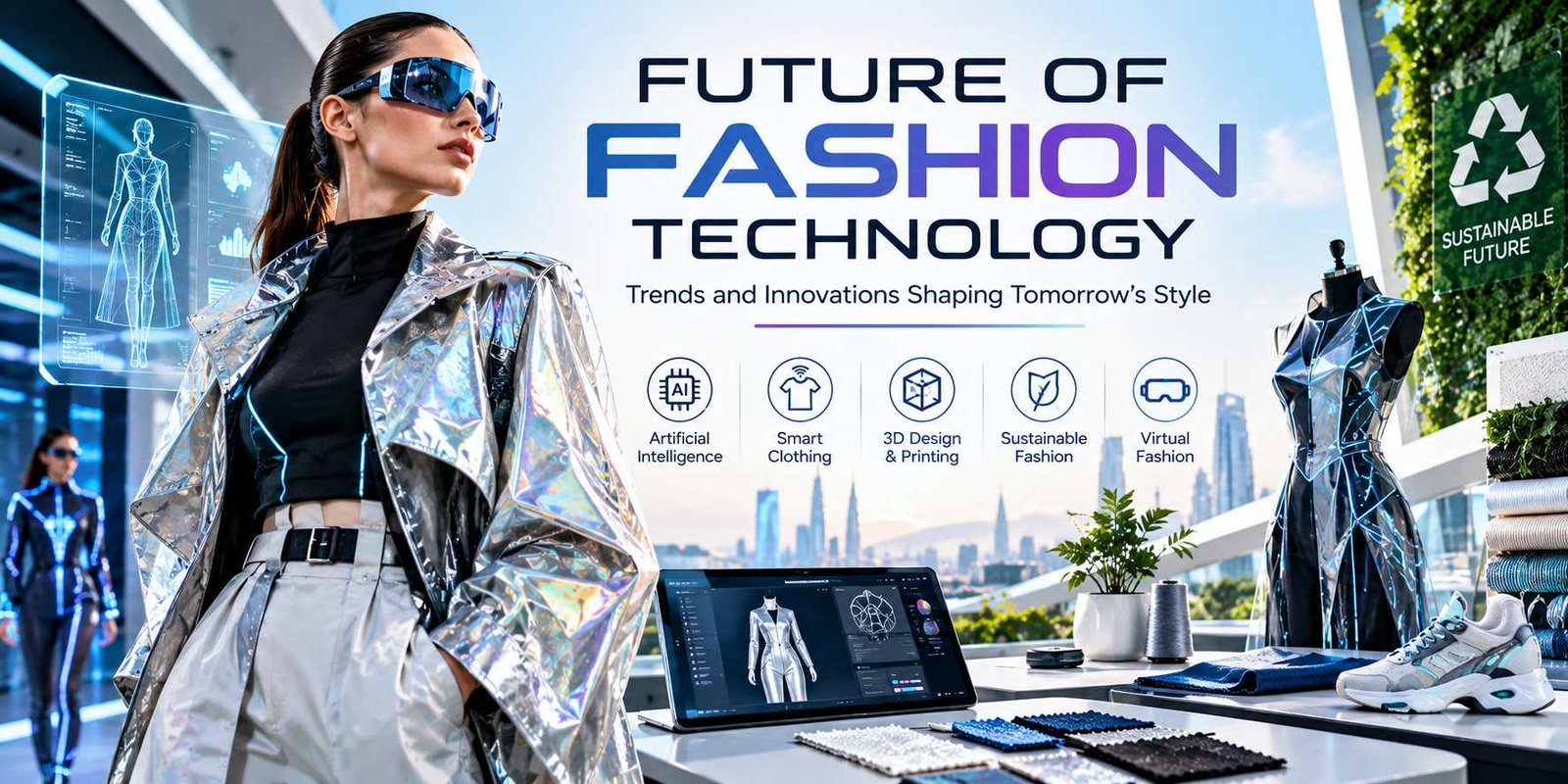
The future of fashion technology is not limited to futuristic-looking clothes or digital runway shows. It includes a much wider range of developments, from artificial intelligence and smart textiles to 3D design, virtual clothing, automated production, and new approaches to sustainability.
Technology can influence almost every stage of fashion. Designers can use digital tools to develop ideas, manufacturers can use advanced systems to produce garments, retailers can offer more personalized shopping experiences, and consumers can interact with clothing in new ways.
At the same time, technology brings important questions. Will smart clothing become normal? Can digital design reduce waste? How will artificial intelligence affect creative work? Could virtual fashion become an important part of personal style?
These questions help explain why fashion technology is becoming such an important part of the industry’s future.
What Is the Future of Fashion Technology?
The future of fashion technology refers to the new tools, systems, materials, and digital experiences that are expected to influence how fashion is designed, produced, sold, worn, and experienced.
It brings together two fields that were once treated separately: fashion and technology.
Traditional fashion focuses heavily on materials, construction, craftsmanship, styling, and aesthetics. Technology adds capabilities such as digital modeling, automation, data analysis, connected devices, artificial intelligence, and advanced manufacturing.
The result is a broader fashion ecosystem in which a garment can be more than something worn for appearance.
Future clothing could potentially provide useful functions, adapt to different conditions, communicate with digital devices, or be designed and customized almost entirely through digital systems.
Why Technology Matters to the Fashion Industry
Fashion is a large and complex industry. Designing a garment is only one part of the process.
Materials must be selected, patterns created, products manufactured, inventory managed, clothing marketed, and products delivered to consumers.
Technology can improve different parts of this process.
For designers, digital tools can make experimentation faster. For manufacturers, automation can improve consistency. For retailers, data can help understand customer preferences. For shoppers, technology can make product discovery and personalization easier.
The most important change may therefore be the connection between these different stages.
Instead of using technology for one isolated task, fashion companies can increasingly connect design, production, sales, and customer feedback.
Artificial Intelligence and the Future of Fashion
Artificial intelligence is becoming an important tool for many creative and business processes.
In fashion, AI can assist with tasks such as trend analysis, image generation, product recommendations, inventory planning, customer service, and design exploration.
A designer can use digital tools to explore different visual directions before developing a physical garment. A retailer can analyze purchasing behavior to understand which products may interest particular customers.
AI can also help businesses process large amounts of information.
However, technology does not remove the need for human creativity. Fashion depends on cultural understanding, visual judgment, craftsmanship, storytelling, and emotional connection.
The strongest future applications are likely to combine technological assistance with human decision-making.
Smart Clothing and Wearable Technology
Smart clothing is one of the most exciting areas of fashion technology.
Unlike conventional garments, smart clothing can include sensors, electronic components, conductive materials, or connections to digital systems.
Potential uses include fitness monitoring, environmental sensing, communication, entertainment, and personal comfort.
For example, future clothing could potentially help manage body temperature or collect information about physical activity.
The challenge is making these features practical without making garments uncomfortable or difficult to maintain.
People still expect clothing to be lightweight, durable, attractive, washable, and comfortable.
For smart clothing to become widely adopted, technology will need to fit naturally into those expectations.
Smart Textiles
Smart textiles are materials designed to provide functions beyond basic covering and decoration.
Some may respond to changes in temperature, moisture, light, pressure, or movement. Others can be designed to interact with electronic systems.
This creates possibilities for clothing that behaves differently depending on the environment.
Imagine a jacket designed to react to changing weather conditions or a garment that adjusts its properties during physical activity.
These concepts show how fashion could become more responsive.
Instead of clothing simply being passive material, future textiles could interact with the wearer and the surrounding environment.
3D Fashion Design
Three-dimensional design is changing the way designers can develop garments.
Traditional development often requires physical samples. A designer may create a pattern, make a sample, adjust it, and repeat the process several times.
Digital 3D design can reduce the need for some early physical samples.
Designers can create virtual garments, adjust measurements, change proportions, experiment with colors, and view the garment from multiple angles.
This can save time during development and make it easier to compare different versions.
For emerging designers, 3D software can also provide a useful way to present concepts to clients, manufacturers, or fashion schools.
3D Printing and Fashion
3D printing provides another route for fashion experimentation.
Instead of cutting traditional fabric pieces, designers can use additive manufacturing to create objects layer by layer.
This approach can be useful for accessories, footwear components, jewelry, experimental structures, and selected garment applications.
One advantage is the ability to create complex shapes that may be difficult to achieve through conventional manufacturing.
3D printing can also support customization because digital designs can be modified before production.
However, cost, material properties, production speed, comfort, and sustainability remain important considerations.
The technology is promising, but practical use depends on the needs of each product.
Digital Fashion and Virtual Clothing
Fashion no longer has to exist entirely in the physical world.
Digital fashion involves clothing created for virtual environments, digital images, games, social platforms, avatars, and other online experiences.
A virtual garment does not require physical fabric, sewing, storage, or shipping.
This gives designers freedom to experiment with shapes and materials that may be difficult to produce in reality.
Digital clothing can also provide a new form of self-expression.
People increasingly maintain identities across physical and digital environments. As online spaces become more interactive, clothing may play a larger role in how people present themselves digitally.
Virtual Try-On Technology
Shopping for clothing online can be difficult because customers cannot physically try products before purchasing.
Virtual try-on technology attempts to address this problem.
Depending on the system, shoppers may be able to use cameras, digital models, or augmented reality to see how clothing, eyewear, accessories, or other products might look.
This can make online shopping more interactive.
It may also help consumers make more informed choices before placing an order.
As these systems improve, virtual fitting could become a more common part of digital fashion retail.
Augmented Reality and Fashion Shopping
Augmented reality can place digital information or visual elements into the user’s physical surroundings.
In fashion retail, this technology can be used for virtual product previews, interactive campaigns, digital styling, and try-on experiences.
Instead of simply viewing a product photograph, customers can interact with the product through a device.
This creates a more engaging shopping experience and gives fashion brands another way to communicate with consumers.
The future could involve shopping environments where physical and digital experiences blend together.
Personalized Fashion Through Technology
Consumers do not all want the same clothing.
Technology can help brands provide more personalized recommendations based on factors such as previous purchases, preferences, measurements, and browsing behavior.
In the future, customization may become even more advanced.
A customer could potentially select a garment design, adjust its measurements, choose materials or colors, and receive a product created specifically for those preferences.
This approach could make fashion more individual.
However, personalization also requires careful handling of customer information. Brands must consider privacy, security, and transparency when collecting and using data.
Technology and Sustainable Fashion
One of the biggest opportunities for fashion technology is supporting more responsible production.
Fashion companies can use digital systems to improve forecasting, manage inventory, optimize patterns, and reduce unnecessary production.
Digital sampling can also help reduce the number of physical prototypes needed during product development.
Advanced materials may provide additional opportunities.
Researchers and designers are exploring alternatives to conventional textiles, including recycled and bio-based materials.
Technology alone cannot solve every environmental problem in fashion, but it can support better decision-making and more efficient systems.
Reducing Fashion Waste Through Digital Tools
Unsold inventory and material waste are important challenges for fashion businesses.
Better forecasting tools can help companies estimate demand more accurately.
Digital product development can allow designers to test ideas before investing heavily in physical samples.
Computer-assisted pattern planning can also help use fabric more efficiently.
Small improvements across the production process can have a meaningful effect when applied at a large scale.
The goal is not simply to produce clothing faster. It is to create a system where resources are used more carefully.
Automation in Fashion Manufacturing
Automation is likely to become increasingly important in fashion production.
Machines can perform repetitive tasks with consistency, while digital systems can coordinate different stages of manufacturing.
Automation may be particularly useful for tasks that require high repetition or precision.
However, fashion manufacturing also depends on skilled workers and craftsmanship.
Not every garment can or should be fully automated.
Luxury products, complex tailoring, handmade details, and specialized techniques may continue to rely heavily on human expertise.
The future is therefore more likely to involve collaboration between people and machines rather than complete replacement of human workers.
Robotics and Fashion Production
Robotics can support manufacturing by handling selected repetitive or precise tasks.
As robotic systems become more capable, their applications in textiles and apparel may expand.
Robots could potentially assist with material handling, cutting, inspection, packaging, or other production activities.
The major challenge is flexibility.
Fabric is soft, flexible, and sometimes unpredictable. Working with textiles can be more complicated than handling rigid industrial materials.
For this reason, fashion robotics requires specialized solutions.
Blockchain and Fashion
Blockchain technology has also been discussed as a potential tool for the fashion industry.
One possible application is product traceability.
A digital record could potentially help track information about a product’s materials, manufacturing history, ownership, or movement through the supply chain.
This may be useful when brands want to provide customers with more information about where products come from.
Digital records could also support authentication for certain high-value products.
However, the usefulness of any system depends on accurate information being entered in the first place.
Digital Product Passports
Digital product information could become increasingly important in the future.
A digital product passport can provide information connected to an item, such as materials, production details, care instructions, or recycling information.
For consumers, this could make it easier to understand a product’s background.
For businesses, digital records could support product management and traceability.
Such systems could become especially useful as the fashion industry focuses more attention on circular production and product life cycles.
The Future of Fashion Retail
Technology is changing not only how clothes are made but also how people shop.
Online stores already use recommendation systems, personalized advertising, digital customer support, and virtual product displays.
Future retail could become more interactive.
Customers may be able to create personalized digital profiles, explore virtual stores, preview products through augmented reality, or receive styling suggestions based on their preferences.
Physical stores may also become more connected.
Instead of simply displaying clothing, a store could combine physical products with digital screens, interactive fitting rooms, and personalized services.
How Technology Could Change Fashion Designers’ Jobs
Technology will likely change the skills expected from future fashion designers.
Traditional skills such as sketching, sewing, draping, pattern cutting, and fabric knowledge will remain valuable.
However, designers may also benefit from understanding digital modeling, 3D software, AI tools, data, smart textiles, and modern production systems.
The future designer may therefore work across several areas.
A designer could develop a physical collection, create digital versions of the garments, work with technology specialists, and use data to understand how consumers respond.
This broader skill set can create new career paths within fashion.
Fashion Technology and Customization
Mass production has traditionally focused on making large quantities of similar products.
Technology could make smaller-scale customization more practical.
Digital patterns can be adjusted quickly. Automated systems can produce variations without completely redesigning the production process.
This could allow consumers to choose different measurements, colors, lengths, or design details.
Customization can make products feel more personal and may reduce the need for brands to maintain huge numbers of standard variations.
The Role of Data in Future Fashion
Data is becoming another valuable resource for fashion businesses.
Companies can analyze information about customer behavior, product performance, sales patterns, and market demand.
This information can help businesses make decisions about design, inventory, pricing, and marketing.
However, data should support creative thinking rather than replace it.
Fashion is not purely mathematical. A product can become successful because it connects with culture, emotion, identity, or timing.
Technology can provide information, but people still interpret that information.
Challenges of Fashion Technology
The future of fashion technology is promising, but it also comes with difficulties.
High Development Costs
Advanced equipment, research, software, and materials can require significant investment.
Technical Complexity
Fashion teams may need new skills to work with digital systems and smart products.
Privacy Concerns
Connected clothing and personalized shopping can involve personal data, making privacy an important issue.
Electronic Waste
Smart garments containing electronic components may create additional recycling challenges.
Accessibility
Some advanced products may initially be too expensive for many consumers.
Loss of Human Craftsmanship
If businesses focus too heavily on automation, traditional skills could receive less attention.
These challenges show why innovation needs careful planning.
What Will Fashion Technology Look Like in the Future?
There probably will not be one single version of future fashion.
Instead, different technologies will develop at different speeds.
Some people may wear smart garments every day, while others may prefer traditional clothing. Digital fashion may become important for online identities, while physical fashion remains central to everyday life.
Sustainable materials could become more widely used. 3D design may become a normal part of fashion education and product development. AI may support research and creative work.
The most important change may be that technology becomes less noticeable.
Instead of looking obviously “high-tech,” future fashion technology may become integrated into ordinary products.
A jacket may look like a normal jacket while offering better performance, personalized fitting, or digital features.
How Consumers Can Prepare for the Future
Consumers do not need to completely change their wardrobes to participate in fashion technology.
They can start by exploring clothing made with innovative materials, learning about digital fashion, trying virtual shopping tools, or choosing products with transparent production information.
It is also useful to understand how technology affects privacy and sustainability.
Being a future-focused fashion consumer is not simply about buying the newest product. It is about understanding how new technologies influence design, production, shopping, and personal expression.
Frequently Asked Questions
What is the future of fashion technology?
The future of fashion technology includes developments such as AI-assisted design, smart clothing, advanced textiles, 3D fashion design, digital garments, virtual try-on systems, automated manufacturing, and technology-supported sustainability.
How will AI affect fashion?
AI can assist with design exploration, trend analysis, product recommendations, forecasting, customer service, and business operations. Human creativity and judgment will remain important.
Will smart clothing become common?
Smart clothing has the potential to become more common as technology becomes smaller, more comfortable, affordable, and easier to maintain.
Can technology make fashion more sustainable?
Technology can support sustainability through improved demand forecasting, digital sampling, efficient production, material innovation, and better product tracking. Its environmental value depends on how it is designed and implemented.
What is digital fashion?
Digital fashion consists of clothing created for digital environments rather than physical wear. It can be used in virtual spaces, games, social platforms, digital images, and avatars.
Will technology replace fashion designers?
Technology is more likely to change the role of designers than eliminate it completely. Creative direction, cultural awareness, craftsmanship, and human judgment remain important parts of fashion.
Conclusion
The future of fashion technology is about much more than making clothing look futuristic. It is about changing the way fashion is imagined, developed, produced, purchased, and experienced.
Artificial intelligence can support creative and business decisions. Smart textiles can give garments new functions. Three-dimensional design can make product development more flexible. Digital clothing can create new forms of self-expression, while advanced materials and production systems may support more responsible fashion practices.
There are still challenges involving cost, privacy, accessibility, electronic waste, and technical complexity. Yet these challenges also create opportunities for designers, engineers, manufacturers, retailers, and consumers to rethink how fashion should work.
The most successful fashion technology will probably be the technology that feels useful rather than unnecessary. Instead of adding complexity for its own sake, future innovations can make clothing more personal, practical, efficient, expressive, and adaptable.
As technology continues to develop, the boundary between fashion and digital innovation will become increasingly connected. The result may not be a wardrobe filled with science-fiction costumes. It may be something more interesting: everyday clothing that quietly uses advanced technology while still reflecting personal style and human creativity.





One Comment