
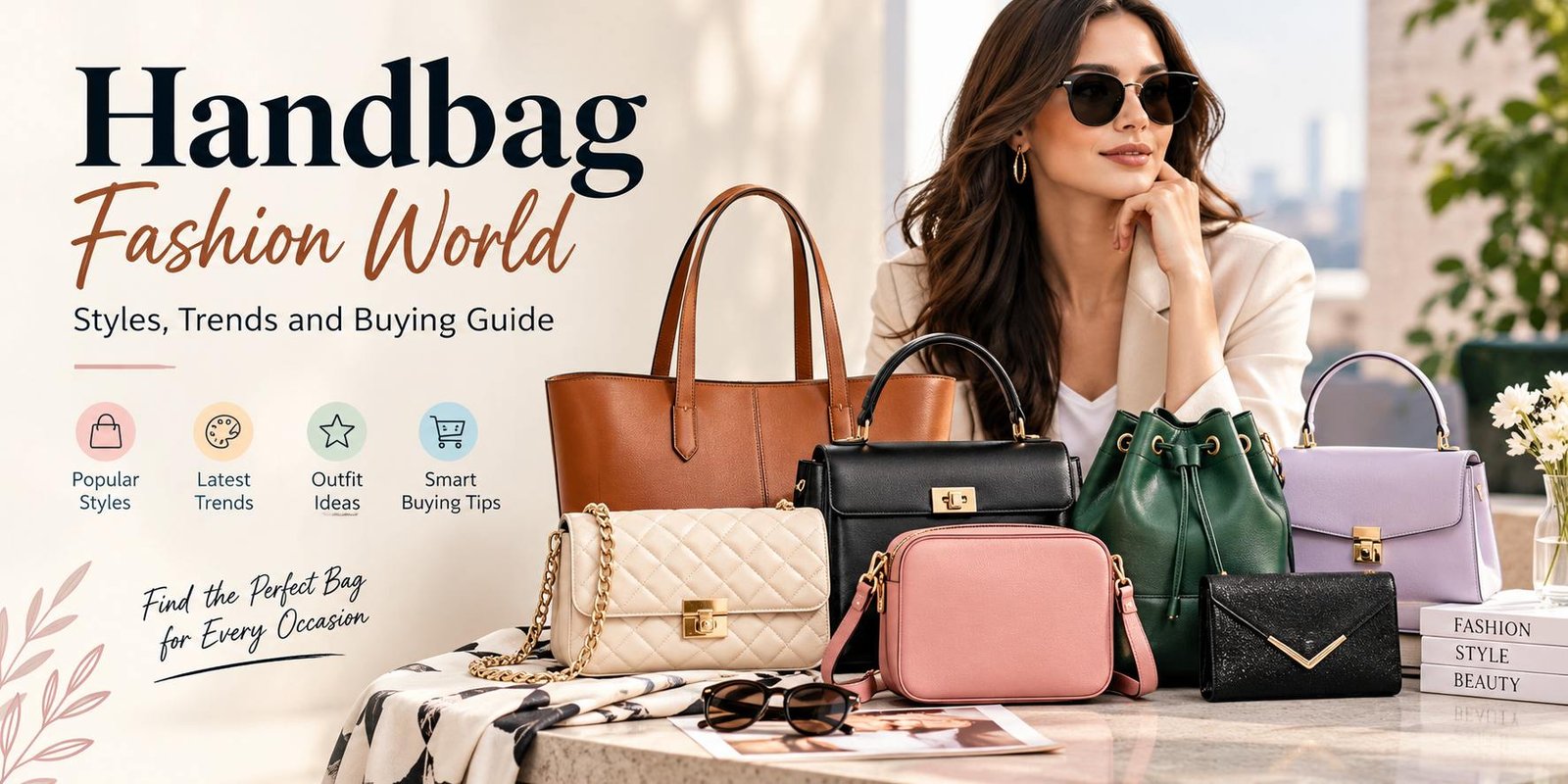
Handbag Fashion World: Styles, Trends and Buying Guide
Handbag Fashion World: A handbag can tell a small story about the person carrying it. Some people choose a roomy bag because their day involves work, shopping, and travel. Others prefer a compact design that holds only a phone, keys, and a few personal items. In the handbag fashion world, these different needs have inspired a wide variety of shapes, materials, and designs.
Finding a handbag is not simply about choosing something attractive. The right option should fit your routine, feel comfortable, and work with the clothes you already own. A bag that looks beautiful on a store shelf may not be useful if it is too heavy, difficult to open, or too small for your daily essentials.
This guide explores handbag designs, ways to style them, materials worth understanding, and details to check before spending your money. Whether you are shopping for your first everyday bag or adding something different to your collection, these ideas can help you make a thoughtful choice.
Understanding the Handbag Fashion World
Handbag Fashion World: Handbags have changed from simple carrying accessories into important parts of personal style. Their designs reflect different lifestyles, practical needs, and creative ideas. A bag might be chosen for its storage space, while another may appeal to someone because of its unusual shape or decorative details.
The handbag fashion world includes everyday accessories, professional bags, travel companions, evening purses, and premium designer pieces. Each serves a different purpose, which is why one style rarely works perfectly for every situation.
For example, someone who spends hours away from home may need a bag with several compartments. A person attending a formal dinner may want something smaller that complements their outfit. Understanding these differences makes shopping easier and helps prevent purchases that end up unused.
Personal taste also matters. Some wardrobes contain mostly simple colors and clean lines, while others include bright prints, layered outfits, and bold accessories. A suitable handbag should feel like a natural addition to your wardrobe rather than an item you bought only because it was popular.
Different Handbag Designs and When to Use Them
Before comparing colors or brands, learn how the main bag shapes differ. Their size, closure, straps, and internal layout can affect how useful they are.
Tote Bags for Busy Days
A tote is often recognized by its open main compartment and two handles. Depending on its dimensions, it may hold books, shopping, a tablet, or other everyday belongings.
This design can suit people who need extra room during the day. However, an open top may offer less protection than a zipped closure, especially in crowded places. If you carry valuable items, check whether the tote includes a secure fastening or an internal zipped pocket.
Totes are available in canvas, nylon, leather, and other materials. A lightweight fabric version can work for casual errands, while a structured design may look more appropriate in a professional setting.
Crossbody Bags for Movement
Crossbody bags use a longer strap that passes across the body. Their main advantage is convenience: your hands remain free while walking, shopping, or exploring a new place.
These bags are often useful for travel and everyday errands. Some have several small compartments, making it easier to separate cards, keys, and other essentials. Others keep the interior simple to reduce bulk.
Before buying one, check the strap adjustment and the position of the bag when worn. The most attractive design will not be comfortable if it sits awkwardly or moves around while you walk.
Shoulder Bags for Everyday Styling
Shoulder bags are designed to hang from one shoulder. Their shapes range from slim, curved designs to larger bags with structured sides.
A medium shoulder bag can be a practical option for people who want something more compact than a tote without choosing a tiny purse. It can also transition between casual outfits and smart-casual clothing.
Pay attention to the handle drop, which refers to the distance between the handle and the top of the bag. This measurement affects how comfortably the bag fits under your arm, especially when wearing a jacket or a thick sweater.
Clutches for Special Events
Clutches are usually small and intended for carrying a limited number of belongings. They are often chosen for celebrations, weddings, formal dinners, and evening gatherings.
Some models include a removable chain or shoulder strap. This feature can be useful when you want the option to carry the bag by hand or wear it during the event.
When choosing a clutch, check its actual capacity rather than judging it from photographs. A slim design may look elegant but might not fit a larger phone or several personal items.
Satchels for an Organized Look
Satchels commonly feature a defined shape, a top handle, and sometimes an additional shoulder strap. Many include separate sections for organizing everyday belongings.
Their structured appearance can work well with office clothing, tailored trousers, and smart dresses. However, some satchels become heavy when filled, so check the weight of the empty bag and the comfort of its straps.
Bucket Bags for a Relaxed Appearance
Bucket bags typically have a rounded body and a wider opening that may close with a drawstring or another fastening. Their shape offers a different look from rectangular handbags.
They can work with relaxed outfits, denim, simple dresses, and casual weekend clothing. Since openings and internal layouts vary, examine how easily you can reach your belongings and whether the closure keeps them secure.
Handbag Fashion World Trends Worth Exploring
Trends can provide fresh ideas, but following every new release is not necessary. A better approach is to notice which design details appeal to you and decide whether they fit your existing wardrobe.
Color Choices That Change an Outfit
A handbag in black, brown, cream, or tan can work with many clothing combinations. These shades are useful when you want one bag for several occasions.
Brighter colors create a different effect. A red or blue handbag can bring attention to a simple outfit, while a pastel shade may add softness to spring and summer clothing. The best color depends on the clothes you wear most often and how much contrast you enjoy.
You do not need to match the bag exactly to your shoes. Instead, look for a color relationship that feels balanced, such as pairing a warm brown bag with earth-toned clothing or using a bright accessory against a neutral outfit.
Shapes That Add Character
The outline of a handbag can change the feel of an outfit. A firm rectangular bag often appears formal, while a soft, slouchy design creates a more casual impression.
Rounded bags, unusual handles, and asymmetrical shapes can add interest without requiring a complicated outfit. If you are trying a distinctive design for the first time, pair it with clothing that allows the bag to stand out.
Decorative Details and Texture
Texture offers another way to introduce variety. Woven surfaces, quilted panels, visible stitching, metal clasps, and embossed patterns can give a bag its own character.
When choosing a detailed design, consider what is already happening in your outfit. A heavily decorated bag may work best with simple clothing, while a plain handbag can balance a printed dress or a patterned jacket.
Practical Features With Modern Appeal
A useful handbag does not need to look plain. Adjustable straps, secure pockets, removable pouches, and well-planned compartments can make everyday use easier while maintaining an attractive appearance.
These features may matter more than a temporary trend because they affect how comfortably you use the bag over time.
How to Select a Handbag That Suits Your Lifestyle
A smart purchase starts with your daily habits rather than a product photograph. Think about where you go, what you carry, and how long you usually keep a bag with you.
Match the Size to Your Belongings
Place your usual essentials together before shopping. Include items such as your phone, wallet, keys, sunglasses, notebook, or water bottle if you regularly carry them.
Compare your list with the bag’s listed measurements. Remember that a bag’s outer dimensions do not tell you exactly how much usable space it has. Thick lining, internal dividers, and narrow openings can reduce capacity.
Avoid choosing an oversized bag simply because it offers more room. Extra space may encourage you to carry unnecessary items and make the bag heavier.
Think About Comfort
A handbag can become uncomfortable when its weight is concentrated on a narrow strap or one shoulder. If you expect to carry heavier belongings, look for a suitable strap width, balanced construction, and a design that sits comfortably against your body.
Handle length is important, too. A bag that fits well over a light shirt may feel tight over a winter coat. If possible, try it with the type of clothing you expect to wear most often.
Compare Materials Carefully
Different materials have different strengths and care requirements.
- Leather: Often selected for its natural texture and appearance. Quality varies, and some leather bags need regular conditioning or careful storage.
- Faux leather: Provides a leather-like finish at different price levels. Durability depends on the material and how the bag is made.
- Canvas: Often suitable for casual use and relatively easy to carry, depending on its construction.
- Nylon: Commonly used in lightweight designs intended for everyday activities or travel.
- Suede: Offers a soft surface but can be sensitive to water, dirt, and staining.
- Woven materials: Can add texture and visual interest, although some designs need gentle handling to prevent damage.
Read the manufacturer’s care instructions before cleaning or treating a new bag. A product designed for one material may damage another.
Inspect the Details Before Buying
Look closely at the stitching, lining, handles, seams, closures, and metal fittings. These details influence how a bag performs during regular use.
For online purchases, examine photographs from several angles. Read customer reviews that describe long-term use, not just first impressions. Check the return policy so you understand your options if the bag does not match its description.
Building Outfits Around Your Handbag
Your handbag can support an outfit without becoming its main feature. A few simple combinations can help you use the bags you already own in more ways.
Everyday Casual Clothing
Jeans, a plain T-shirt, and sneakers can work with a canvas tote or a simple crossbody bag. Choose a neutral design for an understated look or a contrasting color if you want the accessory to attract attention.
For errands, prioritize easy access and comfortable straps. A bag that stays secure while you move may be more useful than one with a complicated closure.
Workwear and Smart-Casual Outfits
Structured shoulder bags and satchels can complement shirts, blazers, trousers, and office dresses. Neutral shades usually fit easily into a professional wardrobe.
If you commute with a laptop or tablet, check the bag’s dimensions and protection features before assuming it will fit. A fashion handbag is not necessarily designed to protect electronic devices.
Dresses and Formal Clothing
A small handbag or clutch can work well with an evening dress, wedding outfit, or formal suit. Metallic finishes and textured materials may add interest to simple clothing, while a plain bag can create balance with a detailed outfit.
Consider the length of the event before making a final choice. If you will be standing or moving around for hours, a design with a detachable strap may offer greater comfort.
Travel and Weekend Activities
A lightweight crossbody bag or backpack can be useful for sightseeing and day trips. Look for secure closures, a comfortable fit, and enough space for essential belongings.
Keep important items organized and avoid carrying more than you need. For travel, also consider the local weather and whether the material is suitable for the conditions you expect.
Luxury and Budget-Friendly Handbags: What Should You Compare?
The handbag fashion world includes premium designer products, independent labels, and affordable everyday options. The right price level depends on your budget and what you value most.
A luxury bag may appeal because of its design history, materials, construction, or distinctive details. However, a brand name alone does not guarantee that a particular model will suit your needs.
Affordable handbags can be sensible choices for shoppers who want a new color, a seasonal design, or a bag for occasional use. Compare the quality of the stitching, the feel of the material, the strength of the handles, and the usefulness of the interior.
Before spending more, ask yourself three questions:
- Will I use this bag regularly?
- Does its construction justify the price?
- Can I style it with clothes I already own?
If you are purchasing a designer handbag, buy from the brand or a reputable retailer whenever possible. Check authenticity information and keep the purchase receipt. Be cautious when a seller provides unclear product details or offers a price that seems unusually low for the item.
Simple Ways to Keep a Handbag in Good Condition
Care depends on the material, but a few habits can help most handbags remain usable for longer.
Empty it regularly. Remove receipts, loose change, and other items that add weight or create clutter.
Clean small marks promptly. Use only cleaning methods suitable for the bag’s material. Test a product on a hidden area when the manufacturer’s instructions allow it.
Store it away from direct sunlight. Excessive heat and sunlight can affect some colors and materials.
Protect its shape. Avoid overfilling the bag. When storing a structured design, gentle stuffing may help it keep its form.
Keep it dry when required. If the bag becomes wet, follow the manufacturer’s drying guidance instead of placing it near direct heat.
Rotate your collection. Using different bags for work, travel, and special occasions can reduce wear on a single favorite.
For delicate or valuable bags, professional cleaning may be a better option than experimenting with household products.
Common Mistakes When Shopping for Handbags
A little planning can prevent disappointment after a purchase.
- Choosing a bag that is too small: Check whether your everyday essentials fit comfortably.
- Ignoring the empty weight: Heavy materials and hardware can make a filled bag difficult to carry.
- Buying only because of a trend: Consider whether you will still enjoy using the design with your existing clothes.
- Overlooking the closure: Make sure the fastening is practical and suitable for the places you visit.
- Failing to check the seller: Review product information, shipping terms, and return conditions before paying.
- Neglecting maintenance: Some materials require more care than others, so consider this before choosing a bag.
The best purchase is one that works in real life, not just one that looks appealing in a product photo.
Frequently Asked Questions About the Handbag Fashion World
What handbag is useful for everyday activities?
A medium shoulder bag, crossbody bag, or tote may work well, depending on how much you carry. Compare comfort, storage, and closure type before choosing.
Which handbag color is easiest to style?
Black, brown, beige, and cream are commonly versatile choices. However, the best color is one that works with your wardrobe and personal taste.
Is an expensive handbag worth buying?
It can be worth the cost if the design, construction, and features suit your needs and budget. A higher price alone does not guarantee greater durability.
Should I buy a trendy handbag or a classic one?
Consider your intended use. A classic design may be easier to wear across different seasons, while a trend-led bag can be enjoyable when you want to experiment with your style.
How can I tell whether an online handbag will fit my needs?
Check its dimensions, strap length, internal compartments, closure, and weight. Read reviews that mention actual use, and make sure you understand the return policy.
How do I choose a handbag as a gift?
Think about the recipient’s usual clothing, preferred colors, and daily routine. If you are unsure about their taste, a simple design with a return option may be a practical choice.
Conclusion
The handbag fashion world offers more than a choice between different colors and brands. It gives shoppers an opportunity to find accessories that reflect their taste while supporting the activities of everyday life.
Start with your needs, compare the available designs, and pay attention to comfort, material, construction, and storage. Then consider how the bag will fit with your wardrobe and budget.
You do not need a large collection to enjoy different looks. A carefully selected everyday bag, a practical option for busy days, and a smaller purse for special occasions may be enough for many wardrobes. Choose thoughtfully, care for your belongings, and let your personal style guide the final decision.





4 Comments