
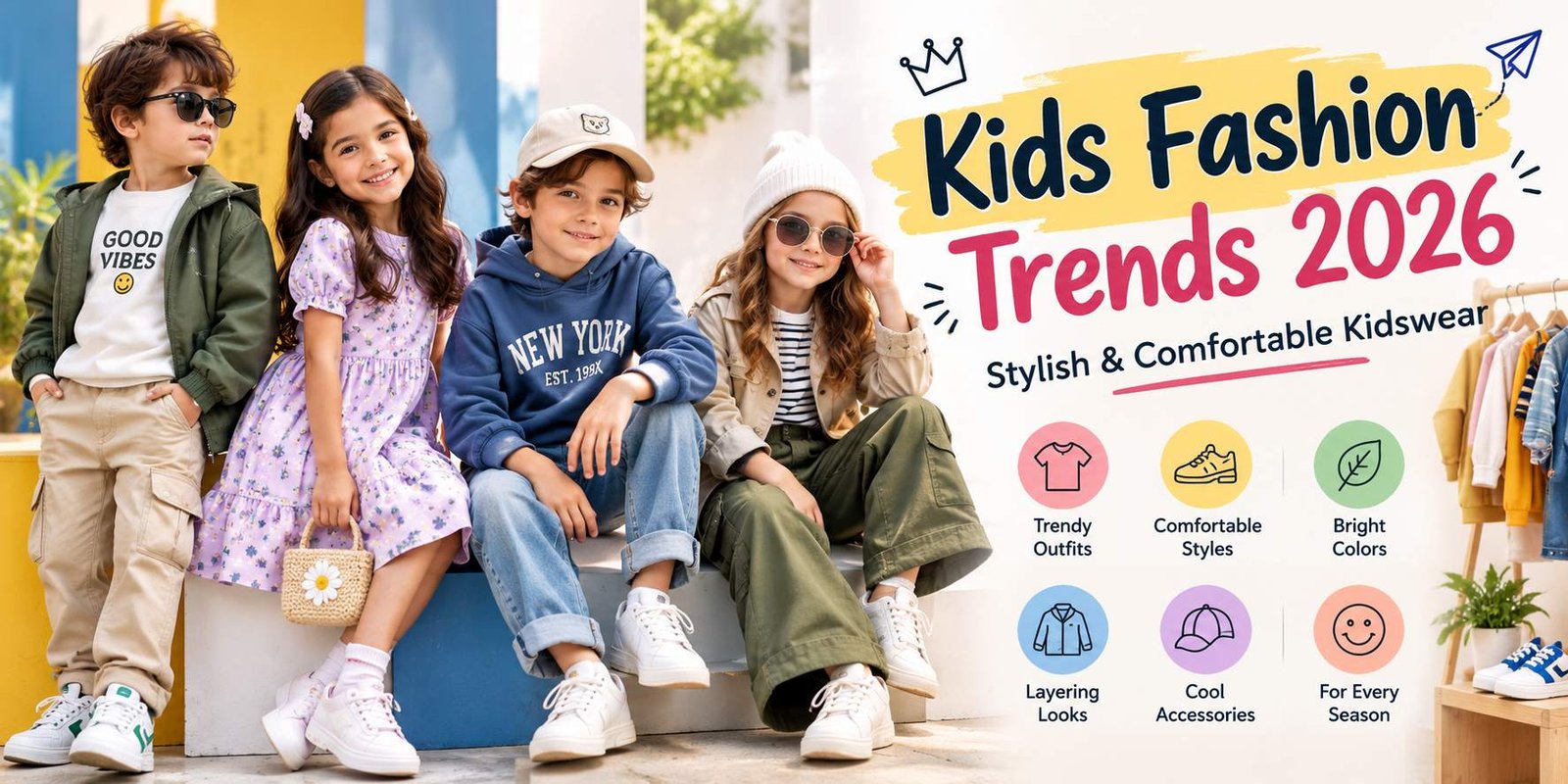
Kids Fashion Trends 2026: A Fresh Guide to Modern Kidswear
Kids fashion trends 2026 are taking a more practical and expressive direction. Children’s clothing is no longer only about looking cute. Parents also want pieces that survive busy days, while children often want colors, prints, and outfits that feel like their own.
This year’s kidswear can be described in one simple way: easy clothing with character.
Instead of filling a wardrobe with short-lived trends, families can choose a few interesting pieces and build outfits around them. Soft layers, relaxed trousers, playful graphics, useful jackets, and easy footwear can all become part of a modern child’s wardrobe.
What Is Changing in Kids Fashion in 2026?
Kids Fashion Trends 2026: Children’s style is becoming more flexible.
A formal-looking item can be worn with something casual. A bright top can be balanced with plain trousers. A summer dress can become an autumn outfit with tights and a cardigan.
This mix-and-match approach makes children’s wardrobes more useful.
The strongest ideas for Kids Fashion Trends 2026 include:
- Relaxed clothing
- Playful graphics
- Easy layering
- Comfortable denim
- Coordinated outfits
- Strong color combinations
- Soft neutral shades
- Sport-inspired pieces
- Utility details
- More personal styling
The important point is that children do not need to wear every trend. A good wardrobe should fit their daily routine first.
1. Clothes That Let Children Move
Children are rarely still for long. They run, sit, climb, play, and explore.
That is why flexible clothing remains important.
Loose trousers, soft tops, stretchy waistbands, roomy sweatshirts, and uncomplicated dresses can make everyday dressing easier.
A useful test is simple: Can the child move naturally while wearing it?
If the answer is yes, the item is more likely to become a regular favorite.
2. The Return of Playful Graphics
Children’s clothing has plenty of room for imagination.
Instead of relying only on traditional cartoon designs, modern kidswear can use:
- Abstract drawings
- Small illustrations
- Nature themes
- Stars
- Animals
- Hand-drawn lettering
- Colorful shapes
- Creative patterns
A graphic top can become the main part of an outfit. Pair it with plain trousers or jeans, and the rest of the look stays simple.
This is also an affordable way to introduce a trend without changing the entire wardrobe.
3. Colorful Dressing Gets More Creative
Color remains a major part of children’s style, but it does not have to mean wearing several bright shades at once.
One strong color can be enough.
For example, a cobalt-blue sweatshirt can work with gray trousers. A yellow jacket can brighten a navy outfit. A green sweater can look great with denim.
This creates a simple rule for parents:
Let one color lead and keep the rest balanced.
Children who enjoy colorful clothes can also experiment with unusual combinations. Personal preference matters more than following a strict color chart.
4. Calm Colors for Everyday Outfits
Bright clothing is not the only option.
Cream, stone, chocolate brown, dusty blue, soft green, and warm gray can create a quieter appearance.
These shades are especially useful for parents who prefer clothes that can be mixed easily.
For example, a neutral cardigan might work with:
- Jeans
- Cargo trousers
- A printed skirt
- Plain shorts
- A casual dress
That makes one item useful across several outfits.
5. Matching Sets Save Time
Busy mornings can make children’s dressing difficult.
A coordinated set solves part of the problem because the pieces already belong together.
Sets can include:
- Sweatshirt and trousers
- Shirt and shorts
- Top and skirt
- Sweater and wide-leg pants
- T-shirt and relaxed shorts
There is another advantage. The pieces do not have to stay together.
A child can wear the top with jeans one day and the matching bottoms with another shirt later.
Therefore, a good set can provide more than one outfit.
6. Denim Becomes More Relaxed
Denim is still a useful choice for children’s wardrobes, but rigid fits are not always practical.
Relaxed jeans, softer denim jackets, loose shorts, and comfortable skirts can give children more freedom.
A denim jacket is particularly useful because it can move between seasons.
Try it with:
Warm weather: T-shirt + shorts + denim jacket
Cool weather: Knit top + trousers + denim jacket
This makes one piece useful for more than one season.
7. Sporty Pieces Move Beyond Sports
Sportswear has become part of everyday children’s dressing.
Joggers, hoodies, track jackets, relaxed sweatshirts, and sneakers can be worn outside the playground or sports field.
However, a complete athletic outfit is not necessary.
A sporty item can be mixed with something more polished.
For example:
Polo shirt + joggers + clean sneakers
or
Hoodie + straight-leg jeans + casual shoes
These combinations create an easy modern look without making the child appear overdressed.
8. Layering Makes Outfits More Useful
Weather can change during the day, especially during transitional seasons.
Layering gives parents an easy solution.
A child might wear:
- A basic T-shirt
- A lightweight overshirt
- A jacket
If the temperature rises, one layer can come off.
Cardigans, zip-up sweatshirts, denim jackets, lightweight coats, and overshirts can all perform this role.
Layering also creates more outfit combinations without requiring many new clothes.
9. Dresses Become More Everyday-Friendly
Dresses do not have to be saved for parties.
Simple designs can work for school, family outings, holidays, and weekends.
Look for comfortable shapes rather than pieces that restrict movement.
A relaxed dress can be styled with:
- Sneakers
- Sandals
- Leggings
- Cardigan
- Denim jacket
- Boots
This allows the same dress to change with the season.
10. A New Approach to Boys’ Clothing
Boys’ fashion is becoming less limited to a small group of basic items.
There is more room for color, texture, layering, and individual taste.
A modern outfit might include a textured sweater with loose trousers. Another option could combine a printed shirt with denim.
Useful combinations include:
- Overshirt + T-shirt + jeans
- Knit sweater + relaxed trousers
- Polo + shorts + sneakers
- Hoodie + cargo trousers
- Casual shirt + denim
These combinations are simple enough for everyday wear but still feel considered.
11. Utility Details Add Function
Cargo pockets, overshirts, zip pockets, drawstrings, and lightweight jackets can make kidswear more practical.
Utility-inspired clothing works particularly well for active children.
A pair of relaxed cargo trousers, for example, can be worn with a plain T-shirt and sneakers.
The important thing is balance. Too many heavy details can make an outfit uncomfortable. One utility-focused item is often enough.
12. Personal Style Starts Early
Children may have strong opinions about what they want to wear.
One child might love bright colors. Another might prefer dark shades. Someone else may choose graphic T-shirts every day.
Parents can support this individuality while still considering practical needs.
A useful method is to offer two or three suitable choices.
For example:
“Do you want the green sweatshirt or the blue one?”
This gives the child a voice without making the entire wardrobe difficult to manage.
13. Accessories Add Personality
Small accessories can change the appearance of a basic outfit.
Depending on age and situation, options can include:
- Caps
- Small backpacks
- Hair accessories
- Colorful socks
- Simple hats
- Lightweight scarves
- Fun footwear
Accessories should remain practical.
For school or outdoor activities, durability matters more than decoration. For a family event, a simple accessory can add a polished touch.
14. Shoes Need More Attention
Children’s shoes should not be selected only because they look fashionable.
Growing feet need comfortable footwear that fits correctly.
When shopping, parents should consider:
- Correct size
- Comfortable interior
- Suitable flexibility
- Secure fastening
- Appropriate grip
- The child’s daily activities
Sneakers are useful because they can work with jeans, dresses, shorts, joggers, and casual trousers.
Still, children may need different footwear for hot weather, rain, winter, or formal occasions.
15. Spring Kidswear Ideas
Spring is ideal for light layers.
A practical spring wardrobe can include:
- Long-sleeve tops
- Lightweight sweaters
- Denim jackets
- Relaxed trousers
- Casual dresses
- Sneakers
The goal is to create outfits that can adapt when temperatures change during the day.
16. Summer Kidswear Ideas
Summer clothing should feel light and easy.
Shorts, breathable tops, loose dresses, lightweight shirts, and sandals are useful choices.
Natural-feeling fabrics can be comfortable in warm conditions, but the best option depends on the child’s activity and local weather.
A simple summer outfit could be:
Loose T-shirt + shorts + comfortable sandals
For a slightly smarter look:
Light shirt + relaxed trousers + casual shoes
17. Autumn Kidswear Ideas
Autumn brings more opportunities to combine textures.
Try:
- Knit sweaters
- Overshirts
- Cardigans
- Denim
- Relaxed trousers
- Boots
- Lightweight jackets
A child can wear a T-shirt underneath a sweater and add a jacket when needed.
This approach makes the outfit flexible rather than overly heavy.
18. Winter Kidswear Ideas
Winter requires warmth first.
A child’s cold-weather wardrobe may include:
- Warm coats
- Padded jackets
- Knit sweaters
- Thermal layers
- Warm trousers
- Boots
- Hats
- Gloves
Instead of focusing only on appearance, check whether the outfit is suitable for the actual weather.
A fashionable winter coat is useful only when it provides enough warmth for the child’s environment.
Building a Smaller Kids’ Wardrobe
Children grow quickly, so buying too many clothes can be wasteful.
A smaller wardrobe can work surprisingly well.
Start with a basic collection:
| Clothing | Suggested Role |
|---|---|
| Plain tops | Everyday foundation |
| Jeans or trousers | Regular outfits |
| Shorts | Warm weather |
| Sweatshirts | Casual layering |
| Cardigan or overshirt | Flexible layer |
| Jacket | Outdoor use |
| Comfortable shoes | Daily wear |
| One smarter outfit | Events |
Once these pieces are covered, add a few personality items.
A printed sweatshirt or colorful jacket can make basic clothing feel new.
How Parents Can Shop More Wisely
A good children’s wardrobe does not require constant shopping.
Before buying something, ask:
Will this work with at least three existing pieces?
If the answer is yes, the item is more likely to be useful.
Also check the care instructions. Children’s clothes often need frequent washing, so difficult-care fabrics may not be practical.
Size matters too. Avoid buying an extremely oversized item only because a child may grow into it. The clothing still needs to be comfortable now.
Making Trendy Kidswear More Affordable
Following fashion does not mean buying a new wardrobe every season.
Instead, update a few visible pieces.
For example:
- New sneakers
- A printed sweatshirt
- A colorful jacket
- A new cap
- A patterned dress
These small changes can give older basics a different appearance.
Secondhand shopping can also be useful for children’s clothing, particularly when children outgrow items quickly.
Kids Fashion and Sustainability
Children’s clothing can have a short useful life because sizes change quickly.
Families can reduce unnecessary waste by choosing clothes carefully.
Some practical habits include:
- Passing suitable clothes to younger siblings
- Donating usable items
- Buying secondhand pieces
- Repairing minor damage
- Choosing versatile garments
- Avoiding unnecessary purchases
The goal is not to create a perfect wardrobe. It is simply to make better use of the clothing already available.
Simple Outfit Formulas for 2026
Parents often need outfit ideas rather than complicated fashion advice.
Here are a few easy formulas:
Everyday Look
Plain top + relaxed trousers + sneakers
Colorful Look
Bright sweatshirt + neutral bottoms + simple shoes
Weekend Look
Graphic T-shirt + denim + sneakers
Smart-Casual Look
Collared shirt + trousers + loafers or clean sneakers
Cold-Weather Look
Knit sweater + trousers + warm jacket + boots
Layered Look
T-shirt + overshirt + lightweight jacket + jeans
These formulas can be adjusted according to the child’s age, weather, and preferences.
What Parents Should Avoid
Not every fashion trend works well for children.
Be careful with clothing that:
- Restricts movement
- Feels uncomfortable
- Has difficult fastenings
- Requires excessive care
- Is unsuitable for the weather
- Does not fit properly
- Is bought only because it is trendy
Children’s fashion should serve the child, not the other way around.
Key Takeaways
- Kids fashion trends 2026 focus strongly on comfort and individuality.
- Relaxed silhouettes make everyday dressing easier.
- Graphics and colors give children room for self-expression.
- Neutral pieces make mixing outfits simple.
- Matching sets can save time and create multiple combinations.
- Denim, sporty clothing, and utility pieces remain useful.
- Layering helps families handle changing weather.
- Shoes should fit properly and support comfortable movement.
- Parents can refresh wardrobes with a few trend pieces instead of replacing everything.
- Personal preference should remain an important part of children’s style.
Frequently Asked Questions
What are kids fashion trends 2026 mainly about?
The main direction is practical clothing with personality. Comfortable fits, expressive graphics, flexible layers, coordinated sets, denim, sporty pieces, and interesting colors are all useful choices.
What should children wear for everyday activities?
Simple combinations such as a comfortable top, relaxed trousers or shorts, and suitable shoes can work well for daily activities.
Are bright colors still popular in children’s fashion?
Yes, bright colors remain an easy way to make children’s outfits more playful. They can also be balanced with neutral clothing.
How can parents make kidswear last longer?
Choose useful fabrics, follow care instructions, avoid unnecessary washing when appropriate, repair minor damage, and pass suitable clothing to younger children.
Should children choose their own clothes?
Giving children a small number of suitable choices can help them develop personal taste while allowing parents to maintain practical limits.
How can parents follow trends without spending too much?
Keep the main wardrobe simple and update it with a few interesting pieces each season. This can provide a fresh look without replacing everything.
Final Thoughts
The most useful lesson from kids fashion trends 2026 is that children’s style does not need to be complicated.
A child can look fashionable in a simple outfit when the colors work together, the clothing fits well, and the pieces reflect their personality.
For parents, the smartest approach is to build around comfort and versatility. Add a few playful pieces, allow children some choice, and avoid buying something simply because it is currently popular.
In the end, the best kidswear is clothing that looks good and allows children to enjoy being children.



2 Comments