
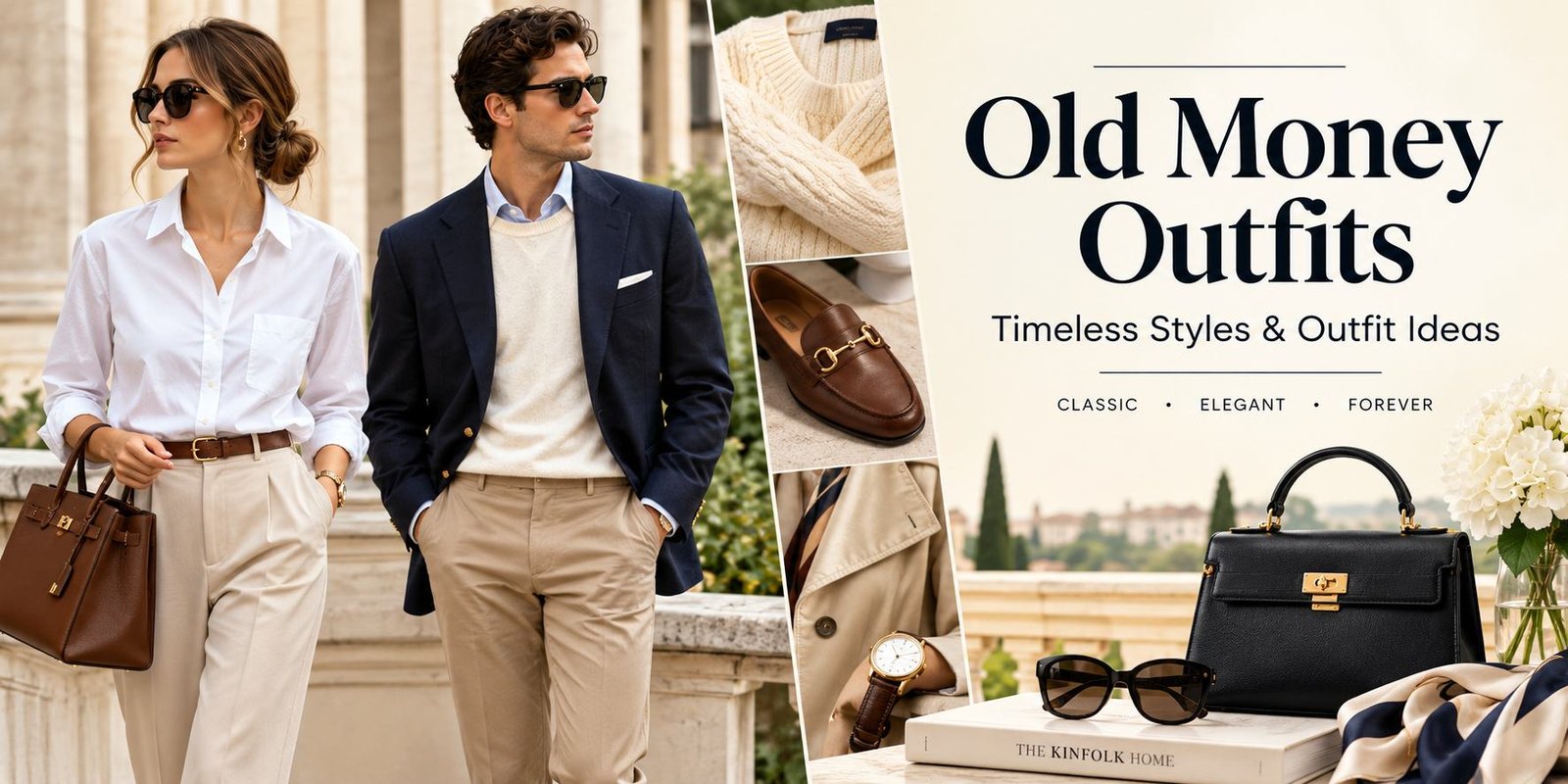
Old Money Outfits: Timeless Styles and Outfit Ideas
Fashion trends change every season. However, some clothing styles remain popular for many years. Old money outfits are a good example. This style focuses on neat clothing, classic shapes, soft colors, and simple details. Instead of following every new trend, it builds a wardrobe around pieces that look good year after year.
You do not need expensive clothes to create this look. In fact, the right fit, clean design, and careful color choices matter more than a famous label. A well-fitted shirt, straight-leg trousers, and simple loafers can create a polished outfit without a large budget.
In this guide, you will learn what old money outfits are, which clothes help create this style, and how to wear them in different seasons. You will also find outfit ideas, color tips, shoe choices, and ways to build a classic wardrobe.
What Are Old Money Outfits?
Old money outfits are based on a classic and refined way of dressing. The style takes ideas from traditional wardrobes that favor quality, simple designs, and clothes that last. It often includes items such as blazers, button-down shirts, knit sweaters, tailored pants, and leather shoes.
The main goal is to look neat without wearing too many bold details. For example, a cream sweater with navy trousers can create a clean and balanced outfit. A simple leather belt and loafers can complete the look.
This style is also linked with quiet luxury. Both favor simple designs and good materials. However, old money fashion often uses a more traditional look, while quiet luxury can include modern shapes and newer styles.
Key Features of Old Money Style
A few basic features help define this look. You can use them when choosing clothes or planning an outfit.
1. Classic Clothing
Old money fashion relies on pieces that do not go out of style quickly. These include white shirts, wool coats, blazers, straight-leg pants, and simple dresses.
Rather than buying clothes for one season, choose items that work in many ways. This makes it easier to create outfits without filling your closet with clothes you rarely wear.
2. Neutral Colors
Soft and neutral shades are common in this style. White, cream, beige, navy, gray, brown, and black are useful choices.
These colors also work well together. For example, you can pair beige trousers with a white shirt or wear a navy sweater with cream pants. As a result, you can create many outfits from a small group of clothes.
3. Good Fit
Fit is one of the most important parts of a polished outfit. Clothes should feel comfortable and sit well on your body.
A blazer should allow easy movement. Likewise, trousers should have the right length and should not feel too tight. Even an affordable outfit can look smart when each piece fits well.
4. Simple Details
This style does not need large logos, bright prints, or too many accessories. Instead, it uses small details to create a neat finish.
For example, a clean watch, a slim belt, or a simple pair of earrings can add a little interest. The goal is to keep the outfit balanced.
Old Money Outfits for Women
Women can create this style with dresses, skirts, trousers, shirts, and knitwear. The best part is that many of these pieces can be worn for work, lunch, travel, or casual events.
Button-Down Shirt and Tailored Pants
A white or light blue button-down shirt is a useful wardrobe item. Pair it with beige, black, or navy tailored pants for a clean look.
You can tuck in the shirt and add a simple belt. For footwear, choose loafers, ballet flats, or low heels. This outfit works well for lunch, office days, and casual meetings.
Knit Sweater and Straight-Leg Jeans
For a relaxed outfit, wear a plain knit sweater with straight-leg jeans. Choose dark blue or light blue denim without heavy rips or large designs.
In addition, you can add a leather belt and simple flats. This combination feels comfortable while still looking neat.
Blazer and Wide-Leg Trousers
A well-fitted blazer can make a basic outfit look more polished. Wear it with a plain top and wide-leg trousers.
For a balanced look, choose colors such as black, cream, gray, or navy. You can finish the outfit with loafers or simple heels.
Classic Midi Dress
A plain midi dress is another good choice. Look for a clean shape, a modest neckline, and a fabric that falls well.
You can wear it with flats during the day. For an evening event, add a small bag and simple jewelry. However, avoid adding too many bold pieces at once.
Old Money Outfits for Men
Men can build this look with basic shirts, trousers, sweaters, jackets, and classic shoes. These clothes are easy to mix and can suit many settings.
Polo Shirt and Chinos
A plain polo shirt with chinos is a simple everyday outfit. Choose white, navy, beige, or light blue for the shirt.
Next, pair it with clean loafers or simple leather sneakers. This outfit is a good choice for a casual lunch, a day out, or a relaxed gathering.
Oxford Shirt and Tailored Trousers
An Oxford shirt gives an outfit a neat and classic feel. Wear it with tailored trousers in gray, navy, or beige.
You can leave the shirt untucked for a relaxed look, as long as the length is right. For a smarter finish, tuck it in and add a leather belt.
Sweater Over a Shirt
Layering is a useful part of classic dressing. Put a crew-neck or V-neck sweater over a button-down shirt. Let the collar sit neatly above the sweater.
This outfit works well with chinos or wool trousers. Also, you can add loafers or simple leather shoes to complete it.
Blazer with a Plain Shirt
A blazer can make an outfit look more formal without being too dressy. Pair a navy or gray blazer with a plain shirt and tailored pants.
For a casual event, wear loafers. On the other hand, choose leather dress shoes when the event calls for a smarter look.
Old Money Summer Outfits
Summer clothing should feel light and comfortable. Therefore, choose breathable fabrics and relaxed fits while keeping the overall look neat.
For women, linen trousers with a cotton shirt make a simple warm-weather outfit. A light midi dress or a plain skirt with a fitted top can also work well.
Men can wear linen shirts, cotton polo shirts, chinos, and lightweight trousers. A simple pair of loafers or clean leather sandals can finish the outfit.
Light colors are useful during hot weather. Cream, white, pale blue, beige, and soft gray can help create a fresh look. Still, you do not need to wear only light shades. Navy and brown can also work well when balanced with lighter pieces.
Old Money Winter Outfits
Cold weather gives you more ways to use layers. Wool coats, knit sweaters, scarves, and tailored trousers are useful choices.
Women can wear a long wool coat over a sweater and straight-leg trousers. Add boots and a simple leather bag for a complete outfit.
For men, a wool coat over a sweater and button-down shirt creates a classic winter look. Pair it with dark trousers and leather boots.
In addition, choose warm fabrics that feel comfortable. Wool, cashmere blends, thick cotton, and quality knitwear can help you stay warm while keeping the outfit smart.
Best Colors for Old Money Fashion
Color choice plays an important role in this style. Neutral shades are easy to match, so they help you create more outfits with fewer pieces.
Here are some useful colors:
- White: Works well with trousers, shirts, dresses, and knitwear.
- Cream: Gives outfits a soft and warm look.
- Beige: Pairs easily with white, brown, navy, and black.
- Navy: A classic choice for blazers, trousers, sweaters, and coats.
- Gray: Works well for formal and casual clothing.
- Brown: Adds warmth to shoes, belts, bags, and coats.
- Black: A simple option for dresses, trousers, shoes, and outerwear.
You can also add soft shades of green or pale blue. However, keep the color mix simple so the outfit does not feel too busy.
Best Fabrics for a Classic Look
Fabric can change how an outfit looks and feels. For this reason, it is worth checking the material before buying clothes.
Cotton
Cotton is comfortable and easy to wear. It works well for shirts, polo shirts, T-shirts, and casual trousers.
Linen
Linen is a popular choice for warm weather. It feels light and allows air to move through the fabric. However, linen can wrinkle easily, so a slightly relaxed look is part of its appeal.
Wool
Wool is useful for colder days. You can find it in coats, sweaters, trousers, and suits. It also helps create a structured look.
Cashmere
Cashmere feels soft and light. It is often used for sweaters, scarves, and other knitwear. If it is outside your budget, a well-made wool or cotton sweater can still work.
Leather
Leather is common in shoes, belts, and bags. A simple leather item can add a classic touch to an outfit. You do not need a large collection; one or two useful pieces may be enough.
Shoes That Match Old Money Outfits
Shoes can change the feel of an outfit. Classic shapes and clean designs are usually the best match.
Women can choose loafers, ballet flats, low heels, ankle boots, and simple sandals. These styles work with dresses, skirts, jeans, and tailored pants.
Men can wear leather loafers, Oxford shoes, Derby shoes, or simple sneakers. For casual outfits, clean sneakers can work well. For formal settings, leather shoes are often a better choice.
Keep your shoes clean and in good condition. Even a simple pair can look smart when cared for properly.
Bags and Accessories
Accessories should support the outfit rather than take attention away from it. Simple designs are often the easiest to style.
Women may choose a structured handbag, a small shoulder bag, or a simple leather tote. Men can use a clean leather belt, a classic watch, or a neat work bag.
Jewelry should also stay simple. Small earrings, a thin necklace, or a plain bracelet can add a finishing touch. Similarly, a watch can work with both casual and formal clothing.
You do not need to wear every accessory at once. Choose a few pieces that match the clothes and the occasion.
Wardrobe Essentials for Old Money Style
You can start building this wardrobe with a small number of useful items. These pieces are easy to combine and can work across different seasons.
Consider adding:
- A white button-down shirt
- A light blue shirt
- A navy or gray blazer
- Beige or black tailored trousers
- Straight-leg jeans
- A plain knit sweater
- A classic midi dress
- A wool or trench coat
- A pair of loafers
- Simple leather shoes or flats
- A neutral handbag or work bag
- A plain leather belt
You do not have to buy everything at once. Instead, start with the items you will wear most often. Then add other pieces as your needs change.
How to Create Old Money Outfits on a Budget
You can follow this style without spending a lot of money. The key is to shop with care and choose clothes that offer good value.
First, make a list of the items you need. This can stop you from buying clothes that look nice in a store but do not match anything you own.
Next, compare fabric, fit, and quality. Check the stitching, buttons, zippers, and lining. A simple shirt with neat stitching may be a better choice than a costly item with poor construction.
You can also explore secondhand stores and resale websites. These places may offer classic coats, blazers, bags, and shoes at lower prices. However, check the condition before buying.
Finally, take care of your clothes. Follow washing instructions, store knitwear properly, and repair small issues when possible. As a result, your wardrobe can last longer.
Common Old Money Style Mistakes
A few simple mistakes can make this style harder to achieve. Keep these points in mind when planning your outfits.
Buying Clothes Only for the Brand
A famous label does not always mean a better outfit. Focus on fit, fabric, and design instead of the name on the tag.
Wearing Too Many Accessories
Too many watches, chains, belts, and other items can make an outfit look crowded. Choose a few simple pieces instead.
Choosing the Wrong Fit
Clothes that are too tight or too loose may not create the clean look you want. Try different sizes and choose the one that feels comfortable and looks balanced.
Using Too Many Bright Colors
Bright colors are not wrong, but several strong shades can make the outfit feel less classic. Start with neutral colors and add one small color detail if you like.
Ignoring Clothing Care
Wrinkled shirts, dirty shoes, and damaged bags can affect the whole outfit. Keep your clothes clean and store them with care.
Frequently Asked Questions
Are Old Money Outfits Still in Style?
Yes. Classic clothing remains useful because it does not depend on short-term trends. Many people also like this style because it offers simple ways to dress neatly.
Can You Wear Old Money Fashion Without Expensive Brands?
Yes. You can create this look with affordable clothes. Choose simple designs, good fit, and colors that work well together. A high price or famous logo is not required.
What Colors Are Best for Old Money Outfits?
White, cream, beige, navy, gray, brown, and black are common choices. These shades are easy to mix and work across many seasons.
What Shoes Should You Wear with Old Money Outfits?
Loafers, ballet flats, Oxford shoes, Derby shoes, low heels, and simple leather boots are useful options. Choose footwear that suits the outfit and the occasion.
Is Old Money Style the Same as Quiet Luxury?
They are related, but they are not exactly the same. Both focus on simple designs and quality. However, old money style often uses traditional clothing, while quiet luxury can include more modern shapes and styles.
Can Younger People Wear Old Money Outfits?
Yes. Anyone can wear this style. You can adjust it to your age, comfort, and daily needs. For example, jeans, a polo shirt, and loafers can create a relaxed version of the look.
How Do I Start Building an Old Money Wardrobe?
Begin with a few basic items, such as a white shirt, tailored trousers, a blazer, a knit sweater, and classic shoes. After that, add pieces that match your lifestyle and budget.
Final Thoughts
Old money outfits offer a simple way to create a neat and timeless wardrobe. The style uses classic clothing, neutral colors, clean shapes, and small details. As a result, you can build outfits that work for many occasions without chasing every new trend.
You do not need expensive labels to get started. Instead, choose clothes that fit well, feel comfortable, and match the rest of your wardrobe. Start with a few useful pieces, take care of them, and build your own version of this classic style over time.


One Comment