
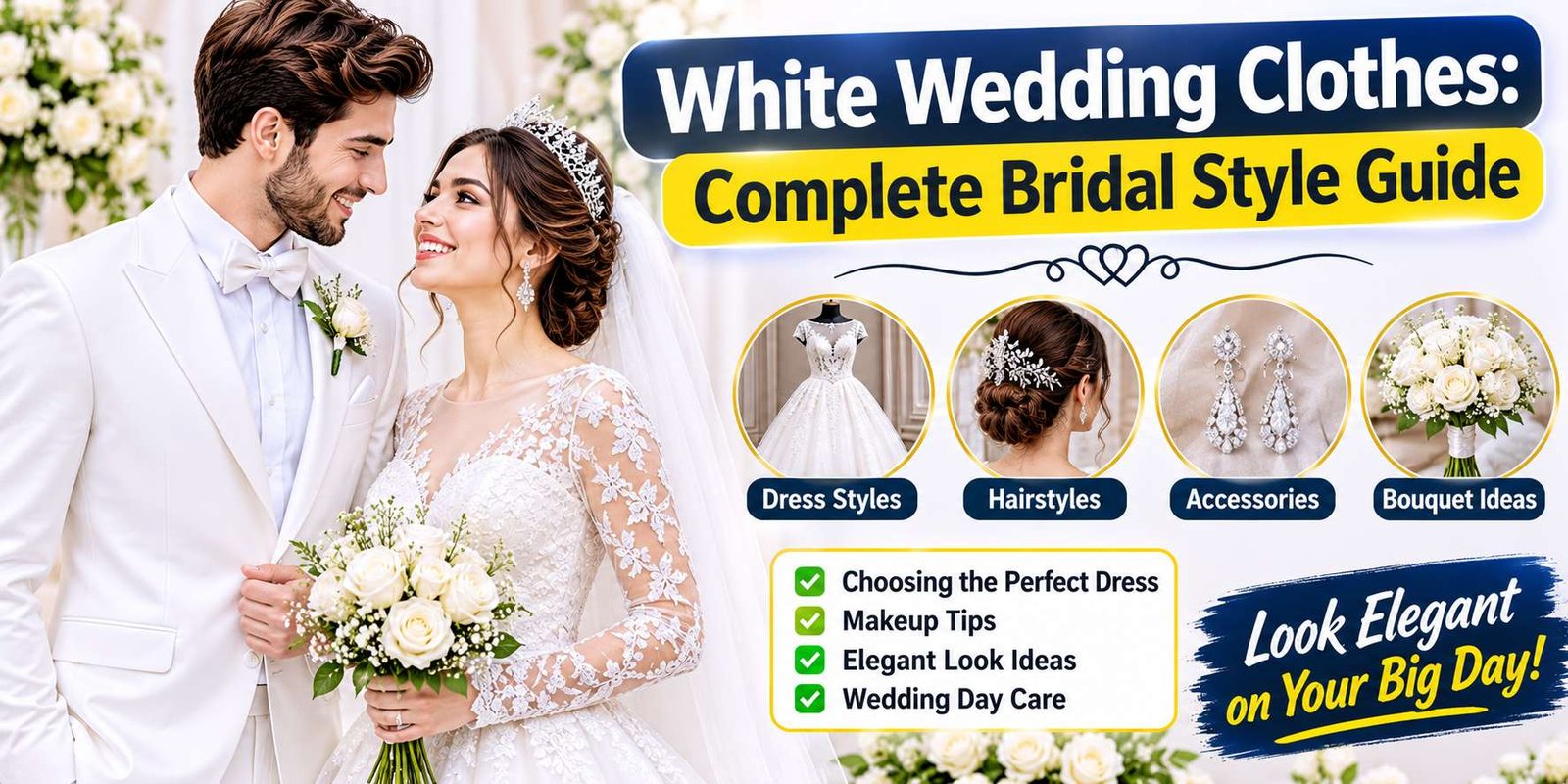
White Wedding Clothes: Complete Bridal Style Guide
White wedding clothes have remained one of the most recognizable choices for bridal celebrations. From classic white gowns to modern separates, tailored suits, flowing dresses, and minimalist bridal outfits, white offers a timeless foundation for many wedding styles. The right white wedding clothes can reflect a bride’s personality while also matching the venue, season, ceremony, and overall wedding theme.
Although traditional bridal fashion often focuses on one long white wedding dress, today’s choices are much broader. Brides can choose from different silhouettes, fabrics, necklines, sleeve designs, lengths, and decorative details. Some prefer a traditional ball gown, while others may feel more comfortable in a simple sheath dress, a sleek column gown, or a contemporary two-piece outfit.
This guide explores the most popular types of white wedding clothes, ways to choose the right style, fabric options, accessories, seasonal ideas, and practical tips for creating a polished bridal look.
What Are White Wedding Clothes?
White wedding clothes refer to bridal garments designed primarily in white or closely related shades such as ivory, cream, pearl, soft white, and off-white. The term can include traditional wedding gowns as well as modern bridal separates, jumpsuits, suits, skirts, tops, and reception outfits.
White is associated with weddings in many Western fashion traditions, but modern bridal fashion is not limited to one specific shade. Brides can select a tone that complements their complexion, personal style, venue, and wedding decorations.
For example, a bright white gown can create a crisp and formal appearance. Ivory may offer a softer and warmer effect, while champagne or cream can produce a more vintage-inspired look.
The most important factor is not simply choosing white. It is finding a bridal outfit that makes the wearer feel comfortable, confident, and appropriately dressed for the occasion.
Why White Wedding Clothes Remain Popular

White bridal clothing has a strong connection with traditional wedding fashion. However, its popularity also comes from practical fashion advantages.
Timeless Appearance
White has a clean and elegant appearance that does not depend heavily on short-lived fashion trends. A well-designed white gown can still look beautiful in wedding photographs many years later.
Easy to Style
Neutral bridal clothing provides a flexible foundation for accessories. Brides can add pearls, metallic jewelry, embroidered details, lace, crystals, bows, veils, or colorful flowers without creating a difficult color combination.
Works With Many Wedding Themes
White can complement a wide range of wedding settings. It can look sophisticated in a ballroom, romantic in a garden, relaxed at a beach ceremony, or modern in an urban venue.
Wide Range of Shades
Modern bridal collections offer more than pure white. Ivory, warm white, soft cream, pearl, and other subtle variations allow brides to choose a tone that fits their overall look.
Different Types of White Wedding Dresses
There is no single style that works for every bride. Understanding common silhouettes can make the shopping process much easier.
Ball Gown
A ball gown usually features a fitted bodice with a dramatic, full skirt. It creates a traditional and formal bridal appearance.
This style can work particularly well for large ceremonies and elegant venues. Brides who enjoy a statement-making silhouette may appreciate the volume and movement of a ball gown.
A-Line Wedding Dress
An A-line dress gradually widens from the waist toward the hem. The shape is versatile and can suit many different wedding settings.
Because it balances structure and movement, the A-line silhouette is one of the easiest styles to adapt to different fabrics and decorative details.
Mermaid Dress
A mermaid gown closely follows the body before expanding near the lower part of the dress. It creates a dramatic silhouette and can be especially suitable for formal evening weddings.
When choosing this style, comfort and movement should be considered because the fitted shape may feel more restrictive than a relaxed silhouette.
Sheath Dress
A sheath wedding dress follows a relatively straight line from the neckline toward the hem. It has a streamlined appearance and works well for brides who prefer understated elegance.
Minimal decoration can make a sheath dress look modern, while lace or embroidery can give it a more romantic character.
Column Dress
A column gown has a long, narrow shape with less volume than a traditional ball gown. It is a strong choice for a contemporary bridal wardrobe.
Simple column dresses can also work well for courthouse weddings, destination ceremonies, and smaller celebrations.
Tea-Length Dress
Tea-length bridal dresses usually finish around the lower leg rather than reaching the floor. They can provide a playful and vintage-inspired alternative to a traditional gown.
This length may also be practical for informal ceremonies or receptions where easy movement is important.
Choosing White Wedding Clothes for Different Body Shapes
The best bridal outfit is not determined by a single body type. Instead, the goal should be to find a silhouette that feels comfortable and highlights the features the bride wants to emphasize.
For a Defined Waist
A-line and ball gown styles can draw attention toward the waist before creating volume through the skirt.
For a Minimalist Look
Column and sheath silhouettes can create a clean, uninterrupted line. They are particularly suitable for brides who prefer simple styling.
For Dramatic Curves
Mermaid and fit-and-flare designs can emphasize the natural shape of the body. Structured fabrics may provide additional support.
For Petite Brides
A streamlined silhouette can prevent the outfit from visually overwhelming the wearer. A high waistline or a less bulky skirt can also create a longer-looking proportion.
For Brides Who Prefer More Coverage
Long sleeves, higher necklines, removable sleeves, capes, and structured bodices offer ways to create additional coverage without sacrificing style.
The most important rule is to avoid choosing a dress simply because it is considered flattering for a particular body type. Personal comfort and individual preference matter just as much.
How to Choose the Right White Wedding Outfit
Selecting the right bridal outfit involves more than liking the appearance of a dress on a hanger.
Consider the Wedding Venue
The venue should influence the structure and fabric of the outfit.
A heavily decorated gown may suit a formal indoor celebration, while a lightweight dress can be more comfortable for a warm outdoor ceremony.
For a beach wedding, breathable fabrics and simple silhouettes can make movement easier. A ballroom celebration may call for more structure, volume, or embellishment.
Think About the Season
Seasonal weather can influence fabric and sleeve choices.
For summer weddings, lightweight fabrics can help maintain comfort. During cooler months, brides can consider long sleeves, heavier fabrics, bridal capes, or layered accessories.
Spring and fall weddings provide opportunities for medium-weight fabrics and removable layers.
Match Your Personal Style
A wedding outfit should feel like an extension of the bride’s personality.
Someone who normally wears minimalist clothing may feel uncomfortable in an extremely embellished gown. Likewise, a bride who enjoys glamorous fashion may want sparkle, texture, embroidery, or dramatic volume.
Consider the Full Day
The ceremony is only one part of the wedding. Brides may also need to walk, sit, dance, greet guests, take photographs, and move between different locations.
An outfit that looks beautiful but becomes uncomfortable after an hour may not be the best choice.
Best Fabrics for White Wedding Clothes
Fabric can dramatically change the appearance and feel of a bridal outfit.
Satin
Satin has a smooth surface and subtle shine. It can create a polished and sophisticated appearance, especially in structured silhouettes.
Chiffon
Chiffon is lightweight and fluid. It is useful for soft skirts, sleeves, overlays, and flowing wedding dresses.
Lace
Lace adds texture and romantic detail. It can cover an entire gown or appear as a decorative element on sleeves, bodices, backs, or hems.
Tulle
Tulle is commonly used for veils and voluminous skirts. Multiple layers can create a light, airy effect.
Crepe
Crepe usually has a smooth, matte appearance and can work particularly well for modern, minimalist bridal designs.
Organza
Organza offers structure while maintaining a lightweight appearance. It can add volume to skirts and decorative details without looking as heavy as some traditional fabrics.
White Wedding Clothes for Different Wedding Styles
The wedding theme can help narrow down clothing choices.
Classic Wedding
A traditional wedding may suit a floor-length white gown, elegant veil, classic jewelry, and refined accessories.
Modern Wedding
A contemporary ceremony can provide an opportunity to experiment with clean tailoring, square necklines, minimalist dresses, jumpsuits, or two-piece bridal outfits.
Garden Wedding
Soft fabrics, floral details, flowing skirts, and delicate lace can work beautifully in an outdoor garden setting.
Beach Wedding
A beach ceremony often benefits from lightweight and breathable clothing. Simple silhouettes and minimal layers can make walking on sand easier.
Vintage Wedding
Vintage-inspired white wedding clothes can include lace, tea-length skirts, long sleeves, delicate buttons, or retro-inspired necklines.
Courthouse Wedding
A courthouse ceremony does not require a traditional floor-length gown. A short white dress, tailored suit, jumpsuit, or simple midi dress can create an elegant and practical look.
Accessories to Wear With White Wedding Clothes
Accessories can transform even a simple white outfit.
Veils
A veil remains one of the most recognizable bridal accessories. Its length and design can be matched with the dress silhouette.
Jewelry
Pearls, diamonds, crystals, and simple metallic jewelry can complement white clothing. However, the jewelry should not compete with heavily decorated dresses.
Shoes
White, ivory, nude, metallic, or subtle colored shoes can work with bridal clothing. Comfort should be considered because wedding days often involve long periods of standing and walking.
Belts
A narrow bridal belt can define the waist and add a small decorative detail to a minimalist dress.
Hair Accessories
Combs, pins, bows, tiaras, and floral accessories can add personality to a bridal hairstyle.
Bridal Bags
A small clutch can be useful for carrying essentials during the reception. It should complement the outfit rather than distract from it.
White Wedding Clothes for Bridesmaids and Guests
White clothing is not always limited to the bride. Some modern weddings use white or neutral clothing for bridesmaids, depending on the couple’s preferences.
Bridesmaids might wear different silhouettes in the same shade, allowing each person to choose a comfortable shape while maintaining a coordinated appearance.
For wedding guests, however, wearing white requires more consideration. Many wedding traditions treat white as the bride’s primary color. Unless the invitation or couple specifically allows white attire, guests may want to choose another color.
If a wedding has a specific dress code, that instruction should take priority over general fashion rules.
Modern Ways to Style White Wedding Clothes
Modern bridal fashion gives brides more freedom to combine traditional and contemporary elements.
Add a Statement Bow
A large bow can give a simple gown a fashionable focal point. It can be placed at the back, waist, shoulder, or neckline.
Try a Bridal Suit
A white tailored suit can provide a polished alternative to a traditional dress. It can be particularly suitable for civil ceremonies, second looks, or reception outfits.
Choose a Two-Piece Outfit
A crop top and skirt or coordinated bridal separates can offer flexibility. Individual pieces can potentially be reused after the wedding.
Use a Dramatic Cape
A bridal cape can create a striking effect while providing an alternative to a traditional veil.
Change Into a Reception Outfit
Some brides choose a traditional ceremony dress and a lighter reception outfit. A short dress, jumpsuit, or sleek second look can make dancing and movement easier.
Common Mistakes to Avoid
Choosing white wedding clothes can be exciting, but several mistakes are worth avoiding.
Choosing Style Over Comfort
A beautiful outfit can become frustrating if it is too tight, too heavy, or difficult to move in.
Ignoring the Venue
A heavily structured dress may not be practical for a casual outdoor celebration. Similarly, an extremely relaxed outfit may not match a highly formal venue.
Waiting Too Long for Alterations
Even a well-fitting wedding dress may require alterations. Brides should allow enough time for adjustments and final fittings.
Overloading Accessories
A heavily embellished gown may already provide enough visual interest. Too many accessories can make the overall look feel crowded.
Forgetting the Shoes
Shoes affect posture, comfort, and the final length of the dress. They should be considered during alterations.
Focusing Only on Trends
Fashion trends can be inspiring, but a wedding outfit should also feel personally meaningful. A timeless design can remain appealing long after the wedding day.
How to Care for White Wedding Clothes
White clothing requires careful handling because marks and stains can be more visible.
Before the wedding, keep the garment in a clean, breathable garment bag and store it away from makeup, food, pets, and other potential sources of stains.
During the event, be mindful of outdoor surfaces, drinks, and cosmetics. If a stain occurs, avoid aggressive rubbing unless the fabric’s care instructions allow it.
After the wedding, professional cleaning may be appropriate depending on the fabric and embellishments. The garment should then be stored according to professional preservation recommendations.
Frequently Asked Questions About White Wedding Clothes
Are white wedding clothes only suitable for traditional weddings?
No. White bridal clothing can work for traditional, modern, minimalist, outdoor, beach, courthouse, and destination weddings. The silhouette, fabric, and accessories can be adjusted to match the event.
Is ivory considered a white wedding color?
Yes. Ivory is commonly used in bridal fashion and is often considered a softer alternative to bright white.
Can a bride wear a white suit instead of a dress?
Absolutely. A tailored white suit can create a sophisticated bridal look, particularly for civil ceremonies, modern weddings, or a second reception outfit.
What accessories look good with white bridal clothing?
Veils, pearls, metallic jewelry, hair accessories, belts, bridal shoes, and small bags can all complement white clothing. The best choices depend on the dress design.
Can wedding guests wear white?
This depends on the couple and the wedding’s dress code. Traditionally, guests are often advised to avoid white because it is associated with the bride. When in doubt, choosing another color is usually the safer option.
Final Thoughts
White wedding clothes offer an enormous range of possibilities for modern brides. A traditional ball gown, a simple sheath dress, an elegant A-line design, a tailored suit, or a contemporary two-piece outfit can all create a beautiful bridal appearance.
The best choice depends on personal style, comfort, venue, season, fabric, silhouette, and the overall wedding atmosphere. Instead of following every bridal trend, consider what feels authentic and practical for the entire celebration.
A thoughtfully chosen white wedding outfit can combine tradition with individuality. With the right silhouette, fabric, accessories, and styling details, white bridal fashion can create a memorable look that feels both personal and timeless.


One Comment