
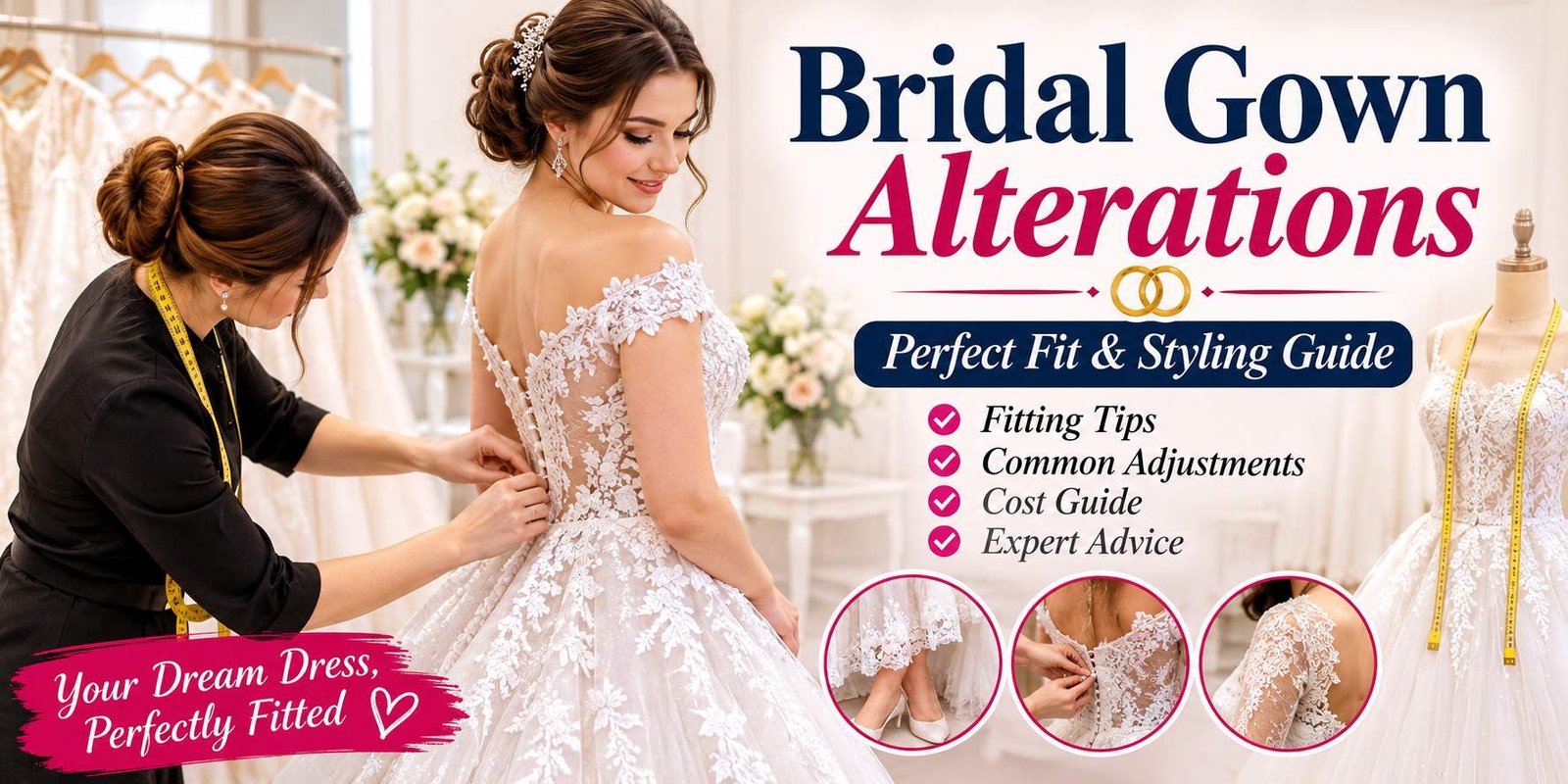
Bridal Gown Alterations: Perfect Fit & Styling Guide
Bridal gown alterations involve adjusting a wedding dress to suit the bride’s measurements, preferences, and desired appearance. These changes may include shortening the hem, adjusting the waist, reshaping the neckline, modifying sleeves, or improving the overall structure of the dress.
Every bride has different preferences, body proportions, and comfort requirements. A gown that looks beautiful on a mannequin may need several adjustments before it feels comfortable and looks balanced when worn.
Whether you have purchased a traditional wedding dress, a modern bridal gown, or a customized designer outfit, understanding the alteration process can help you prepare for your wedding day with confidence.
This guide explains the importance of bridal gown alterations, common adjustment types, fitting schedules, costs, fabric considerations, and practical tips for achieving a beautiful final look.
What Are Alterations for Bridal Gowns?
Alterations for bridal gowns are professional adjustments made to a wedding dress to improve its fit, structure, and overall appearance.
Unlike ordinary clothing adjustments, bridal alterations often require specialized tailoring skills because wedding dresses may contain delicate fabrics, decorative embroidery, lace, beads, sequins, corsetry, and multiple layers.
A professional bridal tailor examines the dress and determines which changes are necessary without damaging its original design.
Common bridal gown alterations include:
- Adjusting the waist and bodice
- Shortening or lengthening the hem
- Reshaping the neckline
- Modifying sleeves and straps
- Adding or removing decorative details
- Adjusting the bust area
- Improving the dress train
- Adding a bustle for easier movement
The purpose is not necessarily to change the original design. Instead, alterations help the dress fit naturally and allow the bride to move comfortably throughout the celebration.
Why Bridal Gown Alterations Are Important
A wedding dress is usually worn during several activities, including walking, standing, sitting, taking photographs, and dancing. Proper fitting can make these activities easier.
1. Achieving the Right Fit
Wedding dresses are commonly produced in standard sizes. However, individual measurements rarely match every part of a standard size perfectly.
For example, a bride may need a different adjustment around the waist than around the bust.
Professional tailoring can improve the fit of these areas and create a more balanced silhouette.
2. Improving Comfort
A dress that is too tight may restrict movement, while loose straps or a poorly fitted bodice may require constant adjustment.
Alterations can help address these problems before the wedding.
3. Enhancing the Dress Shape
Small adjustments can make a noticeable difference in the overall appearance of a wedding gown.
A properly positioned waistline, balanced hem, and correctly fitted bodice can help the original design look more polished.
4. Supporting the Original Design
Professional alterations should respect the original construction of the gown.
A skilled tailor understands how to work with delicate details while maintaining the dress’s intended appearance.
5. Making Movement Easier
Long trains, multiple skirt layers, and fitted silhouettes may create practical challenges.
Adjustments such as a bustle or carefully modified hem can make movement easier during the reception.
Common Types of Bridal Gown Alterations
Different wedding dresses require different adjustments. The following are some of the most common services offered by bridal alteration specialists.
Hem Shortening
Hem shortening is one of the most frequently requested wedding dress adjustments.
A gown that is too long may drag on the floor, become difficult to walk in, or create a tripping risk.
A tailor adjusts the hem according to the bride’s height and footwear.
During the fitting, brides should bring the shoes they plan to wear on the wedding day. This helps the tailor determine the correct dress length.
Taking In the Waist
Some bridal gowns fit correctly around the bust but feel loose around the waist.
Taking in the waist involves carefully reducing excess fabric to improve the dress’s shape.
This adjustment is especially common with fitted gowns, mermaid dresses, and structured bridal designs.
Adjusting the Bust
The bust area is important for both comfort and support.
A dress that is too loose may shift during movement, while excessive tightness can make breathing and sitting uncomfortable.
A tailor may adjust seams, cups, or internal support structures depending on the gown’s construction.
Strap Adjustments
Wedding dress straps may need shortening, lengthening, or repositioning.
Correctly adjusted straps help support the bodice and prevent unwanted movement.
This is particularly important for gowns with thin shoulder straps or off-the-shoulder designs.
Sleeve Alterations
Some brides choose to modify the sleeves of their wedding dresses.
Possible changes include:
- Shortening long sleeves
- Narrowing loose sleeves
- Adding lace sleeves
- Removing existing sleeves
- Adjusting sleeve openings
- Changing sleeve shapes
Sleeve alterations can also help transform a simple gown into a more personalized bridal outfit.
Neckline Modifications
The neckline influences the overall appearance of a wedding dress.
Depending on the fabric and construction, a tailor may be able to adjust its shape, coverage, or position.
Common neckline styles include sweetheart, square, V-neck, bateau, and illusion designs.
Because neckline changes can affect the structure of a gown, they should be discussed with an experienced bridal specialist.
Train Adjustments
A wedding dress train creates a dramatic appearance, particularly during the ceremony and photographs.
However, a long train may become difficult to manage during the reception.
A tailor can help adjust the train or add a bustle that allows it to be secured behind the dress.
Alterations Bridal Gowns for Different Dress Styles

Not every wedding dress requires the same tailoring approach. The gown’s silhouette, fabric, and construction determine which adjustments are suitable.
A-Line Wedding Dresses
A-line gowns gradually widen from the waist toward the hem.
Common alterations include waist adjustments, hem shortening, strap modifications, and bodice fitting.
Because this silhouette offers a balanced shape, it can be relatively straightforward to adjust when the construction allows.
Mermaid Wedding Dresses
Mermaid gowns closely follow the body before flaring near the lower portion.
These dresses often require careful fitting around the bust, waist, hips, and thighs.
The tailor must maintain the original proportions while ensuring that the bride can walk and sit comfortably.
Ball Gown Wedding Dresses
Ball gowns feature fitted bodices and full skirts.
Alterations may include adjusting the bodice, shortening the hem, modifying sleeves, and arranging multiple skirt layers.
The volume of the skirt can make certain adjustments more time-consuming.
Sheath Wedding Dresses
Sheath gowns have a relatively straight silhouette.
They may require adjustments along the sides, shoulders, waist, or hem.
Precise fitting is important because even small changes can affect how the dress hangs.
Lace Wedding Dresses
Lace gowns require special attention because decorative patterns may be difficult to recreate after alterations.
A professional tailor should understand how to reposition lace appliques and preserve the original design.
When Should You Start Bridal Gown Alterations?
Timing is an important part of the alteration process.
Starting too late can create unnecessary pressure, particularly when a dress requires several fittings or complicated adjustments.
Ideally, brides should begin discussing alterations approximately two to three months before the wedding, although the best schedule depends on the gown and tailor’s availability.
First Fitting
The first fitting allows the tailor to examine the gown and identify necessary changes.
The bride should bring the wedding shoes and undergarments planned for the event.
The tailor may pin excess fabric, discuss design adjustments, and estimate the work involved.
Second Fitting
During the second appointment, the bride checks the progress of the alterations.
The tailor evaluates the waist, bust, sleeves, hem, and overall balance.
Any remaining fitting issues can be discussed before the final appointment.
Final Fitting
The final fitting is used to confirm that the gown fits properly.
The bride should walk, sit, and move naturally while wearing the dress.
This helps identify any remaining discomfort or construction problems.
Some dresses may need additional appointments, especially when extensive customization is involved.
How Much Do Bridal Gown Alterations Cost?
The cost of bridal alterations varies depending on the gown, location, tailor, and amount of work required.
Simple adjustments may cost less than complex modifications involving lace, embroidery, corsetry, or multiple layers.
Factors that influence the price include:
- Type of alteration
- Fabric and dress construction
- Number of layers
- Amount of decorative detailing
- Tailor’s experience
- Local labor rates
- Urgency of the work
For example, shortening a simple skirt may require less time than adjusting a heavily embroidered ball gown.
It is a good idea to request an itemized estimate before approving the work.
Brides should also keep a separate budget for alterations when purchasing their wedding dress.
Choosing the Right Bridal Alteration Specialist
Selecting an experienced tailor is one of the most important decisions in the alteration process.
A wedding gown may contain expensive materials and delicate construction, so it should be handled carefully.
Check Previous Work
Ask to see examples of previous bridal alterations.
Photographs can help you understand the tailor’s experience with different silhouettes and fabrics.
Read Customer Reviews
Reviews can provide useful information about communication, punctuality, craftsmanship, and customer satisfaction.
Look for feedback from brides who had similar dresses altered.
Discuss Your Requirements Clearly
Explain what you want to change and what parts of the original dress you want to preserve.
Clear communication helps reduce misunderstandings.
Ask About the Timeline
Find out how many fittings will be required and when the finished gown will be ready.
Make sure the tailor has enough time to complete the work properly.
Request a Written Estimate
Ask for a breakdown of the expected charges.
This helps you understand which services are included and whether additional costs may apply.
Important Fabric Considerations During Bridal Alterations
Different fabrics respond differently to tailoring.
Understanding the material can help brides make better decisions.
Satin
Satin has a smooth surface that can show stitching marks and needle holes.
Alterations should be performed carefully to maintain a clean finish.
Chiffon
Chiffon is lightweight and delicate.
Its flowing structure requires precise handling, particularly during hem adjustments.
Lace
Lace often contains decorative patterns that must be preserved.
Removing or repositioning lace details may require additional time and specialist skills.
Tulle
Tulle is frequently used in layered skirts and veils.
Multiple layers may need to be adjusted separately to achieve an even hem.
Organza
Organza provides structure but can be delicate.
Tailors should handle its seams and edges carefully to maintain the original shape.
Crepe
Crepe has a smooth, flowing appearance and is often used in modern bridal gowns.
Precise stitching is important because visible marks can affect the final finish.
Can You Change the Design of a Wedding Dress?
Yes, certain wedding dress designs can be modified.
However, the possibilities depend on the original construction, available fabric, and tailor’s skills.
Some brides choose to add sleeves, change necklines, adjust skirt volume, add lace, or create a different back design.
Others prefer smaller changes that maintain the original appearance.
Major structural modifications should be discussed before work begins.
A professional tailor can explain which changes are realistic and which might affect the dress’s balance or durability.
Bridal Gown Alterations Before and After: What Changes Matter Most?
A well-executed alteration does not always need to be dramatic.
Sometimes small adjustments produce the biggest improvements.
For example, correcting the hem can make a long gown easier to walk in. Adjusting the bodice can improve support, while modifying the waist can help the dress follow the intended silhouette.
The goal is to make the dress look naturally fitted rather than visibly reconstructed.
Before approving the final work, check the gown from different angles and make sure the changes look balanced.
How to Prepare for Your Bridal Fitting
Preparation can make each appointment more productive.
Consider following these practical steps:
- Bring the shoes you intend to wear during the wedding.
- Wear suitable bridal undergarments.
- Bring photographs showing your preferred final appearance.
- Discuss comfort concerns with the tailor.
- Explain whether you plan to change outfits during the reception.
- Ask about the care requirements of the fabric.
- Allow sufficient time for additional adjustments.
It is also useful to take photographs during fittings so you can compare different adjustments.
Common Bridal Alteration Mistakes to Avoid
Even when working with an experienced tailor, proper planning is important.
Waiting Until the Last Minute
Late alterations may limit the time available for additional fittings.
Start early enough to allow for unexpected changes.
Buying the Wrong Size
Choosing a dress that is significantly too small can make alterations difficult or expensive.
It is usually easier to adjust a gown that has some extra fabric than one with insufficient material.
Ignoring Wedding Shoes
Changing shoe height after the final hem adjustment may affect the dress length.
Always use your planned wedding footwear during fittings.
Making Too Many Design Changes
Multiple structural changes can increase costs and may affect the original appearance.
Focus on adjustments that genuinely improve fit and comfort.
Skipping the Final Fitting
Never assume that the dress will fit perfectly simply because earlier adjustments looked correct.
A final fitting provides an opportunity to check the completed work.
How to Maintain Your Wedding Dress After Alterations
Once the gown has been adjusted, proper storage and handling are essential.
Keep it in a clean, breathable garment bag and store it away from direct sunlight, moisture, and potential stains.
Avoid placing heavy objects on top of the dress.
If the gown contains delicate lace, beads, or embroidery, follow the tailor’s or cleaner’s care instructions.
After the wedding, consider professional cleaning and preservation if you want to keep the dress for future use.
Frequently Asked Questions About Bridal Gown Alterations
How long do bridal gown alterations take?
The timeline depends on the dress and the amount of work required. Simple adjustments may take less time, while extensive changes involving detailed fabrics and structural modifications may require several weeks.
How many fittings does a wedding dress need?
Many gowns require approximately two to three fittings, although complex alterations may need additional appointments.
Can a wedding dress be made smaller?
Yes. A professional tailor can often take in a gown, depending on its construction, seam allowance, and available fabric.
Can a wedding dress be made bigger?
Sometimes. A tailor may use existing seam allowances or add matching fabric or decorative panels. However, the possibilities depend on the original gown.
Should I buy my wedding shoes before alterations?
Yes. Bringing your intended wedding shoes to the fitting helps the tailor establish the correct hem length.
Can lace wedding dresses be altered?
Yes. Lace gowns can be altered by specialists who understand how to preserve the decorative patterns and reposition appliques.
Are bridal gown alterations expensive?
Costs vary according to the type of work, fabric, construction, and location. Requesting a written estimate before starting is recommended.
Final Thoughts
Alterations bridal gowns are an important part of preparing for a wedding because the right adjustments can improve fit, comfort, and overall appearance.
From shortening the hem and adjusting the bodice to modifying sleeves and securing a long train, professional tailoring can help transform a beautiful wedding dress into a gown that feels personally designed for the bride.
Planning early, choosing an experienced specialist, attending every fitting, and communicating clearly can make the process much easier.
Ultimately, the perfect bridal gown is not simply about its designer, price, or latest fashion trend. It is about finding a dress that fits comfortably, reflects personal style, and allows the bride to enjoy every moment of her special day.


3 Comments