
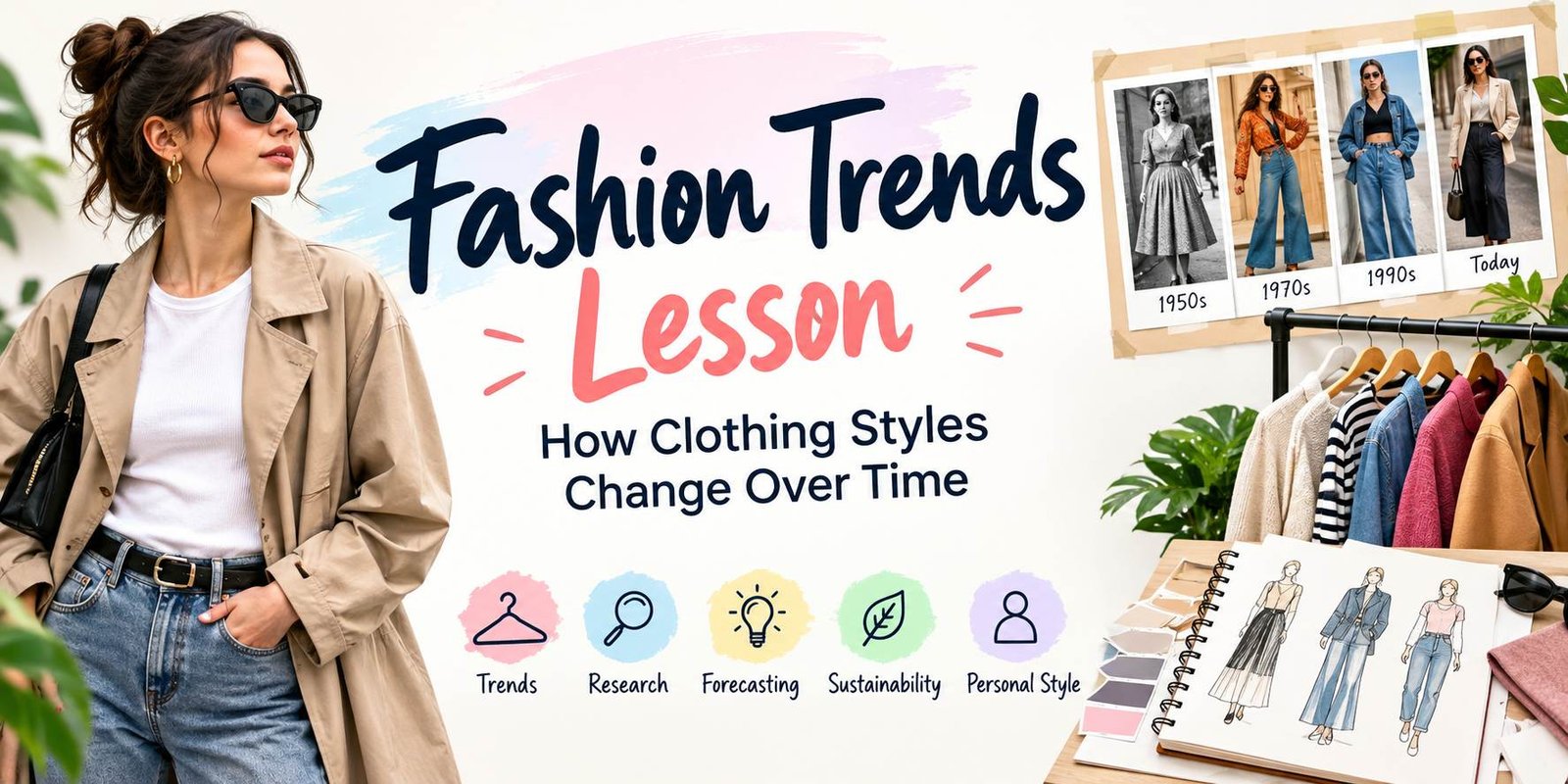
Fashion Trends Lesson: How Clothing Styles Change Over Time
A Fashion Trends Lesson helps us understand why clothing styles change and how people decide what to wear. Fashion is more than buying new clothes or following popular looks. It reflects personal taste, culture, technology, creativity, and changes in everyday life.
Think about the clothes people wore ten or twenty years ago. Some styles have returned, while others have changed to suit modern needs. Loose jeans, vintage jackets, simple sneakers, and classic accessories are examples of items that can become popular again in new ways.
Learning about fashion trends helps students, designers, bloggers, and everyday shoppers understand these changes. It also teaches people how to recognize new styles without copying every popular look. In this guide, we will explore how trends begin, how they spread, and how anyone can study fashion in a practical way.
What Is a Fashion Trends Lesson?
A Fashion Trends Lesson is a learning activity that explains how clothing preferences develop and change. It looks at the reasons certain colors, fabrics, shapes, and accessories become popular during a particular period.
For example, a Fashion Trends Lesson might compare everyday outfits from the early 2000s with clothing that people wear today. Students could notice differences in jeans, shoes, bags, prints, and the way outfits are combined.
The purpose is not to decide which decade had the best fashion. Instead, learners explore how social habits, cultural influences, and personal choices affect clothing.
A useful lesson may cover:
- The meaning of a fashion trend
- The difference between trends and personal style
- The influence of music, film, and online content
- Seasonal changes in clothing
- The role of designers and fashion businesses
- The impact of trends on the environment
- Ways to develop an individual look
These topics make fashion easier to understand. They also help learners make thoughtful choices instead of treating every new trend as a rule.
Why Fashion Trends Change Over Time
Fashion changes because people, lifestyles, and cultural interests do not remain the same. Clothing must also respond to weather, comfort, work, social events, and changing ideas about appearance.
Several influences help explain why a style becomes popular.
Culture and Everyday Life
Culture has a strong connection with clothing. Traditional garments, local crafts, community celebrations, and historical designs can inspire modern outfits.
Everyday routines matter too. When people need comfortable clothes for travel, work, or study, practical designs may receive more attention. At other times, people may prefer formal clothing, decorative details, or bold statement pieces.
These preferences can influence what stores offer and what designers create.
Music, Films, and Entertainment
Entertainment often introduces audiences to distinctive clothing ideas. A character in a popular film might wear a memorable jacket, while a musician may become known for unusual shoes or colorful outfits.
Fans sometimes adapt these looks to suit their own budgets and lifestyles. They might choose a similar color, search for secondhand clothing, or combine one inspired item with clothes they already own.
However, inspiration does not mean every viewer will follow the same look. People select details that fit their own preferences.
Technology and Online Communities
Digital platforms have made fashion ideas easier to discover. A person can see an outfit from another country without waiting for a magazine or television program.
Creators, independent designers, stylists, and ordinary users all share clothing ideas online. A simple styling video can introduce viewers to a new way of wearing an older item.
Technology also allows people to shop online, compare products, and learn about unfamiliar brands. As a result, fashion conversations can spread across borders much faster than before.
Fashion Trends Lesson: Understanding Popular Styles
One important part of a Fashion Trends Lesson is learning to identify different kinds of trends. Not every popular item has the same purpose or lifespan.
Short-Term Fashion Trends
Some styles attract attention for a limited period. They may become popular through social media, a celebrity appearance, or a widely shared outfit idea.
For instance, a particular bag shape might appear in many online posts for several months. Later, people may become interested in a different design.
Short-term trends can be fun to explore, but buying every new item can become expensive. It is often wiser to experiment with an accessory or use something similar that is already in your wardrobe.
Long-Lasting Fashion Trends
Other styles remain useful for many years. Straight-leg jeans, simple shirts, neutral coats, and classic sneakers can work across different seasons.
These items may change slightly in cut, fabric, or color, but their basic appeal remains familiar.
Long-lasting styles can also help people build a practical wardrobe. When clothing works with several existing pieces, it becomes easier to create different outfits without buying something new for every occasion.
Returning Fashion Trends
Fashion often revisits older ideas. A design that once seemed outdated may appeal to a new generation.
Vintage-inspired denim, retro sportswear, older handbag shapes, and classic prints can return with modern details. Designers may adjust the fit, fabric, or styling to make an older look feel current.
This pattern shows that fashion does not always move in a straight line. Sometimes, the past becomes a source of fresh inspiration.
How to Recognize a New Fashion Trend
Recognizing a trend takes more than seeing the same outfit once or twice. A style may be popular in one online community but remain uncommon elsewhere.
To study a possible trend, look for repeated signs across different sources.
Observe Different Fashion Sources
Start by looking at a variety of sources rather than relying on one influencer. Fashion magazines, designer collections, street-style photographs, online stores, and local clothing shops can reveal different preferences.
Notice whether similar colors, shapes, fabrics, or accessories appear in several places. Repeated appearances may suggest growing interest, although they do not prove that a trend will become widespread.
Look at Real-Life Clothing Choices
Runway designs can introduce creative ideas, but everyday clothing shows how people adapt them. Observe what people wear at school, work, social gatherings, and public events.
For example, a designer might present a dramatic oversized coat. Everyday shoppers may choose a simpler version that offers the same relaxed shape but feels more practical.
This difference helps explain how fashion ideas move from creative concepts into daily wardrobes.
Consider the Time and Place
A trend does not have to become popular everywhere. Climate, culture, income, local traditions, and personal needs affect clothing choices.
Heavy outerwear may attract attention during a cold season, while lightweight fabrics are more useful in warmer weather. A style popular in one city may have limited appeal in another.
Therefore, it is important to study the audience and setting before deciding whether a fashion trend is genuinely relevant.
Fashion Trend Forecasting: How Experts Study Future Styles
Trend forecasting means studying available information to estimate which styles may gain attention in the future. Fashion businesses use this process to plan designs, select materials, and prepare products for upcoming seasons.
Forecasting is not a guarantee. People can change their preferences unexpectedly, and a predicted trend may never become widely popular.
Studying Consumer Preferences
Businesses examine shopping behavior, customer feedback, search activity, and other available information to understand what people may want.
If customers repeatedly ask for comfortable clothing or versatile colors, a brand may consider those preferences when planning a collection.
However, past behavior does not tell the whole story. Designers also need creativity and an understanding of the people they want to serve.
Researching Colors and Materials
Color and fabric choices can influence the mood of a collection. Forecasting teams may examine art, architecture, nature, cultural events, and existing design work for inspiration.
For example, natural landscapes might inspire earthy colors, while modern technology could influence the use of reflective fabrics or unusual surface details.
These ideas are then adapted to suit the brand, season, price range, and intended customer.
Using Data Carefully
Digital tools can help businesses organize large amounts of information. Search patterns, sales records, and customer responses may reveal changes in interest.
Still, data needs careful interpretation. A product can receive many online views without generating enough purchases to support a successful business.
Combining research with practical experience gives designers a more balanced understanding of possible future trends.
Seasonal Fashion Trends and Clothing Choices
Seasons affect what people wear because temperature, daylight, and daily activities change throughout the year. Fashion brands often plan collections around these needs.
Spring Fashion
Spring outfits often include lighter layers, breathable fabrics, and fresh color combinations. A lightweight jacket, cotton shirt, comfortable trousers, or simple dress can work well as temperatures change.
Floral prints and pastel shades may also appear in spring collections. However, people can choose other colors according to their personal taste.
The main goal is to find clothing that feels comfortable and suits local weather conditions.
Summer Fashion
Summer clothing often focuses on airflow and ease of movement. Linen shirts, cotton dresses, relaxed shorts, and lightweight skirts are common options.
Accessories can also affect an outfit. Sunglasses, hats, and practical bags may provide both style and useful protection during outdoor activities.
Rather than choosing clothes only because they are fashionable, consider fabric comfort, fit, and the activities planned for the day.
Autumn Fashion
Autumn often brings opportunities to combine several clothing layers. Cardigans, denim jackets, boots, trousers, and medium-weight coats can help people adjust to cooler temperatures.
Earthy colors may appear in seasonal collections, but classic black, blue, white, and gray remain useful choices.
A good autumn wardrobe does not need to be large. A few pieces that work together can create many outfit combinations.
Winter Fashion
Winter clothing usually prioritizes warmth and protection from cold weather. Coats, sweaters, thermal layers, scarves, gloves, and suitable footwear can make outdoor activities more comfortable.
Layering is particularly useful because indoor spaces may be warmer than the outdoors. Several adjustable layers can be more practical than one heavy garment.
The right choices depend on the local climate and how much time a person spends outside.
The Role of Social Media in Modern Fashion
Social media has changed how people discover, discuss, and recreate clothing styles. Instead of receiving fashion ideas from only a small number of magazines or designers, users can explore many different sources.
Fashion Creators and Outfit Inspiration
Creators often share styling tips, wardrobe ideas, shopping reviews, and outfit combinations. Their content can help viewers see how one item works in different settings.
For example, a creator might style a white shirt with jeans for a casual day and then combine it with tailored trousers for a more formal look.
Viewers can use these ideas as inspiration while adjusting them to their own budgets and preferences.
Viral Content and Fast-Moving Trends
A short video or photograph can attract attention very quickly. When many users recreate the same look, an item may become more visible in online fashion discussions.
However, popularity on a platform does not always reflect wider demand. Some styles remain popular within a specific group, while others gradually reach a broader audience.
Before purchasing a viral product, check its quality, price, fit, and usefulness.
Developing a Personal Point of View
Online fashion can introduce people to new possibilities, but it can also create pressure to look like everyone else.
A healthier approach is to treat online content as a source of ideas rather than a list of rules. Save the outfits you genuinely like and notice what they have in common.
You may discover that you prefer simple colors, relaxed shapes, vintage accessories, or a mixture of several styles.
Fashion Trends Lesson for Students
A Fashion Trends Lesson can be useful in schools, colleges, design courses, and independent learning. It connects creative thinking with history, culture, communication, and responsible shopping.
Students do not need expensive clothing or professional equipment to study fashion. Simple observation and research can provide valuable learning opportunities.
Activity 1: Compare Two Fashion Periods
Choose two different decades and examine photographs of everyday clothing from each period.
Compare the following features:
- Clothing shapes and fits
- Popular colors and prints
- Shoes and accessories
- Fabrics and visible textures
- Differences between casual and formal outfits
Write down three similarities and three differences. Then explain which changes might relate to technology, lifestyle, music, or cultural influences.
This activity helps students see fashion as something that develops over time.
Activity 2: Create a Trend Research Board
Select one clothing item, such as a jacket, handbag, pair of jeans, or sneaker.
Collect examples from different sources and arrange them into a research board. Include a short note about the item’s shape, material, colors, and possible audience.
Students can also record where each example appeared and when it was observed. This makes the project more organized and encourages evidence-based thinking.
Activity 3: Build Outfits From Existing Clothes
Choose five clothing items that can be combined in different ways. Create several outfits using only those pieces.
For example, a plain shirt, jeans, cardigan, skirt, and jacket may produce different looks through changes in layering and accessories.
The purpose is to explore creativity without buying new clothes. It also shows how personal style can develop through thoughtful combinations.
Activity 4: Discuss the Life of a Trend
Choose a style that has become popular and investigate its development.
Ask these questions:
- Where did the style first gain attention?
- Which people or communities helped spread it?
- How has it changed over time?
- Is it practical for everyday wear?
- What happens when interest in it decreases?
Students can present their findings in a short report or classroom discussion. The activity encourages research, observation, and clear communication.
Fast Fashion, Sustainability, and Changing Trends
Fast fashion refers to a business approach that brings clothing inspired by current styles to market quickly, often at relatively low prices. It can make new looks accessible, but it can also encourage frequent purchases and short periods of use.
When people buy clothes they rarely wear, money and materials may be wasted. Discarded garments can also add to textile waste, especially when items are difficult to repair, reuse, or recycle.
Learning about these issues helps people consider the wider effects of fashion choices.
Shop With a Clear Purpose
Before buying something new, think about how often you will wear it and whether it works with your existing wardrobe.
A fashionable item is more useful when it suits your daily routine. For example, a jacket that matches several outfits may provide more value than one designed for a single occasion.
It can also help to set a clothing budget and avoid purchases made only because a product is trending online.
Repair, Reuse, and Buy Secondhand
Clothing does not always need to be replaced when a trend changes. Small repairs, creative styling, and secondhand shopping can extend the useful life of garments.
An older shirt might look different when worn open over a T-shirt. A secondhand jacket may become a distinctive part of a modern outfit.
These approaches support creativity while helping people use the clothes they already have.
Understand Quality and Care
Fabric quality, stitching, fit, and care instructions can affect how long a garment remains wearable.
Washing clothes according to their labels, storing them properly, and repairing small problems early may help extend their lifespan.
Although price alone cannot determine quality, considering construction and care needs can support more informed shopping decisions.
Fashion Trends and Personal Style: What Is the Difference?
A fashion trend is a style that attracts attention among a group of people during a particular period. Personal style is the way an individual expresses preferences through clothing and accessories.
The two can influence each other, but they are not identical.
Someone might enjoy oversized jackets because they feel comfortable, while another person prefers fitted clothing. Both choices can look fashionable when the pieces fit well and suit the wearer.
Personal style can also include elements from different periods. A person might combine classic trousers with vintage jewelry and modern sneakers.
You do not need to follow every trend to dress well. Instead, identify the colors, shapes, fabrics, and clothing types that make you feel comfortable and confident.
Common Mistakes When Studying Fashion Trends
Fashion research becomes more useful when learners avoid a few common errors.
Assuming Every Popular Look Is New
Some designs return after years of limited attention. Researching older photographs and fashion history can help reveal these connections.
Treating Online Popularity as Proof
A style seen repeatedly on one platform may not represent everyone. Look across different sources and audiences before drawing conclusions.
Ignoring Comfort and Practical Needs
A striking outfit may not suit every activity, climate, or workplace. Good fashion choices consider both appearance and function.
Buying Items Without a Plan
Following every trend can create a crowded wardrobe. Before purchasing, consider whether the item matches clothes you already own and whether you will use it regularly.
Copying Without Understanding
Recreating an outfit can be a useful learning exercise, but studying why it works provides deeper knowledge. Consider the balance of colors, proportions, textures, and accessories.
How Fashion Trends May Develop in the Future
Fashion will continue to respond to new technology, cultural interests, business choices, and consumer expectations. The exact styles that become popular are difficult to predict, but several areas are worth watching.
Digital design tools can help creators test shapes and colors before producing physical garments. Online shopping tools may also help customers compare fit and explore different styling options.
At the same time, interest in garment durability, secondhand shopping, repair, and responsible production may influence how some consumers approach clothing.
Fashion communities are also likely to keep exchanging ideas across countries and cultures. This can create fresh combinations of traditional techniques and modern designs.
However, future fashion will not be shaped by technology alone. Human creativity, cultural meaning, affordability, comfort, and individual expression will remain important.
Frequently Asked Questions About Fashion Trends Lessons
What is the purpose of a Fashion Trends Lesson?
Its purpose is to explain how clothing styles become popular, how they change, and what influences those changes. It can also teach research skills, personal styling, and responsible shopping.
Who can benefit from learning about fashion trends?
Students, designers, fashion bloggers, retail workers, and anyone interested in clothing can benefit. The knowledge can support creative projects, wardrobe planning, and fashion-related careers.
How can beginners study fashion trends?
Start by observing outfits, comparing photographs from different periods, and following a variety of reliable fashion sources. Record repeated colors, shapes, materials, and styling ideas instead of relying on a single example.
Do fashion trends always come from designers?
No. Designers are one source of inspiration, but trends can also develop through street style, music, online communities, cultural traditions, and everyday clothing choices.
Is it necessary to follow every new trend?
No. Trends are optional sources of inspiration. Choosing clothes that suit your comfort, budget, lifestyle, and personal taste is often more useful than constantly replacing your wardrobe.
How does fashion education encourage sustainability?
It can help people understand clothing quality, garment care, reuse, secondhand shopping, and the effects of unnecessary purchases. These lessons support more thoughtful decisions about clothing.
Conclusion
A Fashion Trends Lesson offers a practical way to understand why clothing styles change and how people respond to new ideas. Trends can develop through culture, entertainment, social media, seasonal needs, and creative experimentation.
By studying these influences, learners can recognize patterns, research emerging styles, and understand the difference between temporary popularity and lasting design.
Most importantly, fashion knowledge should encourage creativity rather than pressure. You can explore new ideas, reuse existing clothes, and develop a personal look that suits your everyday life. Understanding trends is not about wearing everything that becomes popular. It is about knowing where fashion ideas come from and deciding which ones are right for you.


One Comment