
Fashion Technology Examples: How Technology Is Used in Fashion
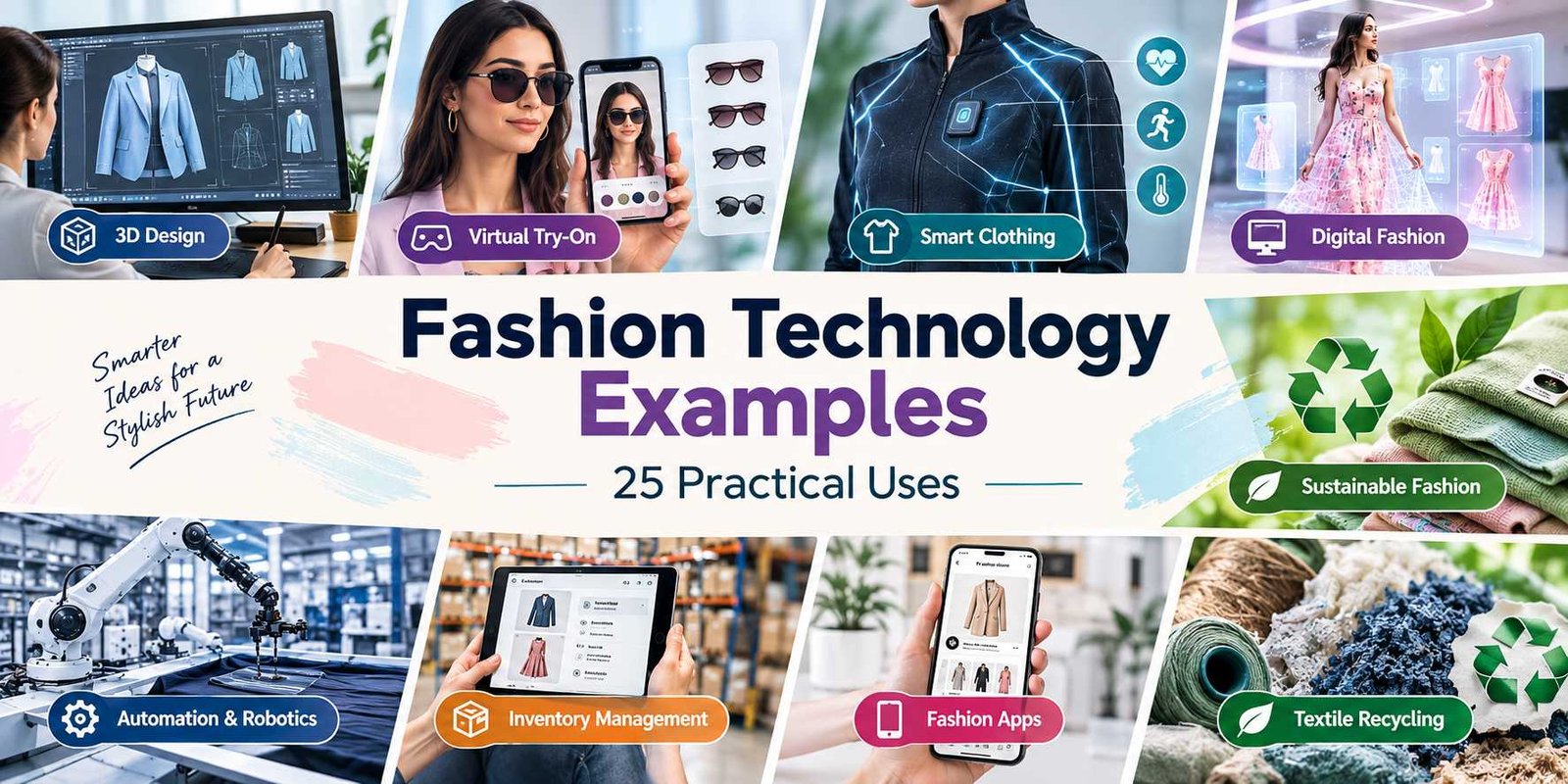
Fashion Technology Examples show how modern tools are used in clothing design, manufacturing, shopping, and sustainability. Technology is no longer limited to computers or factory machines. Today, it is also part of the way fashion products are planned, created, sold, and used.
For example, a designer can build a garment digitally before making a sample. At the same time, an online shopper can use a virtual fitting tool before buying a product. Fashion companies can also use data to understand customer needs and improve their products.
These examples make fashion technology easier to understand. Instead of looking at technology as one large idea, it is better to see how different tools are used for specific fashion tasks.
What Are Fashion Technology Examples?
Fashion technology examples are practical ways that technology is used in the fashion industry. They include simple design software as well as advanced tools that use artificial intelligence, sensors, robots, and virtual systems.
Technology can now help with many parts of fashion.
For instance, a fashion brand may use:
- 3D software for clothing design
- AI for product suggestions
- AR for virtual try-on
- Smart fabrics for special functions
- Digital tools for marketing
- Automated machines for production
- Software for stock control
- Recycling technology for textile waste
- Digital platforms for virtual fashion
Each example has a different purpose. Some help designers, while others improve production or make shopping easier.
1. 3D Clothing Design
One of the best Fashion Technology Examples is 3D clothing design.
In the past, designers often relied on sketches and physical samples. Now, 3D design software allows them to create a digital version of a garment and view it from many angles.
A designer can change the shape, color, size, and other details on a screen. As a result, several ideas can be tested before a physical sample is made.
For example, imagine a designer creating a new jacket. Instead of making many samples, the designer can build a digital jacket first. Different sleeve lengths, pocket positions, and colors can then be tested on the computer.
This approach can save time during the early design stage.
Why 3D Design Is Useful
3D design can help with:
- Faster design changes
- Digital product presentations
- Better garment views
- Virtual samples
- Team collaboration
- Less need for early physical samples
Moreover, designers can share digital designs with clients, buyers, and production teams.
2. Artificial Intelligence for Fashion Recommendations
Artificial intelligence is another major example of technology in fashion.
Online fashion stores can use AI systems to suggest products that may interest shoppers. These systems can study browsing activity, previous purchases, searches, and selected products.
For example, a customer who often looks at casual dresses may receive suggestions for similar dresses. The website could also show matching shoes, bags, or accessories.
As a result, customers may find useful products more quickly.
AI and Personalized Shopping
Personalized shopping can make online fashion stores easier to use. Instead of showing every product to every visitor, a website can display items that are more closely related to each shopper.
Large online stores can benefit from this system because they may have thousands of products.
3. Virtual Try-On Technology
Virtual try-on is one of the most noticeable Fashion Technology Examples for shoppers.
This technology allows customers to preview a product digitally. Depending on the system, shoppers may use a smartphone camera or another digital tool to see how an item could look on them.
Virtual try-on can be used for:
- Clothing
- Sunglasses
- Shoes
- Jewelry
- Makeup
- Accessories
For example, someone buying sunglasses online may use a camera tool to compare different frames.
Therefore, virtual try-on can make online shopping more interactive.
4. Smart Clothing
Smart clothing combines normal garments with digital or electronic features.
Some smart clothing uses sensors or connected parts. These features can collect information or respond to changes around the wearer.
For example, sports clothing may include sensors that track movement during exercise. In some cases, smart clothing can also connect with a mobile device.
Different products can have different purposes. Some are designed for sports, while others may focus on safety, comfort, communication, or entertainment.
What Makes Smart Clothing Different?
Traditional clothing mainly provides comfort, protection, and style. Smart clothing adds technology as another feature.
However, the technology should not make the garment difficult to wear. Comfort, weight, washing, battery life, and ease of use are also important.
5. Smart Textiles
Smart textiles are materials that can do more than traditional fabrics.
Depending on the design, these materials may react to heat, movement, pressure, light, or electricity.
For example, researchers can develop materials that respond to temperature changes. Other textile projects may combine fabric with sensors or electronic parts.
Smart textiles have possible uses in fashion, sportswear, workwear, and other clothing areas.
As technology improves, these fabrics may become easier to use in everyday products.
6. Augmented Reality in Fashion
Augmented reality, often called AR, places digital information or objects over a real-world view.
In fashion, AR can make product shopping more engaging. A customer may use a phone camera to preview an accessory, shoe, or other product.
Fashion brands can also use AR in advertising. For instance, a customer could scan an image and open an interactive product experience.
AR for Product Discovery
AR gives brands another way to present products. Instead of looking only at a normal product photo, shoppers can interact with digital content.
This can be helpful for products where appearance and personal style are important.
7. Digital Fashion
Digital fashion is another interesting example of fashion technology.
Digital garments are created mainly for virtual spaces. They can be used for avatars, games, social platforms, virtual events, or creative projects.
A designer can create a digital dress or jacket without producing physical fabric.
Because of this, designers can test unusual shapes, colors, and effects that may be difficult to make in the real world.
Why Digital Fashion Matters
Digital clothing can support online self-expression. It also creates a new type of fashion product that exists mainly in a digital space.
For many designers, digital fashion is an extra creative option rather than a replacement for physical clothing.
8. AI-Assisted Fashion Design
AI can also support the design process.
A designer may use AI tools to explore colors, patterns, shapes, or other visual ideas. For example, a designer creating a summer collection can test several color combinations before choosing a final palette.
The designer still makes the final decision. AI simply gives the designer another way to explore ideas.
Therefore, AI can work as a support tool while human creativity remains central.
9. Automated Fabric Cutting
Fabric cutting is an important part of clothing production. Computer-controlled cutting systems can follow digital patterns and cut fabric according to set measurements.
For large production runs, accurate cutting can reduce mistakes. It can also help factories repeat the same pattern across many garments.
As a result, automated cutting can support faster and more consistent production.
Human Skills Still Matter
Automation does not remove the need for people. Workers still prepare materials, operate equipment, check quality, and solve production problems.
In other words, technology can support skilled workers instead of simply replacing them.
10. Robotics in Fashion Manufacturing
Robotics is another practical example of technology in fashion production.
Robotic systems can help with certain repeated tasks. Depending on the factory, machines may move materials, handle parts, inspect products, or assist with packing.
However, fabric is soft and flexible. Therefore, working with clothing can be more difficult than working with hard industrial materials.
For this reason, fashion robotics needs special systems and careful control.
11. Computer-Aided Pattern Making
Pattern making is an important part of garment construction. Digital pattern software allows designers and technicians to create and change patterns on a computer.
For example, a technician can adjust the size of a digital pattern without drawing the whole piece again.
Digital patterns can also be saved and shared with other team members.
As a result, product development can become more organized.
12. Digital Fashion Showrooms
Fashion brands can also use digital showrooms to present their collections.
A digital showroom may include:
- Product images
- 3D garment views
- Size information
- Color options
- Product details
- Ordering information
This setup allows buyers and customers to view collections online.
In addition, brands can present their products to people in different locations without requiring everyone to visit one physical showroom.
13. Virtual Fashion Shows
Virtual fashion shows use digital platforms to present clothing collections.
Instead of bringing every viewer to one physical location, a brand can create an online presentation. Viewers can watch from different places.
A virtual show may include videos, digital backgrounds, animated garments, or interactive features.
Therefore, virtual fashion shows can help brands reach wider audiences.
14. Fashion Inventory Technology
Managing stock is an important task for fashion businesses.
Technology can help companies track products, sizes, colors, sales, and stock levels. For example, inventory software can show which products are selling quickly and which ones are sitting in storage.
With better stock information, businesses can make more informed ordering decisions.
This can be especially helpful for brands that sell many products across different stores or online channels.
15. Technology for Fashion Forecasting
Fashion forecasting means studying information to understand possible changes in customer preferences.
Digital tools can help researchers organize large amounts of information. They may study:
- Search behavior
- Sales data
- Social media activity
- Customer surveys
- Market reports
- Product performance
These tools can make research faster and easier.
Still, forecasting is not a guarantee. Fashion can change because of culture, media, economic conditions, events, and other factors.
16. Blockchain and Fashion Product Tracking
Blockchain is another technology that has been explored in fashion.
One possible use is creating a digital record for a product. Such a record may store information about an item’s journey, ownership, or authenticity.
For example, a fashion product could have a digital identity that connects it with selected product information.
However, the value of such a system depends on how it is created and how accurate the information remains.
17. Technology for Textile Recycling
Textile waste is a major concern for the fashion industry. Technology can support efforts to sort and recycle discarded materials.
Modern sorting systems can help identify different materials before they enter a recycling process.
For example, a system may help separate different fibers or identify material types.
Better sorting can make it easier to recover useful materials from old clothing.
Why Recycling Technology Matters
Clothing can contain mixed fibers, dyes, buttons, zippers, and other parts. Separating these materials can be difficult.
For that reason, better technology may help recycling systems work more efficiently.
18. Digital Product Passports
A digital product passport can provide information about a fashion item through a digital record.
Depending on the system, it may include information about:
- Materials
- Manufacturing
- Product care
- Repairs
- Recycling
A customer could access this information through a digital identifier linked to the product.
As a result, important product information can remain easier to find throughout the item’s life.
19. Wearable Fitness Fashion
Sportswear is another area where fashion and technology come together.
Wearable technology can be added to products designed for exercise and physical activity.
For example, technology may help track movement or connect clothing with fitness devices.
At the same time, the garment still needs to be comfortable during exercise.
Therefore, successful wearable fashion must balance technology, comfort, performance, and style.
20. 3D Printing in Fashion
3D printing allows designers to create physical objects from digital designs.
In fashion, this method can be used for some accessories, jewelry, footwear parts, decorative pieces, and experimental garments.
For example, a designer can create a digital accessory and then produce it with a 3D printer.
This gives designers another way to explore unusual shapes and custom products.
21. Fashion Apps
Mobile apps are now common in the fashion industry.
A fashion app may offer:
- Outfit suggestions
- Digital wardrobes
- Shopping tools
- Style ideas
- Product alerts
- Virtual try-on
- Clothing organization
For example, a digital wardrobe app can allow users to take pictures of their clothes and organize them into groups.
Then, users can create outfit combinations without searching through their entire closet.
22. Technology for Fashion Customer Service
Technology can also improve customer service.
An online fashion store may use an AI assistant to answer simple questions about products, sizes, delivery, or availability.
This allows customers to get quick answers.
At the same time, human support remains important for more complex problems.
Therefore, automated tools and human service can work together.
23. Personalized Size Recommendations
Finding the right size is a common problem in online fashion shopping.
Technology can help by using measurements, product information, previous purchases, or customer details to suggest a suitable size.
For example, a size tool may tell a shopper how a particular garment is likely to fit.
Better size guidance can make online shopping easier. It may also help reduce some avoidable returns.
24. Sustainable Production Software
Digital software can also support more careful fashion production.
A business can use software to monitor materials, production amounts, stock, and other information.
For example, a company may compare different production plans and select an option that uses fewer resources.
Technology does not automatically make a product sustainable. However, better information can help businesses make smarter choices.
25. How Fashion Technology Examples Benefit the Industry
The Fashion Technology Examples above show that technology can help in many different ways.
Faster Design
Digital tools allow designers to test and change ideas quickly.
Easier Shopping
Virtual try-on, size tools, and product recommendations can make online shopping more convenient.
Better Production
Automation and digital pattern systems can improve consistency and organization.
More Creative Options
3D design, digital fashion, and smart textiles give designers new ways to experiment.
Better Business Decisions
Inventory and data tools can help companies understand products and customer behavior.
Support for Sustainability
Digital sampling, recycling tools, and production software can support efforts to reduce unnecessary waste.
How to Choose the Right Fashion Technology
Not every technology is useful for every fashion business.
A small clothing brand may benefit more from inventory software than expensive robots. Similarly, a fashion student may gain more from learning 3D design than trying to build a complex smart garment.
For this reason, businesses and students should first identify the problem they want to solve.
After that, they can choose a technology that fits their budget, skills, and goals.
Which Fashion Technology Is Most Useful?
There is no single answer because different fashion tasks need different tools.
Designers may find 3D software and AI tools useful. Online shoppers may benefit more from virtual try-on and size recommendations.
Meanwhile, manufacturers may prefer automated cutting and digital pattern systems. Sustainability teams may focus on recycling technology and production software.
Ultimately, the best technology is the one that solves a real problem without adding unnecessary complexity.
Final Thoughts
These Fashion Technology Examples show how technology is becoming part of many areas of fashion. From 3D clothing and AI recommendations to smart textiles, virtual try-on, digital fashion, automation, and recycling tools, each technology has a different role.
Importantly, fashion technology is not only about futuristic ideas. Many tools are already useful for everyday tasks such as designing clothes, managing stock, improving online shopping, and planning production.
As these tools develop, fashion professionals will have more ways to combine creative skills with digital knowledge. However, technology should always have a clear purpose.
The strongest fashion solutions will balance innovation with comfort, quality, creativity, sustainability, and customer needs.
FAQs About Fashion Technology Examples
What are some common Fashion Technology Examples?
Common examples include 3D clothing design, AI recommendations, virtual try-on, smart textiles, wearable technology, digital fashion, automated cutting, fashion apps, and textile recycling.
How is AI used in fashion?
AI can help with product recommendations, trend research, design ideas, customer personalization, and other business tasks.
What is 3D fashion design?
3D fashion design uses digital software to create and view clothing before or during physical production.
What is smart clothing?
Smart clothing combines regular garments with technology such as sensors, connected parts, or electronic features.
Can technology make online fashion shopping easier?
Yes. Virtual try-on, size tools, product recommendations, and digital styling features can make online shopping easier and more interactive.
Is digital fashion the same as physical clothing?
No. Digital fashion is created mainly for virtual spaces, while physical fashion is made as real clothing or accessories.
How can technology support sustainable fashion?
Technology can support digital sampling, production planning, textile sorting, recycling, inventory management, and other processes that may help reduce unnecessary waste.




One Comment