
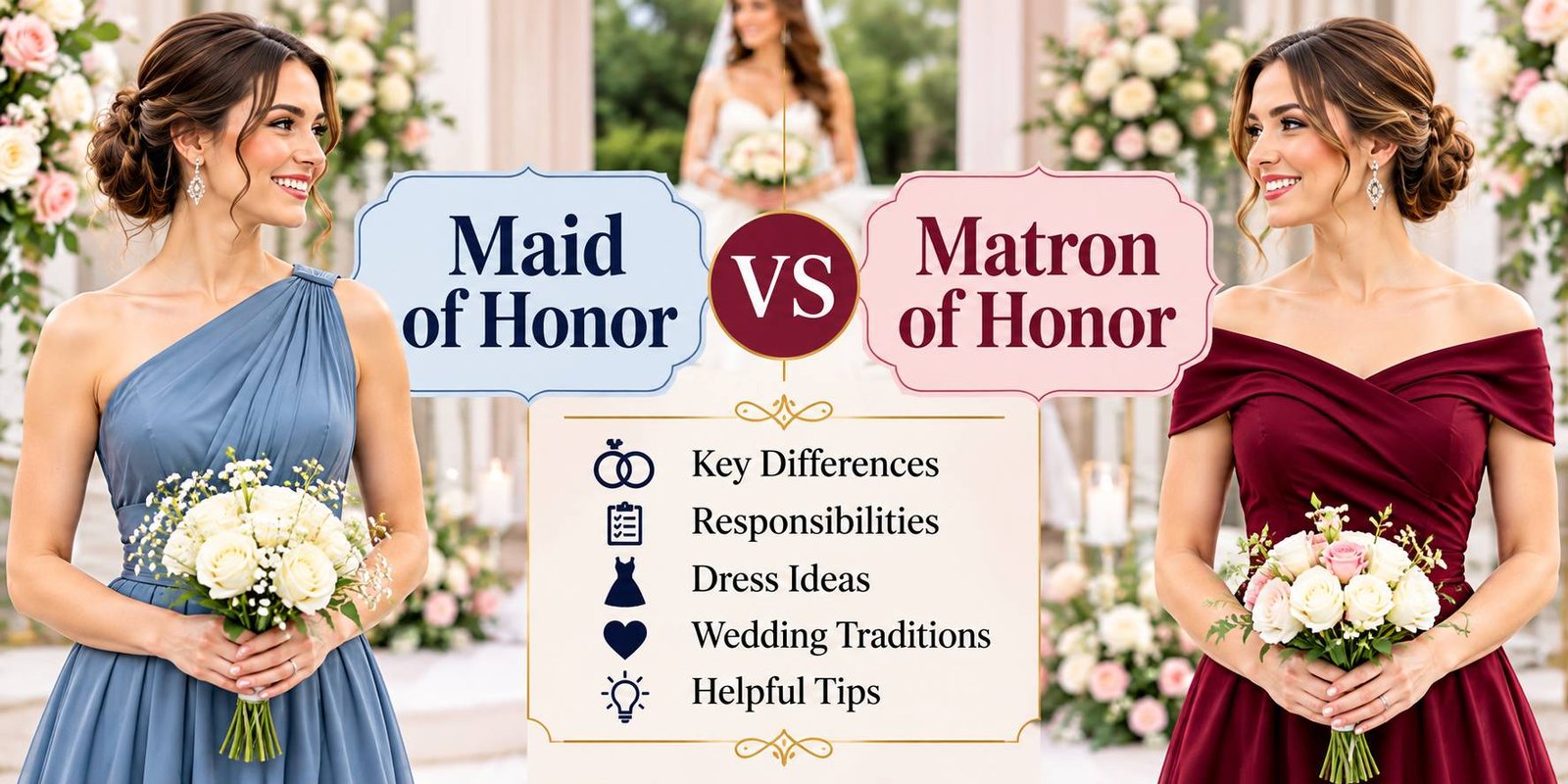
Maid of Honor vs. Matron of Honor: Roles and Differences
A wedding brings together people who have played meaningful roles in a couple’s life. Among the most important people standing beside the bride are her maid of honor or matron of honor. These two positions may sound different, but they share almost the same purpose. Both involve friendship, trust, and helping the bride enjoy one of the most memorable days of her life.
Many people become confused when they hear these titles for the first time. Is a matron of honor older than a maid of honor? Does one have more responsibilities? Can a bride choose both? These are common questions, especially for people who are planning their first wedding.
The traditional distinction is simple: a maid of honor is usually unmarried, while a matron of honor is married. However, modern celebrations do not always follow this old convention. Couples can choose the titles and arrangements that make sense for their relationships.
This guide explores how these wedding positions work, what each attendant may be expected to do, how their outfits are selected, and how brides can make the best choice for their wedding party.
Understanding the Maid of Honor Role
A maid of honor is usually the bride’s principal female attendant. She is often someone the bride knows very well, such as a sister, close friend, cousin, or childhood companion.
Her position is special because she provides support during both the preparation period and the actual celebration. She may help the bride compare dresses, organize appointments, communicate with bridesmaids, and prepare for important wedding activities.
However, being a maid of honor is not simply about completing a list of tasks. The relationship between the bride and her chosen attendant is often the most important part of the position.
Why Brides Choose a Maid of Honor
A bride may choose someone who has been part of her life for many years. This person might understand her preferences, recognize when she feels stressed, and know how to make her smile.
Some brides select their sisters, while others prefer their closest friends. There is no universal formula for making this decision.
A good maid of honor should be willing to listen, communicate clearly, and respect the bride’s wishes. She does not need to be an expert wedding planner. A supportive attitude and a dependable relationship are often more valuable.
Understanding the Matron of Honor Role
A matron of honor holds a position similar to that of a maid of honor. The traditional difference is that the matron is a married woman.
She may be the bride’s older or younger sister, a longtime friend, a cousin, or another trusted family member. Her marital status gives her the traditional title, but it does not automatically make her more experienced or more important.
In many weddings, a matron of honor takes part in the same activities as the maid of honor. She may attend dress appointments, help organize gatherings, coordinate the bridal party, and stand close to the bride during the ceremony.
Why the Title Matters in Traditional Weddings
Wedding language has developed through customs that have been followed for generations. The word “maid” traditionally referred to an unmarried woman, while “matron” was used for a married woman.
This distinction was once a familiar way to describe the bride’s principal attendant. Today, however, couples often care more about personal relationships than traditional labels.
A married friend may still be introduced as the maid of honor, especially if that is the title she prefers. Likewise, a bride may use matron of honor to recognize a married person who is particularly important to her.
Maid of Honor vs. Matron of Honor: The Main Differences
When comparing these two positions, it is important to separate their traditional names from their actual responsibilities.
The main difference is marital status. Their involvement in the wedding can be exactly the same.
| Detail | Maid of Honor | Matron of Honor |
|---|---|---|
| Traditional meaning | Unmarried attendant | Married attendant |
| Relationship to bride | Close friend or relative | Close friend or relative |
| Planning assistance | May help | May help |
| Bridal party support | Coordinates with bridesmaids | Coordinates with bridesmaids |
| Ceremony position | Near the bride | Near the bride |
| Wedding speech | May give one | May give one |
| Outfit | Selected according to wedding theme | Selected according to wedding theme |
Neither title indicates a higher position. Both attendants can receive equal recognition and participate in the same wedding activities.
Does One Position Have More Authority?
No. A matron of honor does not automatically have more authority than a maid of honor.
The bride decides how much responsibility each person receives. If she chooses both, she can divide the work according to their availability, interests, and strengths.
For instance, one attendant may be comfortable organizing events, while the other may enjoy helping with clothing and accessories. Their different skills can make wedding preparation easier.
Can a Bride Select Both Attendants?
Yes. A bride can have a maid of honor and a matron of honor at the same wedding.
This arrangement is useful when two people are equally important in her life. For example, she might want her married sister and unmarried best friend to share the special recognition.
There is no need to make one person feel less valued. Both can stand beside the bride and contribute to the celebration.
Advantages of Having Two Honor Attendants
More shared support: Wedding preparations involve many details. Two trusted people can divide the work and help the bride manage her schedule.
Different strengths: One person may be good at organizing events, while the other may be better at communication or fashion decisions.
Recognition of important relationships: Some brides have two close relationships that they do not want to separate into ordinary andspecialpositions.Better availability: If one attendant has work or family commitments, the other may be available to help with certain arrangements.
Dividing Responsibilities Fairly
The best approach is to discuss duties before wedding activities become busy.
For example, one attendant might help coordinate the bridal shower, while the other assists with the bachelorette party. Both can attend important appointments and communicate with the bridesmaids.
The bride should explain her expectations clearly. This prevents misunderstandings and allows everyone to enjoy the experience.
Important Duties of the Maid and Matron of Honor
Although every couple organizes a wedding differently, honor attendants often take part in several common activities.
1. Helping With Wedding Preparations
Wedding planning can involve decisions about clothing, decorations, guest arrangements, and schedules. An honor attendant may help the bride review choices and think through practical details.
For example, she can accompany the bride to appointments or help compare different design ideas.
However, she should avoid taking control of decisions. The bride’s preferences must remain central throughout the process.
2. Assisting With Bridal Shopping
Shopping for a wedding dress can be a memorable experience. A maid or matron of honor may join the bride when she visits bridal stores.
She can help evaluate different silhouettes, fabrics, necklines, and dress details.
It is also useful to consider comfort. A beautiful dress should allow the bride to walk, sit, and move with ease.
Honest feedback is welcome, but negative comments that make the bride uncomfortable should be avoided.
3. Helping With the Bridal Shower
A bridal shower is often organized before the wedding as a gathering for the bride and her guests.
An honor attendant may help with invitations, decorations, food arrangements, and activities. She can also communicate with other bridesmaids or family members who want to contribute.
The event does not need to be expensive to feel special. A simple gathering with thoughtful details can be just as enjoyable as a large celebration.
4. Supporting the Bachelorette Party
The bachelorette party is another possible pre-wedding event.
Depending on the bride’s personality, it might involve a dinner, a small gathering at home, a weekend trip, or an evening with friends.
The maid or matron of honor may help organize the activity and confirm arrangements with attendees.
Most importantly, the celebration should reflect what the bride actually enjoys rather than following social media trends.
5. Keeping Bridesmaids Informed
Bridesmaids often need information about dress fittings, accessories, arrival times, and other wedding arrangements.
The honor attendant may help share updates and answer general questions.
Clear communication reduces last-minute confusion. It also helps everyone understand what is expected before the wedding day.
6. Helping the Bride Get Ready
On the wedding morning, the bride may need assistance with several small tasks.
Her attendant can help organize personal items, check accessories, hold the bouquet, or assist with the dress when needed.
She may also remind the bride to eat something, drink water, and take a short break during a busy schedule.
7. Supporting the Bride During the Ceremony
During the ceremony, the honor attendant generally stands near the bride.
Depending on the couple’s arrangements, she may hold the bouquet, adjust the veil, or help with other small details.
The exact duties depend on the ceremony style and the instructions provided by the wedding planner.
8. Giving a Personal Wedding Toast
Some brides ask their maid or matron of honor to give a short speech during the reception.
The message can include a meaningful memory, a few words about the bride, and warm wishes for the couple.
A natural speech is usually more memorable than one filled with formal language. It should also respect the couple and the people attending the celebration.
Choosing Dresses for Both Wedding Attendants
Fashion can help create a coordinated appearance among the bridal party. However, the bride does not have to select identical dresses for everyone.
The choice depends on the wedding theme, venue, season, and personal preferences.
Satin Gowns for a Polished Appearance
Satin dresses have a smooth finish that makes them suitable for formal celebrations.
A floor-length satin gown can look elegant at an evening wedding. Popular colors include navy, champagne, dusty rose, burgundy, and emerald green.
Both attendants can wear the same color in different silhouettes if the bride wants a little variety.
Chiffon Dresses for Outdoor Weddings
Chiffon is lightweight and flows naturally, making it suitable for garden and summer celebrations.
A chiffon gown with soft pleats or delicate sleeves can create a romantic appearance.
This fabric is also useful when the bridal party wants coordinated outfits that are comfortable in warmer weather.
Lace Designs for Romantic Celebrations
Lace dresses add decorative texture and detail to a wedding outfit.
A lace neckline, sleeve, or skirt can create an elegant appearance without requiring heavy accessories.
These designs work well with classic and romantic wedding themes.
Modern Midi Dresses
Midi dresses offer a contemporary alternative to traditional floor-length gowns.
They can be suitable for smaller weddings, relaxed ceremonies, and semi-formal celebrations.
A coordinated color scheme can help both attendants look connected even when they choose different designs.
Should Both Attendants Match?
Matching outfits are optional.
Some brides prefer identical dresses because they create a traditional bridal party appearance. Others allow individual designs within one color family.
For example, both attendants could wear sage green, but one may select a long satin gown while the other chooses a flowing chiffon design.
This arrangement gives each person some freedom while keeping the photographs visually coordinated.
How to Choose the Right Person for Each Position
Selecting an honor attendant should be a thoughtful decision. The bride should consider the people who make her feel supported and comfortable.
Think About Your Personal Connection
Ask yourself who has been present during important moments in your life.
A close friend, sister, cousin, or another relative may be a natural choice. The strongest reason for selecting someone is usually the quality of the relationship.
Consider Their Availability
Wedding preparations can require time and communication.
Before offering the position, consider whether the person has enough availability to participate. Someone may care deeply about you but have work, family, or travel commitments.
Being honest about expectations helps avoid unnecessary pressure.
Look for Good Communication
A dependable attendant should be comfortable sharing information and discussing problems respectfully.
Good communication is particularly useful when several bridesmaids need to coordinate their schedules.
Avoid Family Pressure
Sometimes, relatives may expect a particular person to receive the honor attendant title.
However, the bride should not feel obligated to make this decision simply to satisfy others.
The position should recognize a relationship that genuinely matters to her.
Discuss the Responsibilities
Before confirming the arrangement, explain what the role may involve.
Talk about event attendance, clothing costs, travel, and other possible expenses. This allows the selected person to decide whether she can comfortably participate.
Wedding Etiquette for Honor Attendants
Good wedding etiquette helps maintain positive relationships throughout the celebration.
Respect the Bride’s Preferences
The bride may have specific ideas about clothing, colors, decorations, and ceremony arrangements.
Attendants can offer suggestions, but they should respect the final decisions.
Be Considerate of Other Bridesmaids
The honor attendant may have a leadership role, but that does not mean she should treat other bridesmaids as assistants.
Everyone should feel included and respected.
Avoid Comparing Titles
There is no reason for a maid of honor and matron of honor to compete.
Both positions recognize important relationships. Their value comes from the support they provide, not from the name of the title.
Discuss Costs Openly
Pre-wedding activities, clothing, transportation, and gifts can create expenses.
It is better to discuss costs early rather than assume everyone can afford the same arrangements.
Maintain Personal Boundaries
An honor attendant is still a person with her own responsibilities.
The bride should understand that her friend or relative may not be available at every moment. Sharing tasks with others can make the experience more comfortable.
Modern Alternatives to Traditional Honor Attendant Titles
Wedding celebrations are becoming more personal, and many couples are choosing arrangements that reflect their relationships.
For example, a bride may select a male friend as her main attendant. This person is often called a man of honor.
Other brides prefer the general title of honor attendant because it does not depend on marital status or gender.
Some couples also choose to have no single leading attendant. Instead, they divide responsibilities among several close friends or relatives.
These choices show that wedding traditions can change while keeping their original purpose: recognizing the people who matter most.
Common Questions About Maid of Honor and Matron of Honor
Is a matron of honor always married?
Traditionally, the title refers to a married woman. However, modern weddings allow couples to choose the title they prefer.
Can a married woman be a maid of honor?
Yes. The traditional distinction is not a strict rule. A bride can use maid of honor for a married friend if that is her preference.
Can a bride have two maids of honor?
Yes. A bride can choose two maids of honor or use different titles for two special attendants.
Does a matron of honor have more responsibilities?
No. Both positions generally involve similar duties. The title does not determine how much work someone must perform.
Can a sister be a maid or matron of honor?
Yes. A sister can serve in either position. Her traditional title depends on her marital status, although the bride can choose another title.
Who stands closest to the bride?
The wedding party arrangement is decided by the couple. If there are two honor attendants, they may stand on either side of the bride or follow another arrangement.
Does the honor attendant pay for the bridal shower?
There is no universal payment rule. The costs may be shared by the hosts, bridesmaids, family members, or friends. The arrangements should be agreed upon beforehand.
Can the maid of honor and matron of honor wear different colors?
Yes. They can wear different colors if the bride approves. Matching shades are also an option for a coordinated appearance.
What is the male version of a maid of honor?
A male friend who supports the bride in a similar role may be called a man of honor.
Is a maid of honor more important than a bridesmaid?
The maid of honor traditionally has a leading position in the bridal party and may have additional responsibilities. However, all bridesmaids can play meaningful roles in the celebration.
Conclusion
The difference between a maid of honor and a matron of honor is mainly connected to traditional marital status. The first title usually describes an unmarried attendant, while the second traditionally refers to a married woman.
Despite this difference, their contributions to the wedding are very similar. Both can help with planning, support the bridesmaids, assist the bride, and participate in the ceremony.
A bride may choose one attendant or recognize two people by selecting both. She can also adjust traditional titles to reflect her personal relationships.
Ultimately, a wedding title should not become a source of competition or pressure. The most meaningful choice is someone who genuinely cares about the bride, respects her wishes, and is happy to share the celebration with her.