
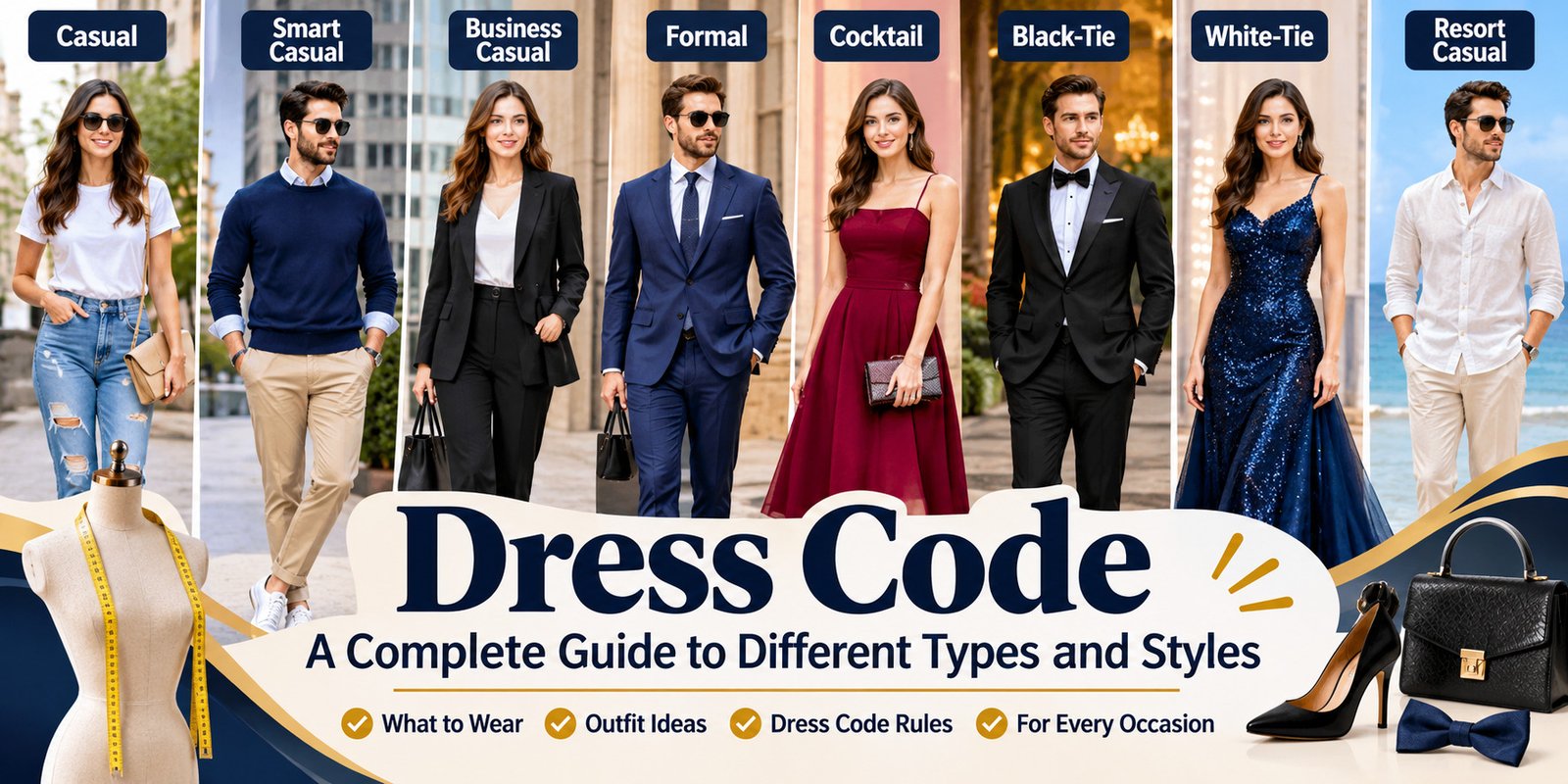
Dress Code: A Complete Guide to Different Types and Styles
Choosing the right outfit is not always easy, especially when an invitation, workplace, school, or special event comes with a specific dress code. The term dress code refers to a set of clothing guidelines that explains what people should wear in a particular setting. These guidelines help guests, employees, and visitors understand the expected level of formality.
From casual outfits and business clothing to elegant evening dresses and black-tie attire, every dress code has its own purpose. Knowing these differences can make getting dressed much easier. It also helps people feel comfortable, confident, and appropriately dressed for different occasions.
In the United States, dress codes are common at weddings, offices, restaurants, schools, social gatherings, and formal celebrations. Some events allow relaxed clothing, while others require carefully selected outfits and accessories.
This guide explains different types of dress codes, what they mean, and how to choose suitable clothing for men and women. Whether you are attending a wedding, preparing for a business meeting, or planning an outfit for a dinner party, understanding these guidelines can help you make better fashion decisions.
What Is a Dress Code?
A dress code is a collection of clothing rules or recommendations designed for a particular environment or occasion. It tells people which types of outfits are suitable and which styles may not fit the setting.
For example, a company may require employees to wear professional clothing during working hours. A wedding invitation might request cocktail attire, while a formal charity event may specify black-tie clothing.
The main purpose of these guidelines is to create a suitable appearance for a specific environment. They can also reflect the event’s atmosphere, professional standards, cultural traditions, or personal preferences of the organizers.
Dress codes do not always mean wearing expensive clothes. A simple, clean, and well-fitted outfit can look appropriate when it matches the occasion.
Why Dress Codes Are Important
Understanding clothing expectations can make everyday dressing easier. These guidelines are useful in professional, social, and formal situations.
1. They Help People Choose Suitable Outfits
One of the biggest advantages of a dress code is that it provides direction. Instead of guessing what to wear, people can use the instructions to select appropriate clothing.
For example, a casual invitation suggests comfortable outfits, while a formal invitation calls for more polished clothing.
2. They Create a Consistent Appearance
Some workplaces and organizations use clothing guidelines to maintain a consistent professional image. Employees may follow similar standards so that the overall environment feels organized.
3. They Show Respect for the Occasion
Wearing suitable clothing can show consideration for the host, organizers, or people attending an event.
A carefully chosen outfit at a wedding, graduation ceremony, or business function can demonstrate that you understand the importance of the occasion.
4. They Make Dressing Less Confusing
Many people feel uncertain when an invitation includes unfamiliar terms such as smart casual, cocktail attire, or semi-formal.
Learning what these terms mean makes outfit planning simpler and reduces last-minute confusion.
5. They Support Personal Confidence
When people understand what is expected, they can choose outfits more comfortably. Wearing clothing that suits the environment may help them feel more confident throughout the event.
Different Types of Dress Codes
There are several common clothing categories used in the United States and other countries. Each one represents a different level of formality.
1. Casual Dress Code
A casual dress code is one of the most relaxed clothing styles. It focuses on comfort, simplicity, and everyday fashion. It is commonly seen at informal gatherings, casual restaurants, shopping trips, and friendly social events.
Casual clothing does not mean wearing anything without considering appearance. Clean, comfortable, and well-maintained pieces are still important.
What women can wear:
- Jeans with basic T-shirts.
- Casual dresses and skirts.
- Comfortable trousers with simple tops.
- Sneakers, flats, or casual sandals.
- Cardigans and lightweight jackets.
What men can wear:
- Jeans or casual chinos.
- Polo shirts and basic T-shirts.
- Casual button-down shirts.
- Sneakers or loafers.
- Comfortable jackets and sweaters.
The key to casual dressing is choosing clothing that allows easy movement while maintaining a neat appearance.
2. Smart Casual Dress Code
Smart casual combines relaxed clothing with polished fashion details. It looks more refined than everyday casual clothing but is not as formal as traditional business attire.
This style is popular at modern offices, networking events, dinner invitations, and social gatherings.
For women:
- Tailored trousers with a stylish blouse.
- Midi dresses with elegant flats.
- Dark denim with a structured blazer.
- Loafers, ankle boots, or simple heels.
- Minimal jewelry and a neat handbag.
For men:
- Chinos with a button-down shirt.
- Dark jeans with a blazer.
- Polo shirts with tailored trousers.
- Leather loafers or clean sneakers.
- A simple belt and matching accessories.
Smart casual is a useful option when an event requires a presentable appearance without strict formal clothing.
3. Business Casual Dress Code
Business casual is a popular workplace clothing standard. It offers a balance between professional appearance and everyday comfort.
Many American companies use this style because it allows employees to dress professionally without requiring a full traditional suit every day.
Women can choose:
- Dress pants with blouses.
- Knee-length or midi skirts.
- Simple office dresses.
- Blazers and cardigans.
- Closed-toe flats, pumps, or loafers.
Men can choose:
- Chinos or dress trousers.
- Collared shirts.
- Sweaters over dress shirts.
- Optional blazers.
- Leather shoes or clean loafers.
Clothing should be neat, clean, and appropriate for the workplace. Very distressed jeans, beachwear, and overly casual athletic clothing may not fit a traditional business casual environment.
4. Business Professional Dress Code
Business professional is more formal than business casual. It is often associated with traditional corporate environments, interviews, conferences, legal offices, and important business meetings.
The focus is on structured clothing, simple colors, and a polished appearance.
Women’s outfit ideas:
- Matching trouser suits.
- Tailored skirts with formal blouses.
- Structured blazers.
- Formal dresses with modest designs.
- Classic pumps or closed-toe shoes.
Men’s outfit ideas:
- Matching business suits.
- Formal dress shirts.
- Ties when appropriate.
- Polished leather dress shoes.
- Coordinated belts and accessories.
Navy, black, charcoal, and gray are popular choices for this style. Neutral colors are easy to combine and create a professional appearance.
5. Semi-Formal Dress Code
Semi-formal clothing sits between everyday formalwear and relaxed party outfits. It is commonly requested for evening celebrations, weddings, anniversary dinners, and special social occasions.
For women, elegant cocktail dresses, midi dresses, dressy jumpsuits, and sophisticated separates are suitable choices.
For men, a dark suit, formal trousers, a dress shirt, and polished shoes create an appropriate look. A tie may be suitable depending on the event.
Semi-formal does not usually require the same level of formality as black-tie clothing. However, jeans, casual sneakers, and basic everyday T-shirts may look too relaxed.
6. Cocktail Attire Dress Code
Cocktail attire is a stylish dress code often used for evening parties, wedding receptions, engagement celebrations, and upscale social events.
It allows people to wear fashionable outfits while maintaining an elegant appearance.
Women may wear:
- Cocktail dresses.
- Stylish midi dresses.
- Elegant jumpsuits.
- Heeled sandals or pumps.
- Small evening bags and statement jewelry.
Men may wear:
- Dark suits.
- Dress shirts.
- Tailored trousers.
- Leather dress shoes.
- Ties or pocket squares.
Black, navy, burgundy, emerald, and other rich colors are popular for cocktail outfits. However, the best color depends on the event, season, and personal style.
7. Formal Dress Code
A formal dress code requires a polished and sophisticated appearance. It is commonly used for formal dinners, award ceremonies, important celebrations, and special evening functions.
Women may select elegant evening gowns, refined midi dresses, or formal separates. Men can wear dark suits or other formal outfits based on the invitation.
Fabric, fit, and finishing details matter when selecting formal clothing. Satin, chiffon, velvet, and other refined materials are popular choices for evening outfits.
8. Black-Tie Dress Code
Black-tie is one of the most recognizable formal clothing standards. It is generally associated with evening galas, luxury celebrations, formal weddings, and prestigious events.
For women:
- Floor-length evening gowns.
- Elegant formal dresses.
- Refined evening accessories.
- Heeled shoes or formal flats.
- Small clutches and delicate jewelry.
For men:
- Black tuxedos.
- White formal shirts.
- Black bow ties.
- Formal black shoes.
- Optional cummerbund or waistcoat.
A black-tie invitation usually indicates a higher level of formality than cocktail or semi-formal attire.
9. White-Tie Dress Code
White-tie is an extremely formal clothing standard. It is less common than black-tie and is usually reserved for state dinners, traditional balls, and prestigious ceremonial events.
Women generally wear full-length evening or ball gowns with formal accessories.
Men traditionally wear a black tailcoat, white waistcoat, white bow tie, formal trousers, and polished black shoes.
This dress code follows specific traditional clothing rules, so it is important to read the invitation carefully before selecting an outfit.
10. Festive Dress Code
Festive attire is often requested for holiday parties, seasonal celebrations, family gatherings, and special occasions. It gives people an opportunity to wear colorful clothing, attractive patterns, and decorative accessories.
Women can choose colorful dresses, stylish skirts, elegant tops, or fashionable jumpsuits. Men may wear dress shirts, tailored trousers, colorful jackets, or smart suits.
Popular festive colors include red, green, gold, silver, and jewel tones. Sparkling details, embroidered fabrics, and statement accessories can make an outfit more interesting.
The goal is to look celebratory without choosing clothing that feels uncomfortable or unsuitable for the occasion.
11. Resort Casual Dress Code
Resort casual is a relaxed clothing style commonly associated with vacations, beach resorts, outdoor restaurants, and warm-weather destinations.
It combines comfortable fabrics with attractive designs. Linen, cotton, lightweight denim, and breathable materials are popular choices.
Women can wear:
- Linen dresses.
- Maxi skirts with simple tops.
- Lightweight jumpsuits.
- Comfortable sandals.
- Sun hats and stylish sunglasses.
Men can wear:
- Linen shirts.
- Cotton trousers.
- Tailored shorts where permitted.
- Polo shirts.
- Loafers or clean sandals.
Resort casual clothing should feel light and comfortable. However, swimwear is generally better suited to the pool or beach rather than restaurants and indoor resort spaces.
12. Beach Formal Dress Code
Beach formal is a dress code often used for seaside weddings and elegant outdoor celebrations. It combines formal styling with clothing that works in warm temperatures and sandy environments.
Women may wear flowing maxi dresses, elegant summer gowns, or lightweight formal jumpsuits. Men can choose linen suits, light-colored dress trousers, and formal shirts.
Suitable footwear includes dressy sandals, wedges, and other comfortable options. High heels may be difficult to wear on sand.
Light blue, beige, cream, soft pink, and pastel shades are popular choices. Breathable fabrics help guests remain comfortable throughout the event.
13. Dressy Casual Dress Code
Dressy casual is a clothing style that looks more polished than ordinary casualwear. It is often requested for dinner parties, birthday celebrations, informal business events, and social gatherings.
Women can combine stylish blouses with tailored trousers, wear elegant skirts, or select simple dresses. Men can choose chinos, button-down shirts, smart sweaters, and loafers.
Accessories can make a simple outfit look more refined. A structured handbag, attractive watch, or delicate jewelry can add a finishing touch.
The most important thing is to create a balanced appearance without making the outfit look overly formal.
Dress Code for Different Occasions
Clothing expectations can change depending on the event. An outfit suitable for a casual dinner may not work for a corporate conference or formal wedding.
Understanding the occasion is therefore an important part of choosing the right clothing.
Dress Code for Weddings
Wedding invitations often include a specific clothing requirement. Guests should read the invitation carefully before planning their outfits.
Common wedding dress codes include:
- Casual: Comfortable dresses, shirts, trousers, and neat everyday outfits.
- Semi-formal: Cocktail dresses, midi dresses, and suits.
- Formal: Elegant evening dresses and formal suits.
- Black-tie: Floor-length gowns and tuxedos.
- Beach formal: Lightweight gowns and breathable suits.
Guests should also consider the wedding location, weather, and cultural traditions.
Avoid wearing white or similar bridal shades when the couple has requested guests not to wear them. It is also helpful to avoid clothing that may distract from the main celebration.
Dress Code for Office and Workplace
Workplace clothing depends on the company, industry, and job responsibilities. Some businesses have relaxed clothing policies, while others expect traditional professional attire.
For a corporate office, business professional or business casual clothing may be appropriate. Creative workplaces may allow smart casual outfits, while customer-facing positions may require more polished clothing.
Before starting a new job, employees can review the company’s clothing policy or observe the general style of the workplace.
A good office outfit should be comfortable enough for daily activities and suitable for professional responsibilities.
Dress Code for School and College
Schools and colleges may have clothing policies to establish basic appearance standards. Some educational institutions require uniforms, while others allow students to choose their own clothing within certain guidelines.
Common school clothing rules may cover:
- Appropriate shirt and trouser styles.
- Skirt and dress lengths.
- Footwear requirements.
- Clothing with offensive messages.
- Safety requirements for practical activities.
College dress expectations are often more relaxed, although professional presentations, interviews, and graduation ceremonies may require formal clothing.
Dress Code for Job Interviews
A job interview is an important opportunity to make a positive first impression. The right outfit depends on the company and the position.
For a traditional office interview, business professional clothing is a safe choice. A tailored suit, formal shirt, and polished shoes can create a professional appearance.
For a creative company or a relaxed workplace, smart casual or business casual clothing may be more suitable.
Before attending an interview, research the company’s working environment. Choosing clothing that matches its professional culture can help you feel prepared.
Dress Code for Restaurants
Restaurants sometimes use clothing guidelines to maintain their atmosphere and dining standards.
A casual restaurant may welcome jeans, shirts, dresses, and sneakers. An upscale dining establishment may expect smart casual, business casual, or formal clothing.
Some restaurants also restrict beachwear, athletic clothing, or excessively casual footwear.
Checking the restaurant’s website or reservation information can help avoid unexpected clothing issues.
Dress Code for Graduation Ceremonies
Graduation ceremonies are special occasions that usually require neat and presentable clothing.
Students typically wear academic gowns and caps according to their institution’s requirements. Underneath, they can choose comfortable formal or smart casual outfits.
Family members attending the ceremony may wear dresses, shirts, trousers, suits, or elegant separates.
Since graduation ceremonies often involve photographs and long periods of sitting or walking, comfortable shoes and practical clothing are useful choices.
Dress Code Rules for Women
Women have many clothing options across different dress code categories. However, selecting the right outfit involves considering the event, fit, fabric, and overall appearance.
Here are some practical guidelines.
Choose Clothing That Matches the Occasion
A casual daytime gathering may call for jeans and a blouse, while a formal evening event may require an elegant gown.
Understanding the invitation helps avoid choosing something too relaxed or too formal.
Pay Attention to Fit
Clothing should fit comfortably and allow natural movement. Extremely tight or poorly fitted outfits can become uncomfortable during long events.
Tailoring can also improve the appearance of trousers, dresses, blazers, and skirts.
Select Appropriate Footwear
Shoes should complement the outfit and suit the event location.
For example, pumps may work well for an office or formal dinner, while comfortable flats can be useful for outdoor celebrations.
Use Accessories Carefully
Accessories can complete an outfit without making it look excessive.
A simple necklace, classic handbag, elegant watch, or pair of earrings can add interest to a basic outfit.
Consider Fabric and Weather
Lightweight cotton and linen are useful in warm weather. Wool, velvet, and thicker materials may be more suitable for colder seasons.
Choosing the right fabric helps maintain comfort and improves the overall appearance.
Dress Code Rules for Men
Men can create attractive outfits by combining suitable clothing, footwear, and accessories.
Wear Well-Fitted Clothing
A properly fitted shirt, jacket, or pair of trousers can make an outfit look more organized.
Sleeves, trouser lengths, and shoulder fit are important details when selecting formal and business clothing.
Match Shoes With the Outfit
Different occasions require different footwear.
- Sneakers work well with many casual outfits.
- Loafers suit smart casual clothing.
- Oxford and Derby shoes complement formal outfits.
- Dress boots can work with certain business and evening styles.
Shoes should be clean and maintained.
Choose Suitable Colors
Neutral colors such as black, navy, gray, beige, and white are easy to coordinate.
For special occasions, richer shades can add personality while maintaining an appropriate appearance.
Pay Attention to Small Details
A matching belt, neat hairstyle, clean shoes, and suitable watch can improve an outfit.
Small finishing details often make a noticeable difference in professional and formal clothing.
Common Dress Code Mistakes to Avoid
Even when people understand different clothing categories, a few common mistakes can make outfit selection difficult.
1. Ignoring the Invitation
One common mistake is overlooking the clothing instructions on an invitation. If an event specifies cocktail or black-tie attire, wearing everyday casual clothing may not be appropriate.
Always read the invitation before selecting an outfit.
2. Choosing Uncomfortable Clothing
An attractive outfit is not always a practical outfit. Very tight shoes, heavy fabrics, or restrictive clothing can make it difficult to enjoy an event.
Comfort should remain an important consideration.
3. Wearing Too Many Accessories
Accessories can improve an outfit, but too many decorative pieces may create an unbalanced appearance.
Choose a few items that complement the clothing rather than competing with it.
4. Confusing Smart Casual With Business Casual
These two styles are similar, but they serve different purposes. Smart casual is commonly used for social events and relaxed professional environments. Business casual focuses more on workplace standards.
Understanding the difference helps people make more appropriate clothing choices.
5. Forgetting About the Weather
An outfit should suit the temperature and environment. Heavy clothing during summer or lightweight clothing during extremely cold weather can cause discomfort.
Consider the forecast and event location when planning what to wear.
6. Wearing Unsuitable Footwear
Footwear is an important part of dressing appropriately. High heels may not be practical for a beach wedding, while athletic sneakers may not suit a traditional formal dinner.
Choose shoes that match both the clothing and the environment.
How to Choose the Right Dress Code Outfit
Selecting an appropriate outfit becomes easier when you follow a simple process.
Step 1: Understand the Event
Identify whether you are attending a wedding, office meeting, birthday party, dinner, or formal celebration. Different events have different clothing expectations.
Step 2: Read the Clothing Instructions
Look for words such as casual, smart casual, cocktail, formal, or black-tie. These terms provide useful information about the expected appearance.
Step 3: Consider the Location
An outdoor celebration may require different clothing from an indoor hotel event. Consider the venue, available seating, and surroundings.
Step 4: Select Suitable Clothing
Choose an outfit that matches the requested level of formality. Consider the design, fabric, color, and fit.
Step 5: Complete the Look
Select appropriate shoes, accessories, and outerwear. Keep the overall appearance balanced.
Step 6: Check Comfort and Appearance
Before leaving, make sure your clothing is clean, properly fitted, and comfortable enough for the event.
How Dress Codes Are Changing in Modern Fashion
Fashion continues to change as workplaces, lifestyles, and social expectations develop. Traditional clothing rules are becoming more flexible in many environments.
The Growth of Flexible Workplace Clothing
Many modern workplaces allow employees to wear smart casual or relaxed business clothing. This change reflects the growing importance of comfort and individual style.
However, professional expectations still vary by industry and employer.
More Inclusive Clothing Guidelines
Modern fashion discussions increasingly recognize that clothing rules should consider different body types, cultural backgrounds, personal expression, and accessibility needs.
Clear and respectful guidelines can help create a more welcoming environment.
The Influence of Social Media
Fashion websites, Pinterest, Instagram, and other social platforms have made outfit inspiration easier to find.
People can explore different clothing combinations, learn about formal styles, and discover new ways to interpret traditional dress codes.
Sustainable Fashion Choices
Sustainable fashion is also influencing how people approach event clothing. Instead of purchasing a new outfit for every occasion, many people are choosing versatile pieces that can be styled in different ways.
Rewearing formal dresses, renting special-occasion clothing, and investing in quality basics are practical approaches.
Dress Code vs. Personal Style: Understanding the Difference
A dress code and personal style are related, but they are not the same.
A dress code provides clothing expectations for a particular environment. Personal style reflects individual preferences, including favorite colors, designs, patterns, and ways of combining outfits.
For example, two people attending a business meeting may both wear business professional clothing. One might prefer a navy suit, while another chooses a charcoal suit.
Both outfits can meet the same clothing expectations while expressing different personalities.
The best approach is to respect the event’s requirements while making choices that feel natural and comfortable.
Frequently Asked Questions About Dress Codes
What does dress code mean?
A dress code is a set of clothing guidelines that explains what people should wear for a specific event, workplace, school, or environment.
What are the main types of dress codes?
Common types include casual, smart casual, business casual, business professional, semi-formal, cocktail, formal, black-tie, and white-tie.
What is the difference between casual and smart casual?
Casual clothing focuses on everyday comfort, while smart casual combines relaxed pieces with more polished items such as tailored trousers, blazers, and elegant footwear.
What should women wear for a formal dress code?
Women can choose elegant evening gowns, formal dresses, sophisticated jumpsuits, or refined separates. The best option depends on the event and its specific requirements.
What should men wear for a business casual dress code?
Men can wear chinos, dress trousers, collared shirts, sweaters, loafers, and optional blazers. The exact requirements depend on the workplace.
Is jeans considered smart casual?
Jeans can be appropriate for smart casual settings when they are clean, well-fitted, and free from excessive distressing. Dark denim is often an easy choice.
What is the difference between black-tie and white-tie?
Black-tie generally requires a tuxedo with a black bow tie for men, while white-tie traditionally requires a tailcoat and white bow tie. White-tie is more formal and follows stricter traditional rules.
Can I wear sneakers with a casual dress code?
Yes. Clean and comfortable sneakers are generally suitable for casual environments. However, individual venues may have their own restrictions.
How do I know what to wear to an event?
Read the invitation, check the venue, and identify the requested clothing category. If the instructions are unclear, ask the event organizer for guidance.
Why do workplaces have dress codes?
Workplaces use clothing guidelines to establish professional expectations, maintain safety, and create an appearance that suits their business environment.
Conclusion
Understanding different clothing expectations makes it easier to prepare for everyday activities, professional responsibilities, and special occasions. From relaxed casual outfits to traditional white-tie clothing, every style serves a different purpose.
The most important part of choosing an appropriate outfit is understanding the event, reading its instructions, and selecting clothing that matches the expected level of formality. Fit, comfort, footwear, fabric, and accessories also contribute to a polished appearance.
Modern fashion allows people to express their personalities while respecting clothing guidelines. By learning the meaning of different dress codes, anyone can make more confident clothing choices and feel prepared for a wide range of occasions.



4 Comments