
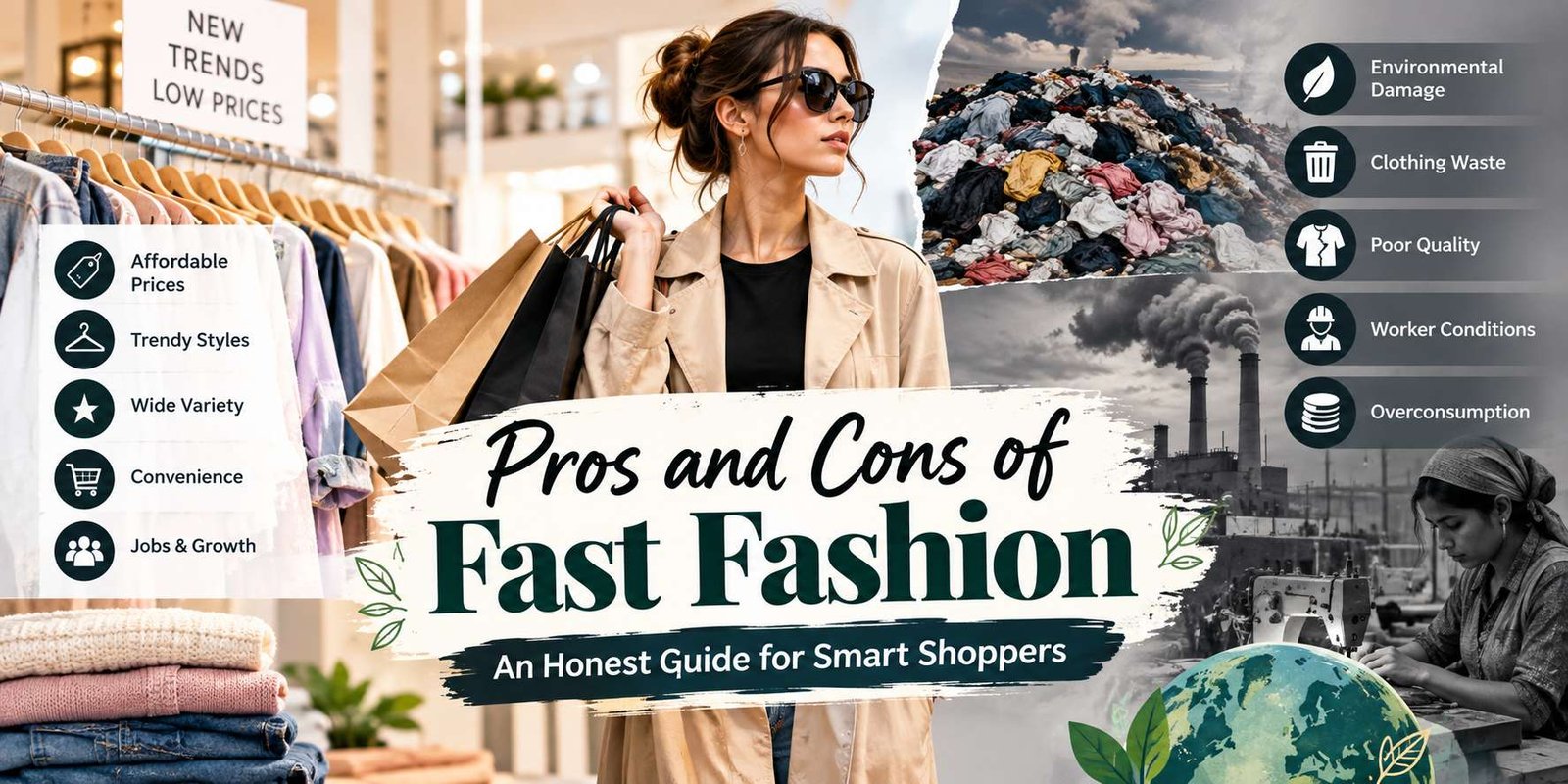
Pros and Cons of Fast Fashion: A Shopper’s Guide
Pros and Cons of Fast Fashion: The pros and cons of fast fashion are worth understanding before your next shopping trip. Fast fashion offers trendy clothes at very low prices, but that low price often comes with hidden costs for people and the planet.
This guide gives you a fair look at both sides. You will learn what fast fashion is, why people love it, where the problems lie, and how to make smarter choices without feeling guilty or confused.
What Is Fast Fashion?
Fast fashion is a way of making and selling clothes quickly and cheaply. Brands copy or adapt popular styles and bring them to stores in a very short time.
New items arrive almost every week. Shoppers see fresh styles all the time, so they feel they must keep buying.
How It Works
The business model rests on a few simple ideas:
- Quick design and production cycles
- Low-cost fabrics and large factories
- Big orders to keep prices down
- Frequent new arrivals
- Strong marketing on social media
This system is why a trendy outfit can cost less than a meal at a restaurant.
The Pros of Fast Fashion
Fast fashion would not be so popular without real benefits. Here are the main advantages.
1. Low Prices
Affordable clothing is the biggest attraction. For families on a tight budget, students, and people who need work clothes, low prices make a big difference.
Buying a few basic items without a big expense can feel like a relief.
2. Easy Access to Trends
You do not need a designer budget to look current. Fast fashion brings runway-inspired styles to everyday shoppers.
If a trend is exciting, you can try it without a large investment.
3. Wide Variety
Fast fashion stores offer many styles, colors, and sizes. You can find formal, casual, and party outfits in one place.
This variety helps people explore their own taste.
4. Convenience
Many fast fashion brands sell through stores and websites with quick delivery. Returns are often simple too.
For busy people, this saves time.
5. Jobs and Economic Activity
The industry employs millions of people worldwide, from factory workers to delivery staff and designers. In many countries, garment manufacturing is a major source of income and a path to economic growth.
6. Good for Short-Term Needs
Sometimes you only need an outfit for a short time, such as a costume, a one-day event, or fast-growing children’s clothes. In these cases, a low-cost option can be practical.
The Cons of Fast Fashion
The downsides are serious, and they affect many people. Here are the biggest ones.
1. Environmental Damage
Making clothes uses large amounts of water, energy, and chemicals. Dyeing and finishing can pollute rivers if waste is not treated properly.
Many fast fashion garments are made from synthetic fibers such as polyester. These fibers come from fossil fuels and can shed tiny plastic particles when washed.
2. Clothing Waste
Cheap clothes are often worn only a few times. Many end up in landfills or are burned.
Because items are so inexpensive, people may feel less need to repair or keep them.
3. Poor Quality
Low prices usually mean thin fabrics, weak seams, and shorter life. A shirt that loses shape after a few washes may cost more in the long run than one good piece.
Buying the same item again and again adds up.
4. Worker Conditions
In some places, garment workers face low wages, long hours, and unsafe workplaces. Public attention has grown after several serious factory accidents in past years.
Not every factory is the same, but supply chains are often hard to see clearly. That makes it difficult for shoppers to know who made their clothes.
5. Overconsumption
Constant new arrivals and flash sales push people to buy more than they need. This can lead to crowded closets, wasted money, and clothes with the tags still on.
6. Copying and Creative Concerns
Fast fashion is sometimes accused of copying independent designers. Small creators may lose income and recognition when their ideas are quickly imitated.
7. Hidden Costs
The shelf price does not include the cost of pollution, waste, or poor working conditions. These costs are paid by communities and the environment instead of the shopper.
Pros and Cons of Fast Fashion: A Quick Summary
The Main Pros
- Low prices
- Trendy designs
- Large variety
- Easy shopping
- Jobs and income for many people
The Main Cons
- Environmental harm
- Large amounts of textile waste
- Weak durability
- Worker rights concerns
- Overbuying and wasted money
Fast Fashion vs. Slow Fashion
Slow fashion is the opposite approach. It focuses on quality, timeless style, fair production, and buying less.
Key Differences
- Fast fashion: many cheap items that are worn briefly
- Slow fashion: fewer, better items that are worn for years
Slow fashion usually costs more at first. Over time, a good piece can cost less per wear.
A Simple Cost-Per-Wear Example
Imagine a $20 top that you wear five times. That is $4 per wear.
Now imagine a $60 top that you wear 60 times. That is $1 per wear.
The cheaper item is not always the cheaper choice.
Is Fast Fashion Always Bad?
The answer is not simple. Fast fashion helps many people dress affordably, and ethical shopping is not always possible for everyone.
At the same time, the system has real problems that need attention. The goal is not perfection. It is making better choices where you can.
How to Shop Smarter
You do not need to quit fast fashion overnight. Small changes can make a real difference.
Buy Less, Choose Better
Before buying, ask yourself three questions:
- Will I wear this at least 30 times?
- Does it match what I already own?
- Would I still want it if it were not on sale?
Check Quality in the Store
Look closely at stitching, fabric weight, and hems. Stretch the fabric gently and see if it recovers.
Try Secondhand First
Thrift shops, online resale apps, and clothing swaps offer great value. You may find high-quality items at fast fashion prices.
Choose Natural and Durable Fabrics
Cotton, linen, and wool often last longer than very thin synthetic fabrics. Check the label before buying.
Care for Your Clothes
Wash less often, use cold water, and air dry when possible. Repair small damage early.
Support Brands That Share Information
Look for brands that explain where and how their clothes are made. Clear information is a good sign.
Donate or Recycle Responsibly
Pass on clothes that still look good. Look for textile recycling programs for worn-out items.
Building a Smart, Budget-Friendly Wardrobe
A simple plan can help you enjoy fashion without waste.
- Start with versatile basics in neutral colors
- Add one or two trendy items each season
- Mix old pieces with new ones
- Keep a list of what you truly need
- Wait 48 hours before buying something you want impulsively
This approach saves money and reduces clutter.
Common Mistakes to Avoid
- Buying something only because it is cheap
- Ignoring fabric and fit
- Shopping when bored or stressed
- Believing that a big sale means a good deal
- Throwing away clothes that could be repaired
- Trusting vague “eco-friendly” labels without details
Frequently Asked Questions
What are the main pros and cons of fast fashion?
The pros include low prices, trendy styles, variety, and convenience. The cons include environmental damage, waste, poor quality, and worker welfare concerns.
Why is fast fashion so cheap?
It uses low-cost materials, large factories, and big orders. Costs such as pollution and low wages may not be reflected in the price.
Is fast fashion bad for the environment?
It can be, because of high resource use, chemical pollution, and large amounts of discarded clothing. The impact depends on how the clothes are made and how long they are worn.
Can fast fashion be sustainable?
Some brands are making changes, such as using recycled materials, but true sustainability also requires people to buy less and keep clothes longer.
Is slow fashion better than fast fashion?
It is usually better for durability and the environment, but it can cost more at the start. It may not suit every budget.
How can I reduce my fast fashion habit?
Buy only what you need, choose quality over quantity, shop secondhand, and repair clothes instead of replacing them.
Is secondhand clothing a good alternative?
Yes. It extends the life of clothes and is often cheaper than buying new.
Does fast fashion help the economy?
It creates jobs and income in many regions, but it can also create problems when workers are underpaid or conditions are unsafe.
Conclusion
The pros and cons of fast fashion show a complicated picture. It makes style affordable and accessible, yet it can harm the planet, waste resources, and put pressure on workers.
You do not have to be perfect. Buy fewer items, choose better quality, try secondhand, and take care of what you own. Small habits add up, and smart shopping can protect both your wallet and the world.






One Comment