
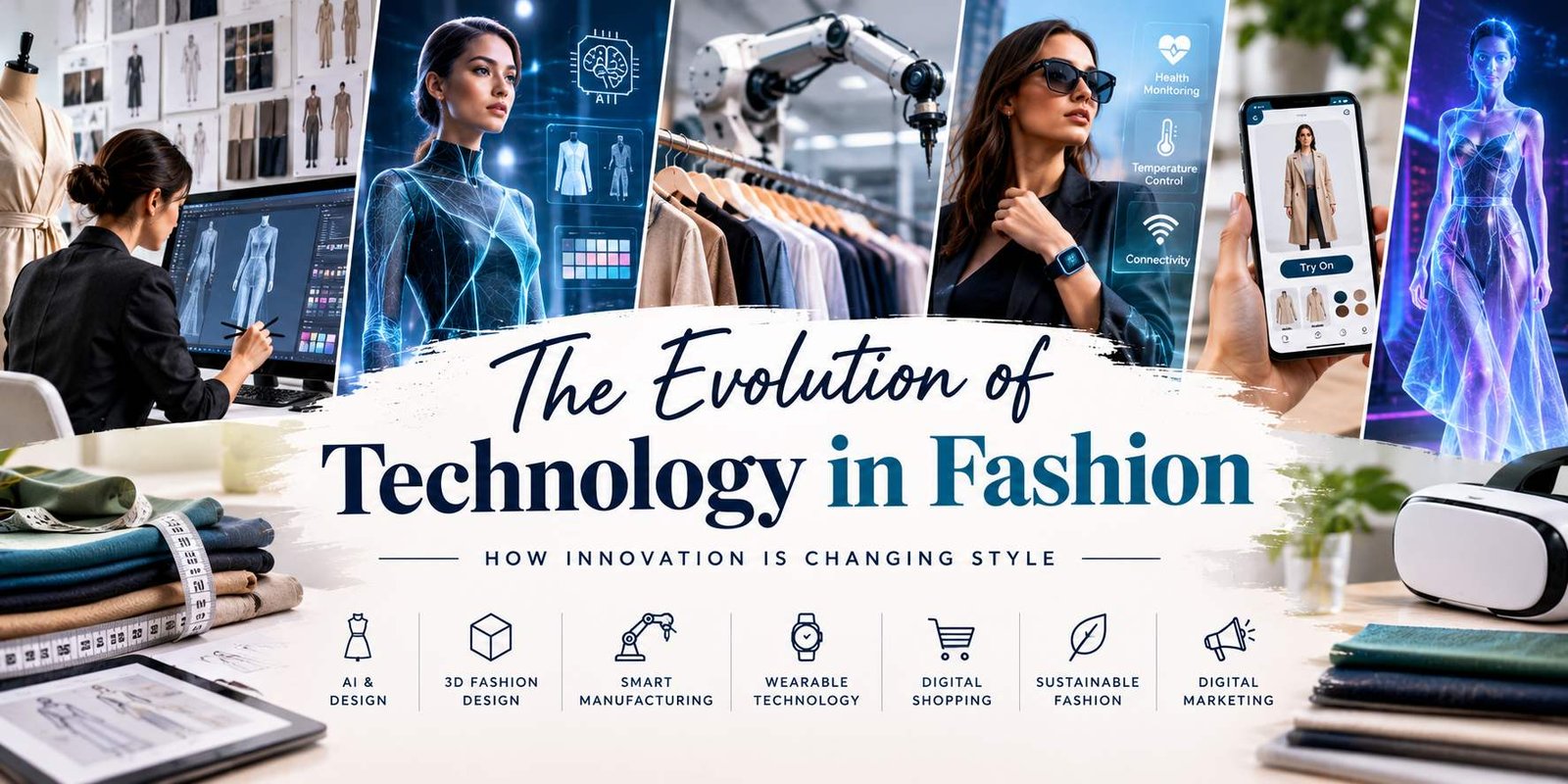
The Evolution of Technology in Fashion: A Complete Guide
The evolution of technology in fashion is the story of how we moved from clothes stitched by hand over many days to garments designed by algorithms and delivered to our doors within hours. Every big change in what we wear, from the cut of a dress to the price of a T-shirt, can be traced to a new machine, material, or idea.
In this guide, you will walk through the major turning points step by step, learn how each invention changed the way clothes are made and sold, and see what the next chapter may look like. Whether you love style, study design, or run a clothing brand, understanding this history helps you make smarter choices today.
Why the Evolution of Technology in Fashion Matters
The Evolution of Technology in Fashion: Fashion is often treated as pure creativity, but creativity needs tools. Technology decides:
- How fast a garment can be made
- How much it costs
- Which materials designers can use
- Who gets to buy it, and from where
- How much waste the process leaves behind
Seeing the full picture explains why modern wardrobes look the way they do, and why the industry faces new questions about sustainability and ethics.
A Quick Timeline
| Period | Key Technology | What It Changed |
|---|---|---|
| 1760s to 1800s | Spinning and weaving machines, Jacquard loom | Cloth could be made in factories |
| 1840s to 1850s | Practical sewing machines | Clothes made faster and cheaper |
| 1856 | First synthetic dye (mauveine) | Bright, affordable colors |
| 1900s to 1930s | Zippers, rayon, nylon | New fasteners and man-made fibers |
| 1950s to 1970s | Polyester, spandex, performance fabrics | Stretch, easy-care, and sportswear |
| 1980s to 1990s | CAD design, global supply chains, fast fashion | Quicker trends and lower prices |
| 2000s | Online shopping, social media | Global reach and instant inspiration |
| 2010s to 2020s | 3D printing, AR, AI, smart textiles | Personalization and new materials |
Stage 1: The Industrial Revolution Changes Cloth (1700s to 1800s)
Before factories, most fabric was spun and woven by hand, so clothing was costly and often repaired for years. In the late 1700s, inventions such as the spinning jenny and the power loom allowed cloth to be produced at a scale that was unimaginable before.
The Jacquard Loom: A Surprising Link to Computers
In 1804, Joseph Marie Jacquard introduced a loom controlled by punched cards, which let weavers create complex patterns automatically. The idea of giving instructions to a machine through cards later inspired early computing, a reminder that fashion and technology have influenced each other for centuries.
Stage 2: The Sewing Machine Speeds Up Everything (1840s to 1900s)
Elias Howe patented a lockstitch sewing machine in 1846, and Isaac Singer improved the design and marketed it widely in the 1850s. Sewing at home and in workshops became many times faster.
What Changed
- Ready-made clothing became affordable for ordinary families
- Standard sizing began to appear
- Garment factories grew in cities
At the same time, the invention of synthetic dye by William Henry Perkin in 1856 gave the world vivid purples and later many other colors that were once reserved for the wealthy.
Stage 3: New Fasteners and the First Man-Made Fibers (1890s to 1940s)
Small inventions often transform everyday life. The zipper, developed in the 1890s and improved into its modern form by Gideon Sundback in 1913, replaced rows of buttons and hooks.
Around the same time, rayon appeared as an “artificial silk” made from plant cellulose. Then in 1935, DuPont’s team created nylon, the first fully synthetic fiber, which became famous through stockings and later played an important role in the war effort.
Stage 4: The Age of Synthetics and Performance Fabrics (1950s to 1980s)
After the Second World War, laboratories became as important to fashion as design studios.
- Polyester offered wrinkle-resistant, quick-drying clothing
- Spandex (Lycra), invented in 1958, added stretch and changed activewear, swimwear, and jeans
- Hook-and-loop fasteners like Velcro entered everyday products
- Waterproof, breathable membranes appeared in the late 1960s and 1970s, helping outdoor clothing become lighter and more comfortable
These materials made clothes easier to care for and gave rise to the sportswear culture we see everywhere today.
Stage 5: Computers, Globalization, and Fast Fashion (1980s to 1990s)
Computer-aided design, usually shortened to CAD, let designers draw patterns on screen, adjust fits, and send instructions straight to cutting machines. Digital inventory systems and faster shipping allowed retailers to track sales almost in real time.
The Rise of Fast Fashion
Some retailers learned to bring runway-inspired styles to stores in weeks instead of months. This model made clothes cheaper and trends faster, but it also encouraged overproduction and short-lived wardrobes, a problem the industry is still working to solve.
Stage 6: The Internet Reshapes Shopping (2000s)
Online stores such as early fashion e-commerce sites let shoppers buy clothing without visiting a mall. Free returns, size guides, and customer reviews gradually made online buying feel safe.
Social Media Becomes the New Runway
Photo and video platforms turned everyday people into trendsetters. A style could now go from one street corner to millions of screens overnight. Brands began using influencers, short videos, and live shopping to reach customers directly.
Stage 7: Smart Tech Arrives (2010s to Today)
The modern phase of the evolution of technology in fashion brings together data, new materials, and automation.
3D Printing and Digital Design
Designers have used 3D printing to create intricate accessories, shoes, and even full garments that would be almost impossible to sew by hand. Digital 3D design software also lets brands create virtual samples, which can cut down on wasted fabric during development.
Artificial Intelligence in Fashion
AI now supports many parts of the business:
- Trend forecasting by analyzing social media and sales data
- Personal recommendations that suggest items based on your taste
- Size and fit tools that reduce returns
- Inventory planning that helps brands avoid making too much stock
- Design assistance that produces ideas, patterns, and mood boards
AI works best as a partner to human creativity, not a replacement for it.
Augmented and Virtual Try-On
Using a phone camera, shoppers can preview glasses, makeup, shoes, or clothing on themselves before buying. Virtual fitting rooms are still improving, but they already help people feel more confident online.
Smart Textiles and Wearables
Fabrics now include sensors, heat control, and conductive threads. Examples include jackets that adjust warmth, sportswear that tracks movement, and accessories that connect to your phone. Wearable devices have also blended fashion with health and communication.
Digital Fashion
Virtual clothing for avatars, games, and social photos has opened a new creative space where garments exist only on screens. It allows experimentation without physical waste, although long-term demand is still developing.
Technology and Sustainability: Solving the Problems It Helped Create
Modern technology made clothing abundant, but also raised concerns about waste, water use, and pollution. New innovations aim to repair some of that damage.
- Recycled fibers from plastic bottles and old garments
- Plant-based and lab-grown materials, such as mushroom-root leather alternatives
- Waterless or low-water dyeing methods
- On-demand manufacturing that makes items only after they are ordered
- Better tracking of where and how a garment was made, with digital product records being introduced in some regions
- Resale and rental platforms that extend the life of clothes
Technology alone cannot fix overconsumption, but it gives brands tools to reduce harm when used responsibly.
The Technology Triangle: A Simple Way to Understand Every Change
Looking back, almost every breakthrough in fashion fits into one of three corners:
- Make it: Machines, fibers, and tools that change how clothes are produced
- Move it: Transport, communication, and e-commerce that change how clothes are sold
- Mind it: Data and design tools that change how we choose and care for clothes
Whenever you hear about a new fashion technology, ask which corner it belongs to. That quick question reveals what problem it is trying to solve.
What Comes Next?
No one can predict the future perfectly, but several trends look likely to grow:
- More personalization, including made-to-measure clothing at everyday prices
- Smarter recycling, separating blended fabrics so they can become new fibers
- Wider use of AI and automation in design and logistics
- Clothes that connect to health, safety, and entertainment
- Greater transparency, so shoppers can see a product’s story
- Human craftsmanship valued even more, because handmade work stands out in an automated world
How to Use This Knowledge as a Shopper or Creator
For Shoppers
- Read fabric labels and learn what each material does
- Use virtual try-on and size tools to reduce returns
- Support brands that share clear information about their processes
- Choose quality pieces that last, no matter how advanced the technology behind them
For Designers and Brand Owners
- Start with small digital tools such as 3D sampling or inventory software
- Test new ideas in limited runs before scaling
- Be open about how and where products are made
- Combine technology with a strong creative identity
Frequently Asked Questions
What is the evolution of technology in fashion?
It is the long process of how inventions in machinery, materials, communication, and data have changed the way clothing is designed, produced, sold, and worn.
What was the most important invention in fashion history?
Many people point to the sewing machine because it made clothes faster and cheaper to produce. Man-made fibers and the internet are also strong contenders.
How has the internet changed fashion?
It allowed global shopping, instant trend sharing, direct brand-to-customer sales, and the rise of influencers.
Is AI replacing fashion designers?
No. AI supports tasks such as forecasting and idea generation, but taste, storytelling, and cultural understanding still depend on people.
Is technology making fashion more sustainable?
It can, through recycled materials, on-demand production, and better tracking. However, it can also encourage overconsumption if used only to make more clothes faster.
What are smart clothes?
They are garments with built-in technology, such as sensors, heating elements, or conductive threads that connect to a phone or respond to the environment.
What is the future of fashion technology?
Expect more personalization, recycling innovations, AI tools, and transparent supply chains, together with a renewed appreciation for craftsmanship.
Conclusion
The evolution of technology in fashion shows that every leap, from the Jacquard loom to AI-powered design, has changed not only how clothes are made but also how we express ourselves. The next chapter will be shaped by sustainability, personalization, and smarter use of data. As a shopper, choose with awareness; as a creator, use technology to support your vision instead of replacing it. When innovation and individuality work together, fashion moves forward in the best possible way.




One Comment