
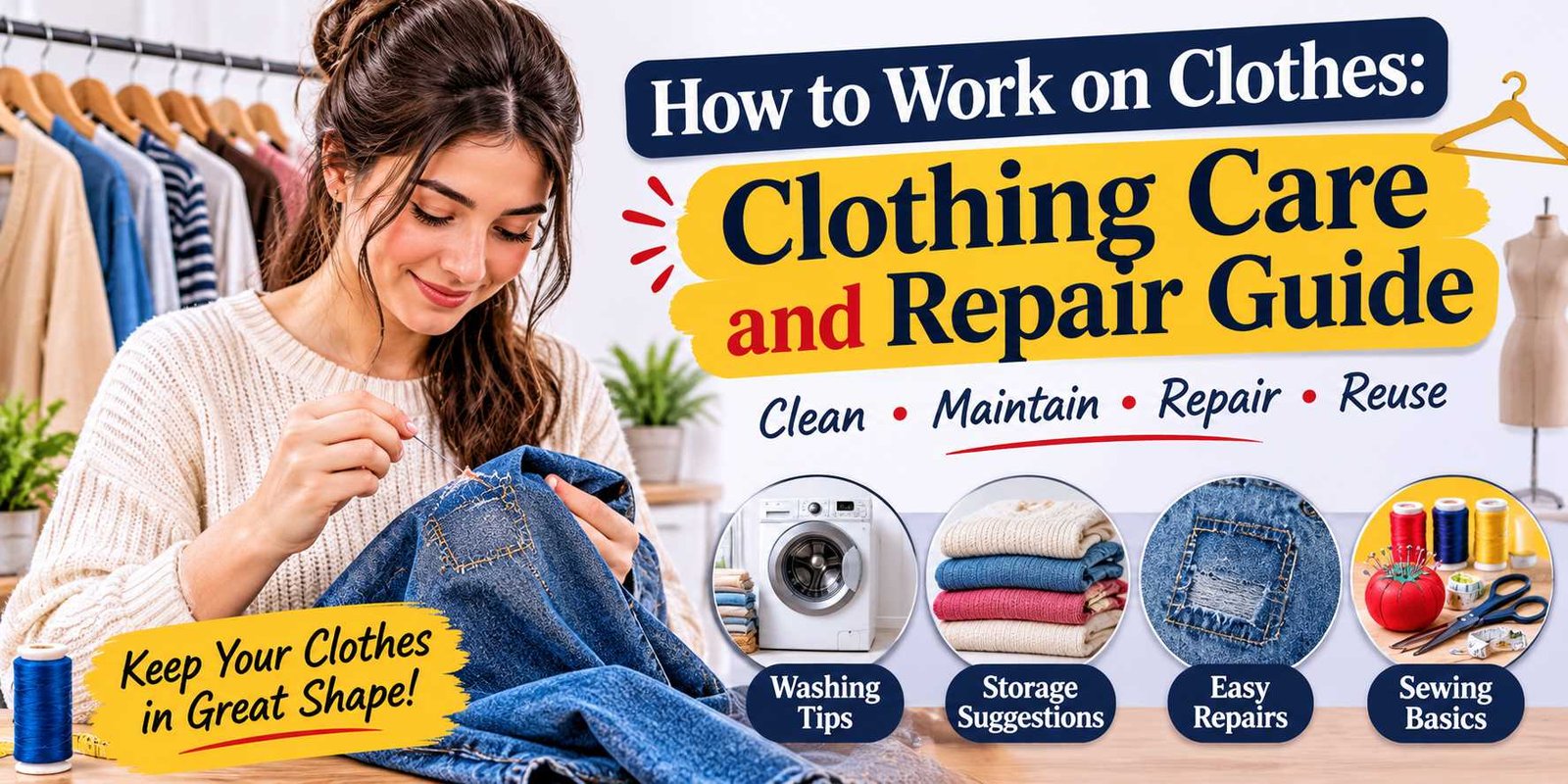
How to Work on Clothes: Clothing Care and Repair Guide
Work on Clothes: Clothing is an important part of everyday life. The clothes people wear can reflect their personality, lifestyle, comfort, and personal style. However, buying new outfits is not the only way to maintain a stylish wardrobe. Learning how to work on clothes can help people improve their outfits, repair damaged garments, adjust clothing sizes, and make old pieces look fresh again.
Working on clothes includes several activities, such as sewing, repairing small damages, changing garment designs, adjusting lengths, removing stains, and improving the overall appearance of different fabrics. These simple techniques can help extend the life of clothing while reducing unnecessary spending.
Whether someone enjoys DIY fashion projects or simply wants to take better care of everyday outfits, understanding basic clothing techniques can make a noticeable difference.
This guide explains different ways to work on clothes, the tools needed, useful clothing repair methods, fabric care tips, and creative ideas for updating an existing wardrobe.
What Does Working on Clothes Mean?
Working on clothes means making changes or improvements to garments through different clothing techniques. These activities may involve repairing, adjusting, decorating, cleaning, or redesigning clothing.
Some people work on clothes because they enjoy creative fashion projects, while others want to save money by repairing garments instead of replacing them.
For example, a person might shorten a pair of trousers, replace a missing button, repair a small hole in a shirt, or add decorative details to an ordinary jacket.
Working on clothes does not always require professional sewing skills. Many simple improvements can be completed at home with basic tools and a little patience.
Why Is It Important to Work on Clothes?
Taking care of clothing offers several practical benefits. It helps people maintain their wardrobes, avoid unnecessary purchases, and make better use of the garments they already own.
1. Extending the Life of Clothing
Clothing can become damaged through regular use, washing, and storage. Small problems such as loose buttons, open seams, and minor tears do not always mean a garment needs to be replaced.
Repairing these issues can help clothing remain wearable for a longer period.
2. Saving Money
Buying replacement clothing regularly can become expensive. Basic repairs and alterations offer an affordable alternative.
For example, replacing a button or repairing a loose seam usually costs much less than purchasing a new shirt or jacket.
3. Improving Personal Style
Working on clothes gives people an opportunity to personalize their outfits. Simple changes can transform an ordinary garment into something more interesting.
Adding embroidery, changing buttons, adjusting sleeves, or decorating denim can create a different appearance without buying an entirely new outfit.
4. Supporting Sustainable Fashion
Repairing and reusing clothing can reduce unnecessary textile waste. It also encourages consumers to think more carefully about their purchasing habits.
A wardrobe that includes well-maintained garments can support a more thoughtful approach to fashion.
Essential Tools Needed to Work on Clothes
Before starting a clothing project, it is helpful to collect a few basic tools. The right equipment makes sewing, repairing, and altering garments easier.
Sewing Needle and Thread
Needles and thread are among the most important supplies for clothing repairs. They can be used to attach buttons, close small holes, repair seams, and make basic alterations.
Choose thread that matches the garment’s color whenever possible.
Fabric Scissors
Fabric scissors are designed to cut textiles cleanly. They are useful for trimming loose threads, shortening fabric, and preparing materials for sewing projects.
Avoid using ordinary paper scissors because they may produce uneven cuts.
Measuring Tape
A flexible measuring tape helps measure waistlines, sleeves, trouser lengths, and other garment dimensions.
Accurate measurements are especially important when adjusting clothing sizes.
Pins and Clips
Sewing pins and fabric clips hold materials together before stitching. They help prevent fabric from moving while working on a particular area.
Seam Ripper
A seam ripper helps remove unwanted stitches without unnecessarily damaging the surrounding fabric.
It is useful when correcting sewing mistakes or removing old seams during clothing alterations.
Iron and Ironing Board
An iron helps remove wrinkles and create neat folds. It is also useful when preparing fabric before sewing or completing an alteration.
Always check the fabric’s care label before selecting a temperature.
Different Ways to Work on Clothes
There are many techniques people can use to improve their clothing. Some require sewing knowledge, while others involve simple cleaning or styling methods.
1. Repairing Damaged Clothing
Repairing clothes is one of the easiest ways to make an existing wardrobe more useful.
Common clothing problems include:
- Missing or loose buttons.
- Small holes in fabric.
- Torn pockets.
- Open seams.
- Broken stitching.
- Loose hems.
- Damaged zippers.
Small repairs can often be completed at home. However, complicated damage may require professional assistance.
2. Changing Clothing Length
Sometimes clothing does not fit properly because it is too long or too short.
Adjusting garment length can improve both comfort and appearance.
For example, trousers can be shortened to create a cleaner fit. Dress sleeves can be adjusted to suit personal preferences, while long skirts can be modified to create a different silhouette.
Before cutting fabric, measure the desired length carefully and leave enough material for the hem.
3. Adjusting Clothing Sizes
Clothing alterations can help improve the fit of existing garments.
Common adjustments include:
- Taking in loose waistbands.
- Adjusting trouser legs.
- Shortening sleeves.
- Changing shoulder seams.
- Adjusting dress waistlines.
- Making minor side-seam changes.
Not every garment can be altered easily. The fabric, original construction, lining, and available seam allowance all affect the result.
4. Adding Decorative Details
Decorating clothing is a creative way to update older garments.
Some popular decoration techniques include embroidery, fabric patches, decorative buttons, lace details, and simple fabric painting.
For example, a plain denim jacket can receive embroidered flowers or small decorative patches. A basic cotton shirt can look different after replacing its original buttons with more distinctive ones.
Choose decorations that match the garment’s fabric and overall design.
5. Improving Clothing Through Styling
Working on clothes does not always mean physically changing the garment. Styling can also improve how an outfit looks.
Try combining different clothing pieces, changing accessories, experimenting with layering, or adjusting how a garment is tucked and worn.
A simple white shirt, for instance, can create several different outfits when paired with trousers, denim, skirts, or tailored jackets.
How to Repair Common Clothing Problems
Understanding basic repair techniques can help people handle everyday clothing damage.
How to Fix a Loose Button
A loose button is a common clothing problem that can usually be repaired with a needle and matching thread.
First, remove any damaged thread around the button. Position the button in its original location and pass the needle through the holes several times.
Secure the thread with a small knot on the reverse side of the fabric.
Avoid pulling the thread too tightly because the button needs enough room to move comfortably.
How to Repair a Small Hole
Small holes can sometimes be repaired with hand stitching.
Turn the garment inside out and bring the fabric edges together carefully. Use small stitches to close the opening without stretching the material.
For delicate or knitted fabrics, choose a repair method suitable for the fabric structure. A visible patch may also be a creative option for casual garments.
How to Fix an Open Seam
An open seam can make a garment uncomfortable or difficult to wear.
Turn the clothing inside out and align the separated fabric edges. Use matching thread to stitch along the original seam line.
Finish the stitching securely and check that the repaired area feels comfortable.
How to Repair a Loose Hem
A loose hem can make trousers, skirts, and dresses look untidy.
Fold the fabric back into its original position and secure it with pins or clips. Use small, even stitches to attach the folded edge.
For a neat result, avoid making the stitches too large or too tight.
How to Work on Different Types of Fabric
Different fabrics require different handling methods. Understanding their characteristics can help prevent damage during repairs and alterations.
Cotton
Cotton is widely used for shirts, dresses, trousers, and casual clothing.
It is generally easy to sew and handle. Cotton garments can often be repaired with ordinary sewing needles and standard thread.
However, always check the care label because some cotton fabrics may shrink during washing.
Denim
Denim is a strong fabric commonly used for jeans, jackets, skirts, and shorts.
Working on denim may require stronger needles and durable thread. Thick seams can be difficult to sew by hand, so a suitable sewing machine may make the process easier.
Small denim tears can sometimes be repaired with patches or reinforcing stitches.
Polyester
Polyester is a synthetic fabric used in many everyday garments.
It generally holds its shape well and is available in different textures and weights.
Use suitable needles and moderate heat when ironing polyester. Excessive heat may damage the fibers.
Silk
Silk is a delicate fabric that requires careful handling.
Fine needles, lightweight thread, and gentle stitching techniques are usually better choices.
Avoid pulling silk tightly while sewing because this can create visible marks or damage the fabric.
Wool
Wool is commonly used in sweaters, coats, scarves, and winter clothing.
Knitted wool garments may need special repair techniques because ordinary stitching can change their shape.
Small holes in wool knitwear may be repaired through darning or suitable patching methods.
How to Make Old Clothes Look New Again
An old garment does not necessarily need to be discarded simply because its appearance has changed.
A few creative improvements can help refresh clothing.
Replace Old Buttons
Changing buttons is a simple way to update shirts, cardigans, jackets, and coats.
Choose buttons that complement the garment’s color, texture, and design.
Add Embroidery
Embroidery can introduce color and personality to plain clothing.
Small designs on shirt pockets, jacket sleeves, and denim areas can create a personalized appearance.
Use Fabric Patches
Fabric patches can cover small damaged areas while adding decorative interest.
They are particularly popular for denim jackets, jeans, casual shirts, and children’s clothing.
Change the Overall Fit
Sometimes a garment looks outdated because its original shape no longer suits current styling preferences.
Professional alterations can help update its silhouette. For example, oversized trousers may be adjusted for a more tailored appearance, depending on the garment’s construction.
Experiment With Layering
Layering is another way to give old clothes a fresh appearance.
A familiar shirt can be worn under a sweater, cardigan, blazer, or jacket. This creates new combinations without changing the original garment.
Common Mistakes to Avoid When Working on Clothes
Clothing projects can become frustrating when basic preparation is ignored. Avoiding a few common mistakes can help produce better results.
1. Cutting Fabric Without Measuring
Cutting fabric without taking accurate measurements can permanently change a garment.
Measure twice before making any cuts, especially when shortening trousers, skirts, or sleeves.
2. Using the Wrong Needle
Different fabrics need different needle sizes and types.
A needle designed for lightweight cotton may not work well with thick denim. Similarly, heavy needles may leave visible holes in delicate fabrics.
3. Choosing the Wrong Thread
Thread should be appropriate for both the fabric and the purpose of the repair.
Using weak thread on a heavily used garment may cause the repair to open again.
4. Ignoring Fabric Care Instructions
Heat, water, and cleaning products can affect different textiles in different ways.
Always check garment labels before washing, ironing, or applying cleaning products.
5. Rushing the Repair Process
Working too quickly can create uneven stitching, poor measurements, and unnecessary fabric damage.
Take time to prepare the garment and inspect the finished repair.
Tips for Better Clothing Maintenance
Regular maintenance can help garments remain attractive and comfortable.
Here are some useful habits to follow:
- Read care labels before washing clothes.
- Separate garments according to color and washing requirements.
- Avoid overcrowding washing machines.
- Store delicate garments carefully.
- Fold knitwear instead of hanging it when appropriate.
- Repair loose buttons and seams early.
- Keep clothes away from excessive moisture.
- Use suitable hangers for structured garments.
- Remove stains using fabric-appropriate methods.
- Check pockets and zippers before washing.
These habits can reduce unnecessary damage and help clothing maintain its original appearance.
Is It Better to Repair Clothes or Buy New Ones?
The decision depends on the garment’s condition, repair cost, quality, and personal needs.
Repairing clothing is often a sensible choice when the garment is made from durable fabric and has limited damage.
For example, replacing a missing button or repairing a small tear is usually more practical than purchasing a replacement.
However, buying new clothing may be reasonable when a garment has extensive damage, poor fabric quality, or alterations that would cost more than replacing it.
A useful approach is to evaluate each item before deciding what to do.
Working on Clothes as a Creative Fashion Hobby
Working on clothes can also become an enjoyable creative activity.
Many people enjoy transforming ordinary garments into personalized fashion pieces. This activity allows them to experiment with colors, textures, patterns, and different design ideas.
Beginners can start with simple projects such as:
- Decorating an old denim jacket.
- Replacing buttons on a cardigan.
- Adding patches to casual trousers.
- Repairing a favorite shirt.
- Creating a simple fabric accessory.
- Adjusting the length of a skirt.
As experience grows, more advanced projects may include changing garment shapes, combining different fabrics, and creating original clothing designs.
Starting with inexpensive or unwanted garments is a practical way to develop skills without risking valuable clothing.
How Working on Clothes Supports Sustainable Fashion
The fashion industry produces a large amount of textile waste. Extending the useful life of clothing is one practical way individuals can reduce their contribution to this problem.
Repairing, reusing, and altering existing garments can help reduce the need for frequent replacement purchases.
For example, someone who repairs a pair of jeans instead of discarding them makes better use of the materials and resources already invested in that garment.
Clothing swaps, secondhand shopping, creative alterations, and responsible garment care can also support more sustainable wardrobe habits.
Although individual repairs cannot solve every environmental challenge associated with fashion production, they can encourage more responsible clothing consumption.
When Should You Visit a Professional Tailor?
Some clothing projects are better handled by an experienced tailor.
Professional assistance may be useful when:
- A garment needs major size adjustments.
- A jacket requires shoulder alterations.
- A dress needs complicated fitting changes.
- A zipper is damaged in a difficult location.
- Delicate fabric requires specialist repair.
- An expensive garment has extensive damage.
- Formalwear needs precise measurements.
A professional tailor can assess the garment’s construction and explain which alterations are practical.
This is particularly important for structured garments, lined clothing, and formal outfits where inaccurate changes may affect the entire design.
Frequently Asked Questions
1. What Does It Mean to Work on Clothes?
Working on clothes means repairing, altering, decorating, cleaning, or improving garments. It can include sewing, replacing buttons, adjusting sizes, and updating clothing designs.
2. Can Beginners Work on Clothes at Home?
Yes. Beginners can start with simple tasks such as sewing buttons, repairing small holes, fixing loose hems, and decorating old garments.
3. What Tools Are Needed to Work on Clothes?
Basic tools include sewing needles, thread, fabric scissors, measuring tape, pins, clips, a seam ripper, and an iron.
4. Is Working on Clothes Expensive?
Not necessarily. Many basic clothing repairs require only inexpensive supplies. More complicated alterations may involve professional tailoring costs.
5. Can Working on Clothes Help Save Money?
Yes. Repairing and adjusting existing garments can reduce the need to replace clothing whenever minor damage occurs.
6. Which Fabrics Are Easiest to Work With?
Cotton is generally a beginner-friendly fabric because it is widely available and relatively easy to sew. Lightweight denim and some polyester fabrics can also be suitable for simple projects.
7. How Can I Make Old Clothes Look Different?
You can replace buttons, add embroidery, use fabric patches, change garment lengths, or experiment with different styling combinations.
8. Does Working on Clothes Help the Environment?
Repairing and reusing garments can extend their useful life and reduce unnecessary textile waste. It is a practical habit that supports more responsible fashion consumption.
Conclusion
Learning how to work on clothes is a useful skill for anyone who wants to maintain a practical, attractive, and affordable wardrobe. From repairing small holes and replacing buttons to adjusting garment sizes and creating personalized designs, simple clothing techniques can make a significant difference.
The best approach is to begin with basic projects, understand the fabrics being used, and choose suitable tools for each task. With patience and practice, ordinary garments can be repaired, improved, and given a fresh appearance.
Working on clothes is not only about fixing damaged items. It is also about creativity, personal expression, responsible shopping, and making better use of the clothing already available. By developing these habits, anyone can build a wardrobe that looks good, feels comfortable, and lasts longer.






One Comment