
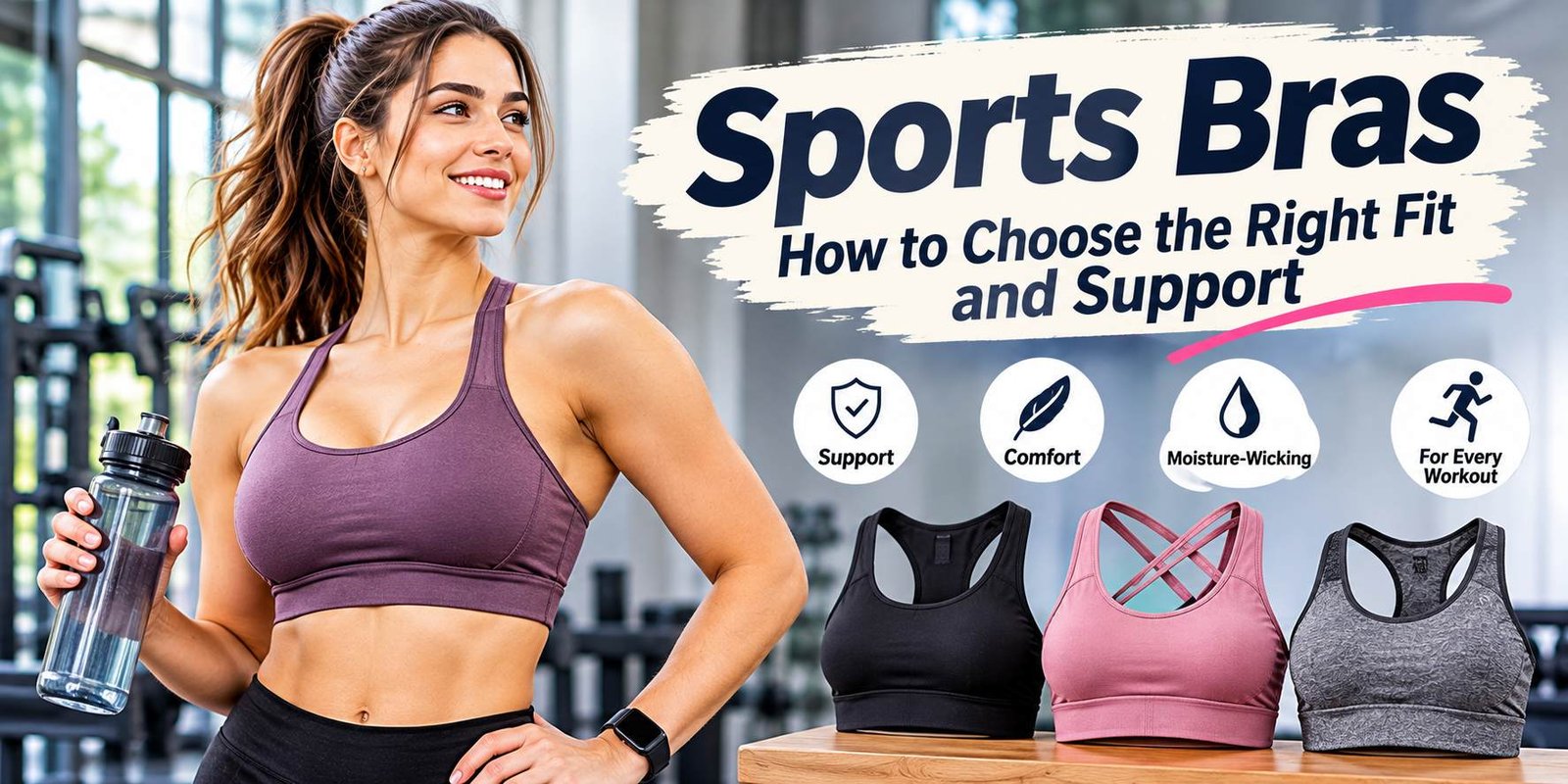
Sports Bras: How to Choose the Right Fit, Support, and Style
Choosing the right Sports Bras can make workouts more comfortable and help you feel supported during physical activity. Whether you enjoy walking, yoga, strength training, cycling, or running, the right design should match your movement, body shape, and personal comfort preferences. A bra that works well for a low-impact activity may not provide enough support for a high-impact workout.
Sports bras are designed to limit breast movement during exercise through compression, individual cup support, or a combination of both. However, finding a suitable option involves more than choosing a color or attractive design. You should also consider the support level, band fit, straps, fabric, coverage, and ease of movement.
This guide explains the main types of sports bras, how to choose the right support level, what features to look for, and how to check the fit before buying. It also covers common shopping mistakes, care tips, and practical advice for building a comfortable activewear collection.
What Are Sports Bras?
Sports bras are specially designed bras that provide support during exercise and other physical activities. Unlike many everyday bras, they use construction features such as supportive bands, elastic fabrics, shaped cups, and wider straps to help control movement.
During activities such as running and jumping, breast movement can occur in multiple directions. A properly fitted sports bra can help reduce excessive movement and discomfort. Sports Medicine Australia explains that support requirements depend on factors such as the activity, breast size, and the design of the bra.
Sports bras are available in many styles, including pullover designs, adjustable bras, racerback options, padded styles, and models with separate cups. Some are made for gentle movement, while others provide stronger support for demanding workouts.
Sports Bras vs. Regular Bras
Regular bras are generally designed for everyday wear, clothing shape, and personal comfort. Sports bras focus more directly on support during movement.
| Feature | Sports Bras | Regular Bras |
|---|---|---|
| Main purpose | Support during exercise | Everyday support and shaping |
| Construction | Often uses stronger elastic and supportive panels | Varies by everyday design |
| Straps | May be wider or adjustable | Available in many widths |
| Fabric | Often includes stretch and moisture-management materials | Depends on the style |
| Support levels | Commonly labeled low, medium, or high impact | Usually not rated by workout impact |
| Best use | Workouts and physical activity | Daily outfits and general wear |
A regular bra may feel comfortable for light daily activities, but it may not provide the movement control needed for running or jumping. Choosing a bra specifically for your planned activity is usually a better approach.
Types of Sports Bras
Different designs provide support in different ways. Understanding these styles can help you narrow down your options.
1. Compression Sports Bras
Compression sports bras hold breast tissue closer to the chest. They usually have a stretchy, close-fitting design and may not have separate molded cups.
These styles are common in pullover designs and can work well for people who prefer a simple, streamlined fit. Depending on the construction and fit, they may suit walking, yoga, strength training, or other activities that do not require the highest level of support.
Look for:
- A secure but comfortable underband
- Stretch fabric that returns to its shape
- Enough coverage for your preferred movement
- Straps that stay in place
Compression alone does not guarantee high support. Always consider the activity and how the bra performs when you move.
2. Encapsulation Sports Bras
Encapsulation bras use separate cups to support each breast individually. Their design is closer to a traditional bra, but the materials and construction are intended for physical activity.
Some styles include adjustable straps, back closures, molded cups, or underwire. These features can help shoppers customize the fit.
Encapsulation designs may be useful for people who prefer individual cup shaping rather than a single compression panel. They are available in different support levels, so check the product details before buying.
3. Combination Sports Bras
Combination sports bras use both compression and encapsulation. They aim to hold the breasts individually while also limiting movement through a supportive outer structure.
These designs can be worth considering for workouts involving running, jumping, or repeated changes in direction. Look for a secure band, suitable cup coverage, comfortable straps, and a construction that does not restrict breathing.
4. Racerback Sports Bras
Racerback sports bras have straps that join or cross toward the upper back. This shape can help keep straps from slipping off the shoulders during movement.
However, a racerback design is not automatically more supportive than every other style. Support depends on the complete construction, fit, fabric, and intended activity.
5. Padded Sports Bras
Padded sports bras include removable or built-in padding. Padding can provide coverage, shaping, or a smoother appearance under workout tops.
Consider whether you prefer removable pads or fixed padding. Removable inserts offer flexibility, although they may shift during activity or need to be taken out before washing.
6. Wireless Sports Bras
Wireless sports bras do not include underwire. They often use a supportive band, fabric panels, and compression to create a secure fit.
They can be a comfortable option for shoppers who dislike underwire. Nevertheless, wireless designs vary widely in support, so choose according to your workout rather than assuming every wireless style is suitable for every activity.
Sports Bras by Support Level
One of the most important shopping decisions is selecting the right support level. Product labels commonly describe sports bras as low-impact, medium-impact, or high-impact.
These labels are useful starting points, but they are not perfectly standardized across all brands. A bra labeled medium support by one company may feel different from a similar product from another company. Check the design details and, when possible, try the bra during movements similar to your workout.
Low-Impact Sports Bras
Low-impact sports bras are designed for activities with relatively gentle movement.
Suitable activities may include:
- Yoga
- Pilates
- Stretching
- Casual walking
- Gentle mobility exercises
These bras may have softer fabrics, lighter compression, and simpler construction. Comfort and freedom of movement are especially important when choosing one.
Medium-Impact Sports Bras
Medium-impact styles provide more support for workouts involving moderate movement.
Common activities include:
- Cycling
- Brisk walking
- Weight training
- Dance fitness
- Moderate gym sessions
Look for a stable band, secure straps, and enough coverage to prevent unwanted shifting. If your workout includes more jumping or running than expected, you may prefer a higher-support option.
High-Impact Sports Bras
High-impact sports bras are designed for activities involving repeated or vigorous movement.
Examples include:
- Running
- HIIT workouts
- Jumping exercises
- Court sports
- Aerobic classes with frequent movement
These designs often use stronger compression, individual cups, wider bands, or adjustable features. Sports Medicine Australia recommends high support for activities involving running, jumping, and forceful arm movements.
Sports Bra Support Comparison
| Support Level | Typical Activities | Features to Consider |
|---|---|---|
| Low impact | Yoga, Pilates, stretching | Soft fabric, gentle compression |
| Medium impact | Cycling, strength training, dance | Secure band, stable straps |
| High impact | Running, HIIT, jumping | Strong support, secure cups, adjustable fit |
Your preferred support level may also depend on your body, comfort, and how much movement you experience. Two people doing the same workout may prefer different designs.
How to Choose the Right Sports Bra
Finding the right option requires looking at more than the size printed on the label. A well-fitting sports bra should feel secure without causing pain, restricting breathing, or limiting normal movement.
1. Know Your Current Measurements
Start by checking your current bra measurements. Your size can change over time, so do not assume that the size you purchased several years ago will still fit.
Many brands provide their own size charts. Follow the instructions for the specific product because sizing can vary between manufacturers and styles.
If you are between sizes, compare the brand’s fit guidance and consider trying more than one size. A professional fitting may also help if you are unsure.
2. Check the Underband
The band provides an important part of the support. It should sit level around your ribcage and feel firm without making it difficult to breathe.
A band that rides up when you raise your arms may be too loose. On the other hand, a band that causes pain, strong pressure, or uncomfortable digging may be too tight.
Try moving your arms, twisting gently, and reaching overhead. The band should remain in place.
3. Check the Cups
The cups should contain your breast tissue comfortably. Look for signs of a poor fit, such as:
- Tissue spilling over the top or sides
- Gaps between the cups and your body
- Wrinkled or loose cup material
- Pinching or uncomfortable pressure
If the bra has separate cups, make sure they sit in a natural position rather than pressing against breast tissue.
4. Evaluate the Straps
Straps should remain secure without digging into your shoulders. If they repeatedly slip, the design or size may not suit your body.
Adjustable straps can be useful because they allow you to change the fit. Wider straps may also feel more comfortable for some people, especially when a bra provides stronger support.
5. Test Your Range of Motion
Do a simple movement check before deciding whether to keep a sports bra. Raise your arms, bend forward, twist, and perform a few gentle jumps if appropriate for the intended activity.
The bra should remain in position and should not cause painful pressure or excessive movement. Test it with the kind of exercise you actually plan to do.
Best Fabrics for Sports Bras
Fabric affects comfort, stretch, breathability, and how a bra feels during a workout. The best choice depends on your activity, personal preferences, and skin sensitivity.
Polyester
Polyester is commonly used in activewear because it is lightweight, durable, and can be designed to manage moisture. Many sports bras combine polyester with elastane or spandex for stretch.
Nylon
Nylon is known for its smooth feel and flexibility. It is often blended with stretch fibers to create close-fitting activewear.
Spandex or Elastane
Spandex, also called elastane, adds stretch and helps fabric move with the body. It is commonly blended with polyester or nylon.
Cotton Blends
Cotton-blend sports bras may feel soft and comfortable for casual wear or light activities. However, cotton can hold moisture, so it may not be the preferred choice for long, sweaty workouts.
Fabric Comparison
| Fabric | Common Characteristics | Considerations |
|---|---|---|
| Polyester | Lightweight and often moisture-managing | Check softness and breathability |
| Nylon | Smooth, flexible feel | Often blended with stretch fibers |
| Spandex / Elastane | Adds stretch and flexibility | Usually combined with another fiber |
| Cotton blends | Soft and familiar feel | May retain more moisture |
Look at the fabric composition rather than relying only on labels such as “performance” or “premium.” The quality of the complete garment matters.
Sports Bras for Different Workouts
Your workout routine should guide your purchase. A bra that works for a relaxed yoga session may not feel secure during a fast run.
Sports Bras for Running
Running involves repeated movement, so many runners prefer high-impact designs. Consider secure cups, a firm band, adjustable straps, and a neckline that provides enough coverage.
If you run outdoors, you may also prefer a smooth design that reduces rubbing under your running shirt.
Sports Bras for Gym Workouts
Gym routines can include weight training, treadmill sessions, machines, and cardio classes. If your workouts vary, a medium- or high-support design may offer more flexibility than a light yoga bra.
For strength training, make sure the bra allows you to reach overhead, bend, and move your shoulders comfortably.
Sports Bras for Yoga and Pilates
Yoga and Pilates often involve stretching, bending, and controlled movement. A low- or medium-support style may be suitable, depending on the poses and your personal needs.
Choose a design that stays in place when you bend forward or raise your arms. Soft seams and flexible material can make longer sessions more comfortable.
Sports Bras for Cycling
Cycling involves repeated upper-body movement and can include longer periods in one position. Look for a secure band and comfortable straps that do not create pressure around the shoulders.
For indoor cycling classes with more vigorous movement, consider a medium-support option.
Sports Bras for HIIT and Dance
HIIT and dance workouts can involve quick direction changes, jumping, and repeated movement. A high-support design may be more comfortable for these routines.
Check the fit carefully because a bra that shifts during exercise can become distracting.
Features Worth Considering Before Buying
Product descriptions can include many technical terms. Focus on features that affect fit and everyday use.
Adjustable straps: These help you customize the shoulder fit.
Adjustable back closure: A hook-and-eye closure can make a bra easier to put on and remove while allowing some fit adjustment.
Front zipper: This may be convenient for people who find pullover styles difficult to remove. Check that the zipper stays secure during movement.
Removable padding: This offers flexibility in coverage and shaping, but inserts may shift during washing or exercise.
Wide underband: A wider band can provide a more stable feel, provided it fits comfortably.
Seamless construction: Fewer or smoother seams may reduce rubbing, although the fit and fabric still matter.
Moisture-management fabric: Some performance fabrics move sweat away from the skin to help manage moisture during exercise.
Common Sports Bra Shopping Mistakes
Even an attractive sports bra may not be the right purchase if it does not suit your body or workout.
Choosing Style Over Support
Color, neckline, and back design can make a product appealing. However, the support level should match the activity first.
Assuming One Bra Works for Every Workout
Different activities create different movement patterns. You may prefer a low-support bra for yoga and a high-support design for running.
Buying the Wrong Band Size
A loose band may move during exercise, while an overly tight one can cause discomfort. Always check how the band feels when you move.
Ignoring the Brand’s Size Chart
Sizing can vary between brands. Check the specific chart rather than automatically ordering the same size from every retailer.
Keeping a Worn-Out Bra
Elastic materials can lose their shape through repeated use and washing. If the band feels loose, straps no longer stay secure, or the bra no longer provides the support it once did, consider replacing it.
Ignoring Skin Comfort
Rough seams, tight edges, or irritating fabric can make a workout unpleasant. Pay attention to rubbing and pressure, particularly during longer sessions.
How to Care for Sports Bras
Proper care can help maintain the fabric and elastic structure. Always follow the garment’s care label because washing instructions differ by material and construction.
General care tips include:
- Fasten hooks before washing to reduce snagging.
- Use a gentle cycle when the care label allows machine washing.
- Consider a laundry bag to protect delicate straps and fabric.
- Use mild detergent and avoid excessive fabric softener if the manufacturer advises against it.
- Air-dry when recommended instead of using high heat.
- Avoid storing damp workout clothing in a closed gym bag.
Check the bra regularly for stretched bands, damaged seams, loose straps, and changes in support. Replace it when it no longer fits or performs comfortably.
How Many Sports Bras Should You Own?
The number depends on how often you exercise and how frequently you do laundry. Someone who works out several times a week may find it useful to keep a small rotation rather than relying on one bra every day.
A practical collection could include:
- One low-support bra for yoga or stretching
- One medium-support bra for gym sessions
- One high-support bra for running or intense workouts
You do not need all three if your routine is simple. Choose the styles that match your actual activities, and make sure each one fits properly.
Frequently Asked Questions About Sports Bras
1. What type of sports bra is best for everyday workouts?
The best type depends on your workout. A medium-support bra may suit many general gym sessions, while running and jumping usually call for stronger support. For yoga or stretching, a low-support option may feel more comfortable.
2. Should a sports bra feel tight?
A sports bra should feel secure, but it should not cause pain, restrict breathing, or dig uncomfortably into your skin. The band should stay in place, and the cups should contain your breast tissue without gaps or spillage.
3. Are high-impact sports bras suitable for running?
Yes. High-impact sports bras are designed for activities involving vigorous movement, including running. Look for a secure band, suitable cup coverage, and comfortable straps.
4. Can I wear a sports bra for yoga?
Yes. Many people choose low- or medium-support sports bras for yoga. Consider the type of poses you practice and choose a design that stays in place during bending and stretching.
5. How often should I replace my sports bra?
There is no single replacement schedule for everyone. Usage, washing habits, fabric quality, and fit all affect how long a bra remains useful. Replace it when the elastic becomes loose, the straps lose stability, seams become damaged, or the support no longer feels adequate.
6. Are padded sports bras better than unpadded ones?
Neither option is automatically better. Padding can provide extra coverage or shaping, while unpadded designs may feel lighter. Choose the style that feels comfortable and provides suitable support for your activity.
7. How do I know if my sports bra is too small?
Common signs include breast tissue spilling over the cups, straps digging into your shoulders, uncomfortable pressure around the band, or difficulty breathing normally. Try another size or design if these problems occur.
8. Can I wear a sports bra all day?
You can wear one for extended periods if it fits comfortably and does not cause irritation or pressure. However, sports bras vary in construction, and a highly compressive workout style may not be the most comfortable choice for every part of the day.
Conclusion
The right Sports Bras should match your body, activity level, and comfort preferences. Start by identifying the workouts you do most often, then compare low-, medium-, and high-support options. Check the band, cups, straps, fabric, and range of motion before making a purchase.
A stylish design is a welcome bonus, but a secure and comfortable fit should guide your decision. With the right features and proper care, you can build an activewear collection that supports your routine and helps you feel comfortable while moving.






One Comment