
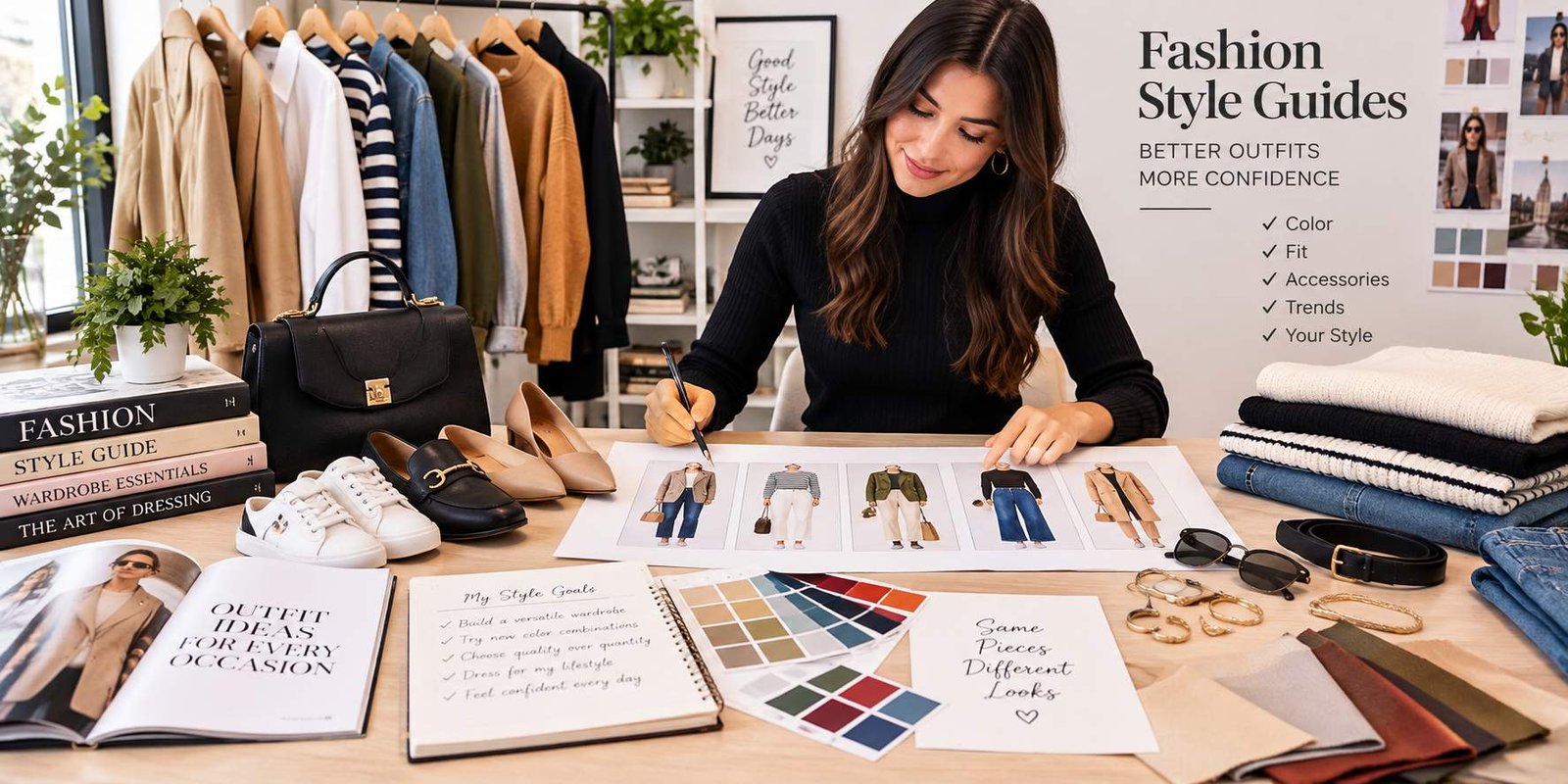
Fashion Style Guides: How to Build Better Outfits With Confidence
Fashion Style Guides: Getting dressed becomes much easier when you understand why certain pieces work together. That is where fashion style guides can help. Instead of telling you to buy a fixed list of clothes or follow every passing trend, a useful style guide gives you a way to make better decisions with what you already own.
Good personal style is not about wearing expensive labels or copying an outfit exactly. It comes from knowing your preferences, understanding proportions, choosing suitable colors, and dressing for the situation. A simple outfit can look polished when those elements are balanced, while a closet full of fashionable pieces can still feel difficult to use.
The most helpful approach is to treat style guidance as a toolkit rather than a set of strict rules.
What Makes a Fashion Style Guide Actually Useful?
A fashion guide should answer practical questions.
Fashion Style Guides: What works for a certain occasion? How can one item be worn several ways? Which colors are easy to combine? How can an outfit feel current without looking forced?
A useful guide also leaves room for individual taste.
For example, two people can wear the same white button-down shirt and create completely different looks. One might pair it with straight-leg jeans and loafers for a relaxed polished outfit. Another could wear it open over a fitted tank with wide-leg trousers and sneakers.
Neither approach is automatically better. The point is understanding the choices behind the outfit.
This is why the best style advice focuses on principles rather than rigid formulas.
Start With the Person, Not the Trend
Before changing a wardrobe, think about the person wearing it.
Your lifestyle has a major effect on what makes sense. Someone who spends most of the week in a casual workplace has different needs from someone attending formal meetings every day. A parent running errands may value movement and easy care, while someone working in a creative studio might have more freedom with unusual silhouettes.
Ask yourself:
- What do I normally do during the week?
- Which clothes do I reach for repeatedly?
- What pieces stay in my closet but rarely get worn?
- Do I prefer simple outfits or noticeable statement pieces?
- Which fabrics feel comfortable?
- What level of maintenance am I willing to handle?
These answers reveal more than a list of current trends.
Fashion Style Guides and the Idea of a Personal Uniform
A personal uniform does not mean wearing identical clothing every day.
It means developing a repeatable combination that feels natural to you.
Someone might repeatedly choose:
Straight jeans + fitted knit + simple sneakers + structured bag
Another person might prefer:
Wide-leg trousers + tucked shirt + belt + loafers
The benefit is convenience. Once you understand the combinations that suit your lifestyle, getting dressed requires less experimentation.
You can still add variety through color, accessories, texture, and seasonal pieces.
Learn the Role of Proportion
Proportion is one of the easiest styling concepts to overlook.
It describes how different shapes and volumes relate to one another in an outfit.
A loose sweater with relaxed trousers creates one visual effect. The same sweater with a slim skirt creates another.
You do not need to follow a rule such as “loose must always be paired with fitted.” That would be too restrictive. Instead, notice how the overall silhouette feels.
Try One Deliberate Contrast
If everything in an outfit has a similar loose shape, the look may feel intentionally oversized or it may simply lack definition.
Adding contrast can create structure.
For example, try:
- A roomy cardigan with straight jeans
- A fitted top with relaxed trousers
- A long coat over a shorter skirt
- A cropped jacket with a high-rise bottom
These are starting points, not requirements. The right combination depends on the clothing, body proportions, fabric, and personal preference.
Build Outfits Around One Main Idea
Many difficult outfits become easier when you choose one item or feature as the starting point.
It could be a patterned skirt, bright handbag, textured jacket, statement shoes, or even an interesting pair of earrings.
Once that piece is selected, let the rest of the outfit support it.
Suppose you have a bold emerald-green skirt. Instead of adding several competing colors and patterns, you might combine it with a simple cream sweater, neutral shoes, and understated jewelry.
The outfit still has personality, but the eye has somewhere to land.
Use Color With Intention
You do not need a complicated color theory lesson to dress well.
Start by creating a group of colors that you genuinely enjoy wearing.
Neutral shades such as black, white, gray, navy, beige, brown, and cream can provide a flexible base. From there, add colors that reflect your taste.
A Simple Three-Part Color Approach
One practical method is to think about three roles:
Base color: The main neutral or grounding shade.
Supporting color: A second shade that works comfortably with the base.
Accent: A smaller dose of a stronger or more noticeable color.
For example, navy trousers, a cream top, and a burgundy bag can feel coordinated without making every item match.
The accent does not have to come from clothing. Shoes, jewelry, scarves, bags, or even makeup can provide it.
Stop Trying to Match Everything
Perfect matching can sometimes make an outfit look less interesting.
Instead of asking, “Does this match?” ask, “Does this belong together?”
That small change makes styling more flexible.
A brown leather bag does not need to be exactly the same shade as brown shoes. A navy jacket does not require navy trousers. Different textures can also create connections between pieces.
A textured knit, smooth leather shoe, and cotton trouser can work together because their differences create visual depth.
Dress for the Occasion Without Losing Your Style
Personal style should adapt to the setting.
An outfit for a weekend coffee run should not have the samelevel of formality as an evening wedding. However, adapting does not mean becoming a completely different person.
The easiest approach is to keep one or two familiar style elements while changing the level of polish.
For example, someone who loves minimalist clothing might wear:
Casual: Straight jeans, clean sneakers, and a simple sweater.
Work: Tailored trousers, a crisp shirt, and loafers.
Dinner: Dark trousers, a refined top, and heeled shoes.
The basic aesthetic remains recognizable even though the formality changes.
Fashion Style Guides for Different Wardrobe Needs
Different clothing categories require different styling decisions.
Everyday Casual Style
Casual dressing works best when comfort and coordination are both considered.
A relaxed outfit does not need to look careless. Clean sneakers, well-fitting jeans, a quality T-shirt, and a structured outer layer can create a simple but intentional combination.
The key is paying attention to fit and condition.
Workwear
Professional clothing depends heavily on the workplace.
A traditional office may call for tailored pieces, while a creative workplace may allow denim, knitwear, or more expressive accessories.
Instead of building an entirely separate wardrobe, look for pieces that can shift between settings.
A blazer, for instance, might work with trousers during the week and jeans on a casual day.
Evening Dressing
Evening outfits often benefit from one element that feels more refined.
That could be a satin blouse, tailored trousers, a sleek dress, polished shoes, or distinctive jewelry.
You do not need every piece to look formal. One elevated element can change the character of a simple outfit.
Weekend Style
Weekend clothing gives you more freedom to experiment.
Try changing proportions, layering unexpected pieces, or using accessories you would not normally wear to work.
A relaxed weekend outfit can also be a useful testing ground for discovering what you actually enjoy.
How to Make One Clothing Item Work Harder
A strong wardrobe is not necessarily a large wardrobe.
Consider a black midi skirt. It could become:
- A casual outfit with a T-shirt and sneakers
- A work look with a tucked blouse and loafers
- An evening outfit with a fitted top and jewelry
- A cooler-weather combination with boots and a sweater
The value of the item comes from its versatility.
Before buying something new, think of at least three outfits you could realistically create with it. If you cannot imagine using it beyond one specific occasion, it may not be the most useful purchase.
Fit Matters More Than the Label
A designer name cannot compensate for clothing that does not work with your proportions or movement.
Fit does not mean every garment needs to be tight or perfectly shaped to the body. Oversized clothing can fit intentionally. Relaxed trousers can look excellent. Boxy jackets can create a strong silhouette.
The important question is whether the garment looks deliberate.
Check areas such as:
- Shoulder placement
- Sleeve length
- Trouser break
- Waist position
- Jacket length
- Overall garment volume
Small alterations can also make a difference. A slightly adjusted hem or sleeve may make an existing piece feel much more polished.
Accessories Can Change the Entire Outfit
Accessories are useful because they can alter an outfit without requiring a complete wardrobe change.
A plain outfit can feel different with:
- A structured handbag
- A silk scarf
- Layered necklaces
- Statement earrings
- A belt
- Sunglasses
- Distinctive footwear
The trick is not to add everything at once.
Choose accessories according to the message you want the outfit to communicate. Minimal jewelry can reinforce a clean aesthetic, while a large bag or bold earrings can become the focal point.
How to Use Trends Without Losing Personal Style
Trends can be fun, but following every trend can make a wardrobe feel disconnected.
A better approach is selective adoption.
Suppose wide-leg trousers become popular. You do not need to replace every pair of jeans. Try one version and see whether the silhouette works with your existing clothes.
The same idea applies to colors, shoes, bags, and accessories.
Ask three questions before buying a trend:
- Do I genuinely like it?
- Can I create several outfits with it?
- Does it fit the way I actually live?
If the answer is yes to all three, the trend has a better chance of becoming a useful part of your wardrobe.
Seasonal Styling Without Rebuilding Your Closet
A seasonal wardrobe does not need to be completely replaced every few months.
Layering can extend the life of many pieces.
A summer dress can move into fall with a cardigan, jacket, tights, or boots. A lightweight shirt can become a layering piece under a sweater. A tailored coat can work across several seasons depending on what is worn underneath.
This approach also reduces the pressure to buy new clothing whenever the weather changes.
Transitional Weather Is About Layers
Spring and fall can be especially useful for experimenting with layers.
Try combinations such as:
- Shirt + lightweight jacket
- Dress + cardigan
- T-shirt + blazer
- Sweater + long coat
- Tank + overshirt
The goal is flexibility. You should be able to remove or add a layer as temperatures change.
A Better Way to Shop for Clothes
Style guidance can also improve shopping habits.
Instead of asking, “Do I like this?” add another question:
“What problem will this solve in my wardrobe?”
Maybe you need a jacket that works with several outfits. Perhaps your current shoes are uncomfortable for long days. Maybe you need one polished outfit for occasional events.
Shopping with a purpose makes it easier to avoid impulse purchases.
Use the Three-Outfit Test
Before buying a new piece, imagine three outfits using clothing you already own.
If the item only works with a completely new collection of shoes, tops, and accessories, it may create more wardrobe problems than it solves.
On the other hand, if you can immediately picture several combinations, the purchase has stronger practical value.
When an Outfit Feels “Almost Right”
Sometimes an outfit looks fine but does not feel finished.
Instead of changing everything, adjust one element.
Try:
- Switching the shoes
- Adding a belt
- Rolling or changing sleeve styling
- Tucking the top differently
- Removing one accessory
- Adding a structured layer
- Changing the bag
Often the problem is not the clothes themselves. It is the relationship between them.
This is one reason experimentation matters more than memorizing fashion rules.
Create Your Own Style Reference
You can turn the ideas from fashion style guides into a personal reference system.
Save images of outfits you genuinely like. After collecting several, look for patterns.
Maybe you repeatedly choose:
- Neutral colors
- Relaxed silhouettes
- Minimal accessories
- Structured bags
- Classic shoes
- One strong color accent
Those repeated choices can reveal your personal style more clearly than a personality quiz or trend report.
From there, shopping becomes easier because you know what belongs in your visual vocabulary.
Common Styling Mistakes to Avoid
There are no universal fashion mistakes, but some habits can make dressing harder.
Buying for an Imaginary Lifestyle
A beautiful formal dress is not useful if you rarely attend formal events.
Buy for your real schedule, not the life you imagine you might have someday.
Choosing Trend Over Comfort
If a piece looks great but you cannot comfortably sit, walk, work, or move in it, you probably will not wear it often.
Comfort and style do not have to compete.
Ignoring What You Already Own
Constantly adding clothes can hide the possibilities in your current wardrobe.
Try creating new combinations before shopping.
Treating Style Rules as Laws
Fashion advice should help you make decisions, not make you afraid of breaking rules.
If a combination feels right and works for the occasion, it does not need approval from a checklist.
A Simple Weekly Styling Exercise
If you want to become more confident with outfits, try a small experiment.
Choose five pieces you already own that you use frequently. During the week, create different combinations around them.
Photograph the outfits if that helps.
At the end of the week, notice which combinations felt most natural. Look at the details: silhouette, colors, shoes, accessories, and level of comfort.
You may discover that your favorite outfits rely on a few repeatable formulas.
That knowledge is more valuable than buying another random piece.
Final Thoughts on Fashion Style Guides
The best fashion style guides do not tell everyone to dress the same way. They give you practical tools for making clothing decisions with more confidence.
Start with your lifestyle. Pay attention to proportion, color, fit, texture, and occasion. Learn how to reuse individual pieces instead of treating every outfit as a one-time combination. Add trends selectively, and allow your preferences to shape the final result.
Most importantly, style should make getting dressed easier, not more stressful.




One Comment