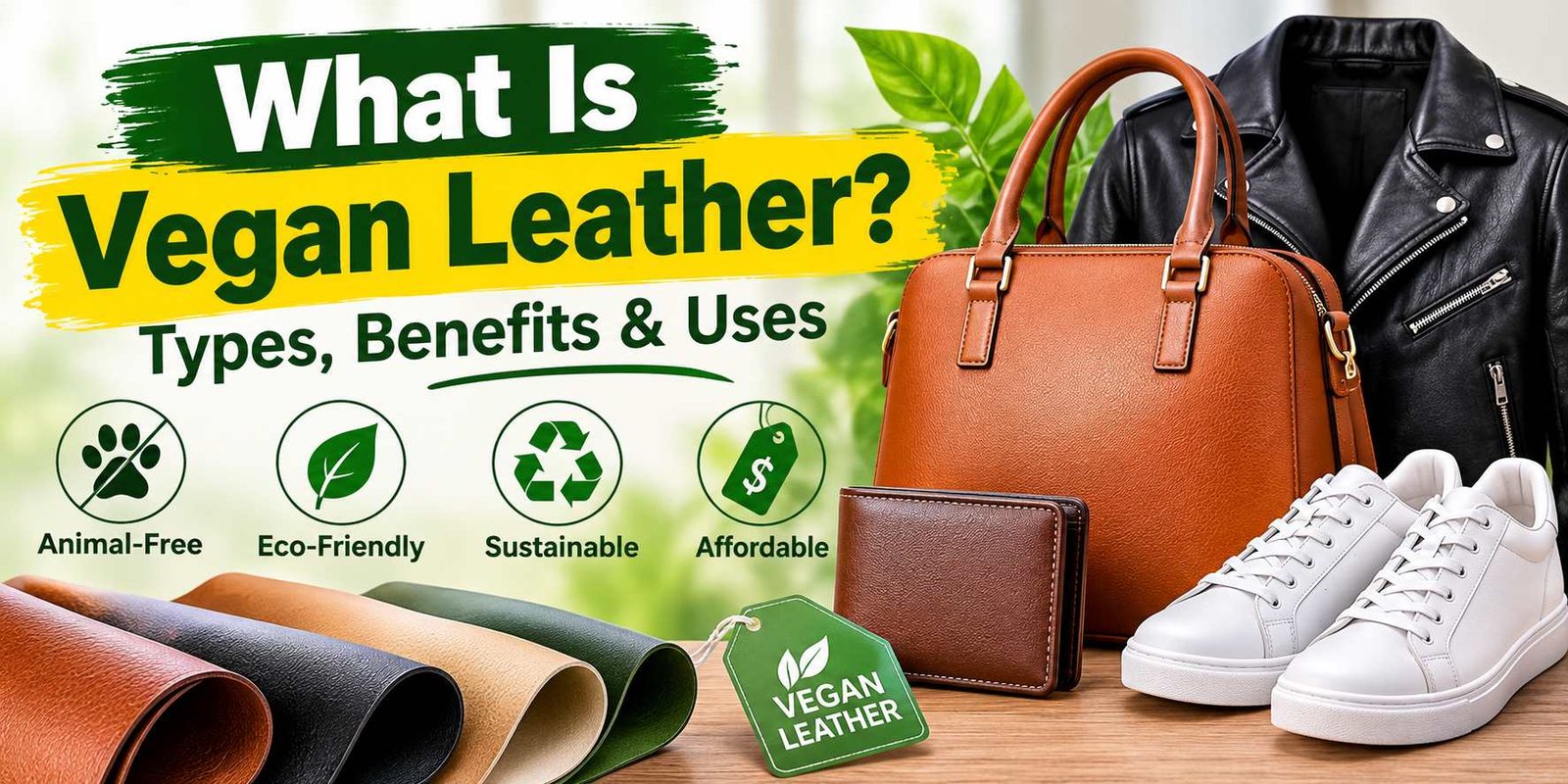
What Is Vegan Leather? Types, Benefits & Uses
Fashion keeps changing as people look for new ways to dress well and make better choices. One material that has gained attention in recent years is vegan leather. You may have seen it in handbags, shoes, jackets, wallets, and other fashion items. However, many people still ask: What is vegan leather, and how does it compare with real leather?
Vegan leather is a material that looks and feels similar to animal leather but does not use animal skin. Manufacturers make it from different materials, including plastic, plants, and other alternatives. As a result, shoppers can find many styles, colors, and textures without choosing traditional animal leather.
However, vegan leather does not always have the same quality or environmental impact. Some types use plastic, while others come from plant-based materials. Therefore, it helps to understand how manufacturers make it before buying a product.
This guide explains what vegan leather is, how it is made, its main types, benefits, drawbacks, and uses in modern fashion. It also shares simple tips to help you choose and care for vegan leather products.
What Is Vegan Leather?
Vegan leather is an alternative to traditional leather that does not contain animal skin. Manufacturers create it from synthetic or plant-based materials to produce a leather-like surface. Many products have a smooth finish, while others feature a grainy texture that looks close to real leather.
Traditional leather usually comes from animal hides, such as cow, sheep, or goat skin. In contrast, vegan leather avoids animal-derived leather materials. This makes it an option for people who want animal-free fashion products.
You may also hear people call it faux leather, artificial leather, or synthetic leather. These terms often describe similar materials, although their exact meaning can vary.
For example, some vegan leather products use polyurethane, also known as PU. Others use PVC or materials made from plants such as pineapple leaves, apples, cork, or mushrooms.
However, the word vegan does not automatically mean that a product is natural or environmentally friendly. Some vegan leather products contain plastic and may create waste when people throw them away.
Therefore, shoppers should look beyond the label and check the materials used in each product.
How Is Vegan Leather Made?
The manufacturing process depends on the type of vegan leather. Some companies use plastic-based materials, while others work with plant fibers and natural resources.
Although these methods differ, manufacturers generally aim to create a flexible surface that resembles animal leather.
1. Making Plastic-Based Vegan Leather
Plastic-based vegan leather often uses polyurethane or polyvinyl chloride. These materials help manufacturers create different textures, colors, and finishes.
For example, PU leather usually has a fabric base with a polyurethane coating. Manufacturers add texture to the surface to give it a leather-like appearance.
PVC leather follows a similar process but uses polyvinyl chloride. It can create a strong and flexible material, although its production raises environmental concerns.
Both types appear in fashion products because they offer many design options at different prices.
2. Making Plant-Based Vegan Leather
Plant-based vegan leather uses natural resources such as fruit waste, leaves, cork, or other plant materials.
First, manufacturers collect suitable plant materials. Next, they process the fibers or waste to create a usable material. Finally, they combine these materials with other ingredients to improve strength, flexibility, and appearance.
However, not every plant-based product contains only natural ingredients. Some manufacturers add plastic coatings or synthetic binders to improve performance.
For this reason, buyers should check the full material description instead of relying only on the product name.
Different Types of Vegan Leather
Vegan leather comes in several forms. Each type has its own appearance, price, strength, and environmental impact. Understanding these differences can help you choose a suitable product.
1. PU Leather
PU leather is one of the most common types of vegan leather. Manufacturers use polyurethane to create a soft coating over a fabric base.
It often feels smooth and flexible. In addition, companies can produce it in many colors and textures.
You can find PU leather in:
- Handbags
- Shoes
- Jackets
- Wallets
- Belts
- Furniture coverings
Many shoppers choose PU leather because it often costs less than genuine leather. It also offers a wide range of designs.
However, PU leather contains plastic-based materials. Its surface may peel or crack over time, especially when people expose it to heat, sunlight, or rough use.
2. PVC Leather
PVC leather uses polyvinyl chloride to create a leather-like surface. Manufacturers often choose it for products that need a firm or water-resistant finish.
It can appear in bags, shoes, furniture, and accessories. Moreover, it usually costs less than many traditional leather products.
However, PVC production and disposal raise environmental concerns. Some PVC products also contain additives that require careful handling.
Therefore, buyers who want a more environmentally focused option may prefer to explore other materials.
3. Pineapple Leather
Pineapple leather uses fibers from pineapple leaves. This material is commonly associated with Piñatex, a product developed from agricultural waste.
Instead of using the pineapple fruit itself, manufacturers use leaves that remain after harvesting. They process the fibers and turn them into a material suitable for fashion products.
Pineapple-based materials can appear in:
- Handbags
- Shoes
- Wallets
- Small accessories
- Fashion details
One major advantage is that this approach can make use of agricultural by-products. As a result, it offers another way to create materials from existing resources.
However, pineapple leather products may include coatings or other ingredients. Their durability and environmental impact depend on the complete manufacturing process.
4. Apple Leather
Apple leather uses waste from apple processing. Food companies produce leftover apple skins, pulp, and other parts during juice and food production.
Some manufacturers use this waste to develop leather-like materials. They combine processed apple ingredients with other materials to create a flexible surface.
Apple leather can offer an attractive finish for bags, shoes, wallets, and accessories.
In addition, using food waste may help reduce the amount of unused material from food production. However, the final product may still contain synthetic ingredients.
5. Mushroom Leather
Mushroom leather comes from mycelium, which forms the root-like network of a fungus. Manufacturers grow mycelium under controlled conditions and process it into a leather-like material.
This material has attracted attention because it can offer a different approach to traditional leather production.
Mushroom-based materials may work for:
- Handbags
- Footwear
- Accessories
- Fashion samples
- Experimental clothing designs
However, mushroom leather technology continues to develop. Not every product offers the same strength, flexibility, or long-term performance.
6. Cork Leather
Cork leather comes from the bark of cork oak trees. Manufacturers process cork into thin sheets and attach it to a fabric backing.
Cork has a natural pattern that gives every product a slightly different appearance. It also feels lightweight and works well for everyday accessories.
Common cork leather products include:
- Wallets
- Handbags
- Purses
- Card holders
- Small accessories
Cork can provide an interesting alternative to plastic-based materials. However, its quality depends on the cork source, backing, and finishing process.
7. Other Plant-Based Materials
Researchers and fashion brands continue to explore new materials for Faux leather. These include alternatives made from:
- Cactus
- Coconut waste
- Grape waste
- Banana fibers
- Other agricultural by-products
Each material has different properties. Some focus on flexibility, while others aim to reduce waste or use renewable resources.
However, many new materials still need further development before they can replace traditional leather in every type of product.
Benefits of Vegan Leather
Vegan leather offers several benefits for shoppers and fashion brands. However, its advantages depend on the material and the way manufacturers produce it.
1. It Does Not Use Animal Skin
One of the main reasons people choose Faux leather is its animal-free nature.
Traditional leather uses animal hides, while Faux leather uses synthetic or plant-based alternatives. Therefore, it gives shoppers another option when they want to avoid animal leather.
2. It Offers Many Fashion Choices
Vegan leather comes in different colors, textures, and finishes. Designers can use it to create simple everyday products or bold fashion pieces.
For example, shoppers can find black jackets, colorful handbags, modern boots, and textured wallets.
Moreover, manufacturers can create different surface patterns without using animal hides.
3. It Often Costs Less
Many PU and PVC products cost less than genuine leather. This makes Faux leather an accessible choice for shoppers who want a leather-like appearance at a lower price.
However, prices vary. Premium plant-based materials may cost more than basic synthetic leather.
4. It Is Easy to Clean
Many Synthetic leather products have a smooth surface. Therefore, people can often clean them with a soft cloth and mild soap.
Unlike some traditional leather products, many synthetic options do not require special leather conditioners.
Still, every product has different care instructions. Always check the manufacturer’s guidance before cleaning it.
5. It Supports New Material Ideas
Synthetic leather encourages brands and researchers to explore alternatives to animal hides.
For example, some companies use fruit waste, leaves, cork, and mushroom-based materials. These ideas can help the fashion industry explore new ways to use resources.
However, new materials still need proper testing to understand their durability and environmental effects.
Disadvantages of Vegan Leather
Vegan leather has useful features, but it also has limitations. Buyers should understand these drawbacks before choosing a product.
1. Some Types Contain Plastic
Many affordable Plant-based leather products use PU or PVC. These materials come from plastic-based chemicals.
As a result, they do not offer the same natural material profile as cork or some plant-based alternatives.
In addition, plastic-based products may create disposal problems when they reach the end of their useful life.
2. It May Not Last as Long
Some vegan leather products can peel, crack, or lose their surface finish after regular use.
Heat, sunlight, friction, and poor storage can speed up this damage.
However, quality matters. A well-made product with suitable care may last longer than a low-quality alternative.
3. It Does Not Always Age Like Real Leather
Traditional leather can develop a natural patina as it ages. Many Leather alternatives materials do not develop the same appearance.
Instead, some products show signs of wear through scratches, peeling, or surface damage.
Therefore, shoppers who enjoy the changing appearance of natural leather may prefer a different material.
4. Plant-Based Does Not Always Mean Eco-Friendly
A product may use pineapple, apple, or mushroom materials but still contain synthetic coatings.
These added materials can affect how easily the product breaks down or gets recycled.
For this reason, shoppers should check the full material list and any available sustainability information.
Vegan Leather vs. Real Leather
Vegan leather and real leather can look similar, but they differ in several important ways.
| Feature | Vegan Leather | Real Leather |
|---|---|---|
| Main source | Synthetic or plant-based materials | Animal hides |
| Animal skin | Not used | Used |
| Price | Often lower, but varies | Often higher |
| Texture | Depends on the material | Natural grain and texture |
| Care | Usually simple | May need special care |
| Aging | May peel or crack | Can develop a patina |
| Durability | Varies by type and quality | Often lasts many years with care |
| Environmental impact | Depends on ingredients and production | Depends on farming, tanning, and processing |
Neither material offers the same results in every situation. For example, high-quality real leather may last for many years, while a cheap synthetic product may wear out quickly.
On the other hand, plant-based alternatives may offer useful ways to reduce reliance on animal hides. Their overall impact depends on how manufacturers make and finish them.
Therefore, consider your needs, budget, and material preferences before buying.
How to Identify Quality Vegan Leather
Not every Artificial leather product offers the same quality. Some feel soft and flexible, while others look stiff or wear out quickly.
Use these simple tips when shopping.
1. Check the Material Label
Start by reading the product description. Look for details such as PU, PVC, pineapple fibers, cork, or other plant-based materials.
A clear material label helps you understand what you are buying.
2. Examine the Surface
Look closely at the product. A quality item should have an even finish without visible cracks, peeling edges, or loose areas.
Also, check the corners and seams because these areas often show early signs of poor construction.
3. Check the Stitching
Good stitching can improve the strength of a handbag, wallet, or pair of shoes.
Look for straight seams and secure thread. Avoid products with loose stitching or uneven edges.
4. Feel the Material
If you can examine the product in person, touch its surface.
A good product should feel suitable for its purpose. For example, a handbag may need a flexible yet firm structure, while shoes need material that can handle regular movement.
5. Read Customer Reviews
Customer reviews can provide useful information about real-life performance.
Look for comments about peeling, comfort, color changes, and durability. In addition, check photos from buyers when available.
Popular Uses of Vegan Leather in Fashion
Fashion brands use vegan leather in many product categories. Its different finishes and colors allow designers to create a wide range of styles.
1. Vegan Leather Jackets
Vegan leather jackets offer a stylish choice for casual and modern outfits. Black jackets remain popular because they match many wardrobe pieces.
You can wear one with jeans, trousers, skirts, or dresses. For a relaxed look, pair it with a basic T-shirt and sneakers.
Meanwhile, a fitted jacket can add structure to a simple outfit.
2. Vegan Leather Handbags
Handbags are among the most common vegan leather products. Brands make them in different shapes, sizes, and colors.
Popular options include shoulder bags, tote bags, crossbody bags, and small evening purses.
Furthermore, vegan leather allows designers to experiment with smooth, textured, and patterned finishes.
3. Vegan Leather Shoes
Vegan leather shoes include boots, flats, sneakers, loafers, and formal footwear.
When buying shoes, check flexibility and comfort. The material should work well with the shape of the shoe and your everyday activities.
For example, soft vegan leather flats may suit casual outfits, while structured boots can create a stronger fashion look.
4. Vegan Leather Pants and Skirts
Vegan leather pants and skirts can add texture to everyday outfits.
Black trousers look stylish with sweaters, shirts, and simple tops. Similarly, a vegan leather skirt can work with boots, sneakers, or heels.
For a balanced outfit, combine one leather-look item with softer fabrics such as cotton, knitwear, or denim.
5. Vegan Leather Wallets and Belts
Small accessories provide another way to explore vegan leather.
Wallets, belts, card holders, and phone cases often use synthetic or plant-based alternatives. These products also make practical gifts for people who prefer animal-free materials.
How to Style Vegan Leather Outfits
Vegan leather can fit into many fashion styles. You do not need a complete leather-look outfit to enjoy it. Instead, use one item to add texture and interest.
Casual Everyday Look
Pair a Alternative fashion materials jacket with blue jeans and a simple T-shirt. Add sneakers or ankle boots for a relaxed outfit.
This combination works well for shopping, casual meetings, and everyday activities.
Smart Casual Look
Choose vegan leather trousers and pair them with a clean button-down shirt. Add loafers or ankle boots to create a more polished appearance.
For a softer finish, choose neutral colors such as beige, cream, grey, or white.
Winter Outfit
Wear a vegan leather jacket over a warm sweater. Add dark jeans, boots, and a scarf to complete the look.
However, choose outerwear that offers enough warmth for your local weather. A leather-like surface alone does not guarantee insulation.
Minimalist Style
For a simple outfit, choose a black vegan leather bag or belt. Pair it with neutral clothing and clean footwear.
This approach adds a modern detail without making the outfit look too busy.
How to Care for Vegan Leather
Proper care can help vegan leather products maintain their appearance. Although many types need simple cleaning, they still require suitable storage and handling.
1. Clean the Surface Regularly
Use a soft, slightly damp cloth to remove dust and light marks.
If the product needs deeper cleaning, follow the manufacturer’s instructions. Avoid strong cleaning chemicals unless the label recommends them.
2. Avoid Too Much Heat
Keep vegan leather away from heaters, hot surfaces, and direct sunlight for long periods.
Excessive heat can dry out some materials and damage their surface coating.
3. Store Products Properly
Store bags and shoes in a cool, dry place. Use dust bags when available.
For handbags, place soft material inside to help them keep their shape.
4. Avoid Rough Surfaces
Sharp objects and rough surfaces can scratch or tear some vegan leather materials.
Therefore, handle bags, shoes, and jackets with care, especially when you use them every day.
5. Follow the Care Label
Different materials need different cleaning methods. For example, cork-based materials may need different care from PU leather.
Always follow the instructions that come with your product.
Is Vegan Leather Sustainable?
The environmental impact of vegan leather depends on its ingredients, manufacturing process, lifespan, and disposal method.
Some plant-based materials use agricultural waste or renewable resources. For example, pineapple leather can use leaves left after fruit harvesting, while apple leather can use waste from food processing.
These methods offer interesting ways to use materials that might otherwise go unused.
However, many vegan leather products still rely on plastic coatings or synthetic binders. These ingredients can make recycling and disposal more difficult.
In addition, a product that wears out quickly may need replacement sooner. This can increase its total environmental impact.
Therefore, do not assume that every vegan leather product is sustainable. Instead, look for clear information about its materials, production, durability, and care.
Is Vegan Leather Waterproof?
Some vegan leather products resist water better than traditional leather. However, water resistance depends on the material and its surface finish.
For example, certain PU and PVC products have coatings that help protect them from light moisture. In contrast, some plant-based materials may absorb water or need extra protection.
Even when a product resists water, you should not assume that it is fully waterproof.
If your bag or shoes get wet, gently wipe away moisture and allow them to dry naturally. Avoid placing them near direct heat.
Is Vegan Leather Good for Everyday Use?
Vegan leather can work well for everyday use when you choose a product with suitable quality and construction.
For example, a well-made wallet or handbag may handle regular use without much trouble. Similarly, vegan leather shoes can offer a stylish option for casual outfits.
However, durability varies between products. Cheap synthetic materials may show damage sooner than higher-quality alternatives.
Before buying, consider how often you plan to use the item. A product for daily wear needs stronger construction than an accessory you use occasionally.
How to Choose the Right Vegan Leather Product
Choosing the right product becomes easier when you focus on your needs instead of the label alone.
Consider these points:
- Purpose: Decide whether you need a bag, jacket, shoes, wallet, or another item.
- Material: Check whether the product uses PU, PVC, cork, or plant-based ingredients.
- Quality: Examine the stitching, surface, and overall construction.
- Comfort: Choose flexible materials for products that need regular movement.
- Price: Compare the cost with the quality and expected lifespan.
- Care: Check whether the product needs special cleaning or storage.
- Brand information: Look for clear details about materials and manufacturing.
Most importantly, choose a product that suits your lifestyle and budget.
The Future of Vegan Leather in Fashion
Fashion companies continue to explore new materials as shoppers show interest in different ways to make clothing and accessories.
Researchers and designers are testing materials made from agricultural waste, plant fibers, fungi, and other resources. These developments may give brands more choices in the future.
At the same time, companies need to improve strength, comfort, production costs, and recycling options.
For example, a plant-based material may sound promising, but it must also perform well in real products. Shoes need flexibility, handbags need structure, and jackets need to handle regular movement.
Therefore, future progress will depend on more than appearance. Manufacturers must create materials that balance design, durability, cost, and environmental impact.
Frequently Asked Questions About Vegan Leather
1. What is vegan leather made of?
Animal-free leather can come from synthetic materials such as polyurethane and PVC. Manufacturers also use plant-based resources, including pineapple leaves, apple waste, cork, and mushroom mycelium.
2. Is vegan leather real leather?
No. Animal-free leather does not use animal skin. Instead, manufacturers create it from synthetic or plant-based materials that can look similar to traditional leather.
3. Does vegan leather peel?
Some vegan leather products can peel or crack over time, especially when they use low-quality coatings. Proper care and storage may help reduce surface damage.
4. Is vegan leather better than real leather?
It depends on what matters most to you. Vegan leather avoids animal skin, while real leather often offers long-lasting performance. Both materials have different environmental and practical effects.
5. Is vegan leather waterproof?
Some types resist water, but not every vegan leather product is waterproof. Always check the manufacturer’s care instructions.
6. Can vegan leather last for years?
Yes, some high-quality products can last for years with proper care. However, their lifespan depends on the material, construction, and frequency of use.
7. Is plant-based vegan leather better for the environment?
Some plant-based materials use agricultural waste or renewable resources. However, added coatings, binders, and manufacturing methods also affect their environmental impact.
8. Can you wash vegan leather?
Most vegan leather products should not go into a washing machine. Clean them with a soft damp cloth and follow the product’s care instructions.
9. Does vegan leather look like real leather?
Many vegan leather products have a similar appearance to real leather. Manufacturers can create smooth, grainy, glossy, or textured finishes.
10. What is the most common type of vegan leather?
PU leather is one of the most common types. It uses a polyurethane coating over a fabric base to create a leather-like surface.
Conclusion
Vegan leather gives shoppers an alternative to traditional animal leather. Manufacturers make it from different materials, including PU, PVC, pineapple leaves, apple waste, cork, and mushroom-based resources.
It offers many fashion choices, different price points, and an animal-free option for clothing and accessories. However, not every type offers the same durability or environmental benefits.
Therefore, take time to check the material, quality, and care instructions before buying. When you understand the differences, you can choose vegan leather products that match your style, needs, and budget.