
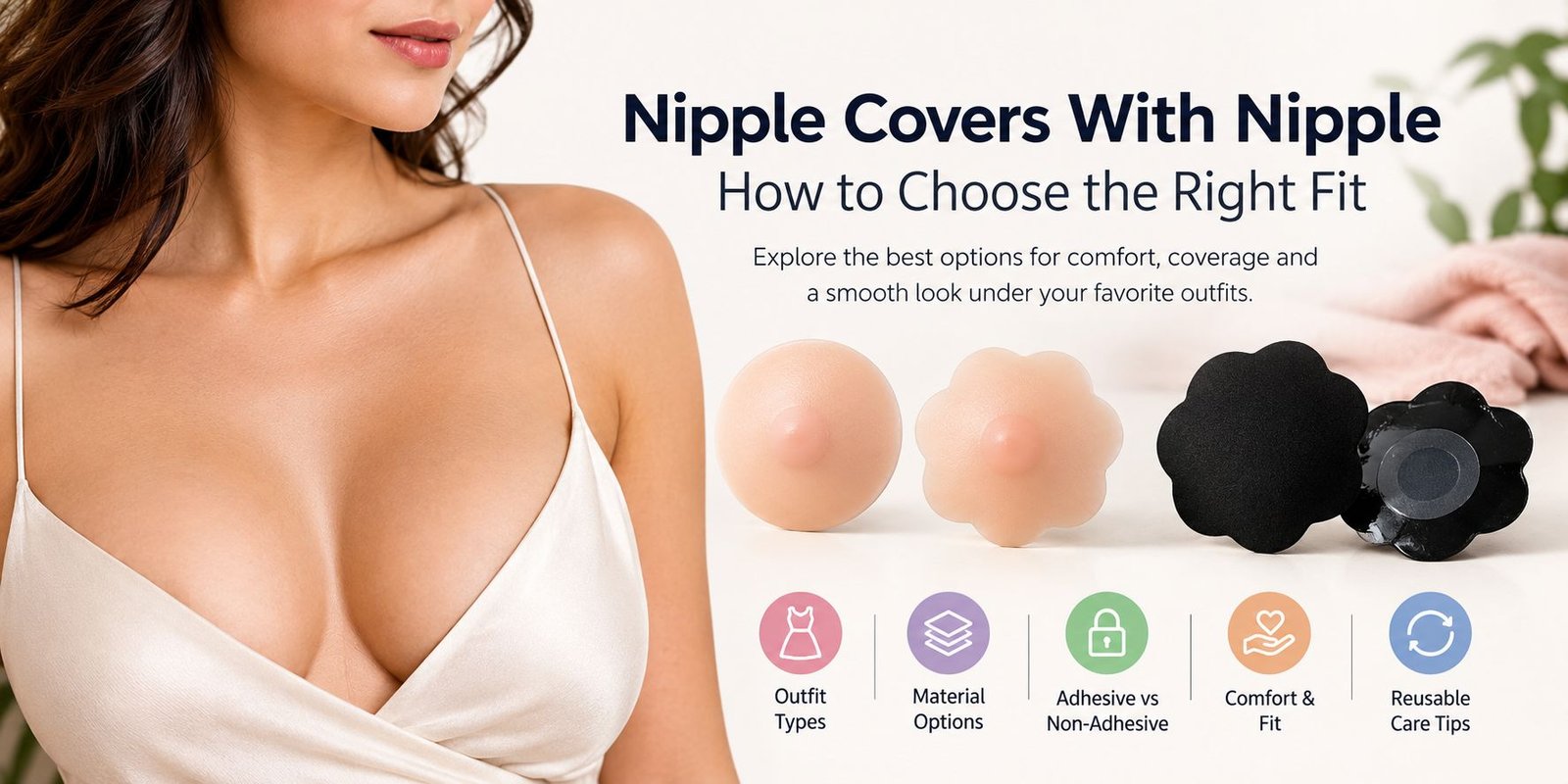
Nipple Covers With Nipple: How to Choose the Right Style and Fit
Not every outfit works well with a conventional bra. A backless dress may expose the band, a thin top can reveal seams, and a strapless design may make ordinary bra straps impossible to hide. That is where nipple covers with nipple coverage can become a useful wardrobe option.
These compact undergarment accessories are made for coverage rather than traditional bra support. Depending on the design, they may attach directly to the skin or stay in position with the help of a close-fitting garment.
Choosing the right pair becomes much easier when you consider the clothing, material, coverage area, skin comfort, and intended use before buying.
What Are Nipple Covers?
Nipple covers are small pieces of material placed over the nipple area beneath clothing. Their primary purpose is to provide discreet coverage without the straps, hooks, cups, or back band associated with a standard bra.
They can be particularly useful when the design of an outfit makes conventional underwear difficult to conceal.
Common situations include:
- Backless outfits
- Strap-free tops
- Lightweight shirts
- Close-fitting dresses
- Certain eveningwear styles
- Sheer or semi-sheer fabrics
- Outfits designed to be worn without a visible bra
One important point is that nipple covers are generally designed for coverage, not the same level of support or shaping provided by a bra.
Why Are Nipple Covers Useful?
The biggest attraction is their small, simple design.
Instead of adding another full layer beneath clothing, you can use a compact cover where coverage is the main requirement. This can help keep an outfit looking cleaner when visible bra straps or edges would distract from the clothing.
They can also give you more flexibility when experimenting with different necklines and silhouettes.
However, the best product depends on the situation. A cover that works perfectly under a fitted T-shirt may not be the right choice for a loose, backless dress.
Main Types of Nipple Covers
Before purchasing, learn how each type stays in position.
Adhesive Nipple Covers
Adhesive covers contain a sticky surface that attaches directly to the skin. Because they create their own hold, they are less dependent on the clothing.
This makes them particularly useful for outfits with little fabric support, including some backless, strapless, or loose designs.
The trade-off is that the adhesive comes into contact with the skin. People with sensitive skin may therefore want to check the material information and test the product before wearing it for an extended period.
Non-Adhesive Nipple Covers
Non-adhesive covers do not use a sticky layer. Instead, they rely on skin contact, body warmth, friction, and the pressure created by the clothing.
They are usually better suited to fitted tops, snug dresses, and other garments that naturally hold the cover against the body.
If the outfit is loose, there may not be enough pressure to keep this type securely positioned.
Fabric Nipple Covers
Fabric versions offer an alternative to silicone. They may feel lightweight and soft, making them appealing for people who prefer a fabric-based product.
Some are intended for one-time use, while others are washable. Always check the manufacturer’s instructions because construction and care can vary considerably.
Silicone Nipple Covers
Silicone is widely used for reusable covers because it can provide a smooth, low-profile surface.
Keep in mind that silicone describes the material, not the holding method. A silicone cover can be adhesive or non-adhesive, so check both details before purchasing.
How to Pick the Right Nipple Covers With Nipple Coverage
There is no single option that works perfectly for everyone. Instead, match the cover to the outfit and your personal preferences.
1. Look at the Clothing First
Your outfit should be the starting point.
Ask yourself:
Will the fabric hold the cover in place?
If the answer is yes, a non-adhesive option may work well.
If the clothing is loose, open at the back, or offers very little pressure, an adhesive design may provide a more dependable hold.
2. Check the Coverage Area
Do not choose a size based only on your usual bra size.
Manufacturers may provide measurements for the actual cover. Some sizing guides recommend measuring the area that needs coverage and then selecting a suitable diameter.
A cover that is too small may not provide enough coverage, while an unnecessarily large one may be more noticeable under delicate fabric.
3. Think About the Neckline
The neckline can influence the shape you need.
A standard round cover may work well beneath many everyday tops. For a deep V or plunge neckline, a different shape may sit more naturally without becoming visible above the clothing.
4. Consider the Fabric
Thin fabrics are less forgiving than heavier materials.
With satin, lightweight jersey, or other delicate fabrics, pay attention to the thickness and edge design of the cover. A smooth, tapered edge can help reduce the chance of an obvious outline.
5. Consider Your Skin
If you are considering an adhesive product, check the manufacturer’s information about the adhesive and intended use.
If you know that your skin reacts easily to adhesives, a non-adhesive option may be worth considering when the outfit provides enough support.
If irritation develops, remove the product rather than continuing to wear it. Adhesive sensitivity can occur, particularly on delicate skin.
How to Apply Nipple Covers
Application is simple, but small details can affect how well they perform.
Prepare Clean Skin
Before applying an adhesive cover, make sure the skin is clean and dry. Lotions, oils, powders, sunscreen, and perspiration can interfere with adhesion.
Position Before Pressing
Take your time when positioning the cover. Once you are happy with the placement, press it into position rather than repeatedly removing and repositioning it.
Smooth the Surface
Gently press from the center toward the outer edge. This helps the cover lie flat and can reduce air pockets.
Check Before Going Out
Put your clothing on and move naturally for a few moments.
Raise your arms, sit down, walk around, and check whether the cover remains comfortable and properly positioned.
This small test can prevent unpleasant surprises later.
Which Outfits Can You Wear With Nipple Covers?
Backless Dresses
A backless dress can make a conventional bra difficult to conceal. An adhesive cover can provide coverage without adding a visible back strap or band.
Strapless Tops
When a top has no shoulder straps, ordinary bra straps may interfere with the design. Covers provide a minimal alternative when you do not need the support of a full bra.
Fitted T-Shirts
A non-adhesive cover can work particularly well when a T-shirt fits closely enough to provide gentle pressure.
Sheer or Lightweight Clothing
For delicate fabrics, the goal is usually a smooth appearance with minimal visible edges. Choose the shape and size carefully rather than automatically choosing the largest option.
Evening Dresses
Formal outfits often have unusual necklines, open backs, or strap-free designs. A suitable cover can be useful when a standard bra would become visible.
Adhesive vs. Non-Adhesive: Quick Comparison
| Feature | Adhesive | Non-Adhesive |
|---|---|---|
| How it stays in place | Attaches to skin | Uses contact and garment pressure |
| Best for | Open, loose, strapless styles | Fitted clothing |
| Adhesive touching skin | Yes | No |
| Outfit flexibility | Generally higher | More dependent on clothing |
| Removal | Peel away carefully | Usually lifts away easily |
| Reusable versions | Available | Available |
| Main purpose | Coverage | Coverage |
Neither type is automatically superior. The correct choice depends on the outfit and how much independent hold you need.
How to Care for Reusable Nipple Covers
Proper maintenance can help reusable covers remain useful for longer.
Wash According to the Instructions
Many reusable products can be cleaned with water and mild soap, but the manufacturer’s directions should take priority.
Avoid harsh cleaning methods that could damage the surface.
Let Them Dry Completely
After washing, allow the covers to air dry fully before storing them.
Do not rub adhesive surfaces aggressively with towels because lint and fibers can interfere with the contact surface.
Protect the Surface
Use the protective film, storage sheet, or case supplied with the product whenever possible.
Keeping dust, hair, and fabric fibers away from the contact surface can help maintain its performance.
Store Them Somewhere Clean
A cool, clean storage area is preferable to leaving the covers loose in a handbag or drawer.
Mistakes to Avoid
Choosing the Cover Before the Outfit
The same product may work beautifully with one garment and poorly with another.
Always consider the clothing first.
Applying Adhesive Covers Over Lotion
Body oils and moisturizers can interfere with adhesion. Apply covers to clean, dry skin instead.
Expecting Bra-Level Support
Nipple covers are primarily coverage accessories. They should not automatically be expected to provide the lift, shaping, or structural support of a traditional bra.
Ignoring Discomfort
Fashion should not come at the expense of skin comfort. If a product causes persistent irritation, remove it and discontinue use.
Forgetting About Movement
A cover that stays in place while standing still may behave differently when you walk, bend, dance, or exercise.
Test the product with the type of movement you expect during actual wear.
How Long Can Reusable Covers Last?
There is no universal lifespan.
The durability of reusable covers depends on the material, adhesive quality, frequency of use, cleaning routine, and storage conditions. Some manufacturers provide specific expected-use figures, but these vary from product to product.
Instead of relying on one fixed number, pay attention to the condition of the cover.
If the surface becomes damaged, loses its intended grip, or no longer performs properly, it may be time to replace it.
Are Nipple Covers a Replacement for Bras?
Sometimes, but not always.
If your only requirement is coverage, nipple covers may be enough for certain outfits.
If you need:
- Breast support
- Lift
- Shaping
- A structured cup
- Additional comfort during movement
then a traditional or specialized bra may be more appropriate.
Think of nipple covers as a separate category of undergarment rather than a universal replacement for bras.
Frequently Asked Questions
What are nipple covers mainly used for?
They are mainly used to provide discreet coverage beneath clothing without the visible straps and bands associated with conventional bras.
Are adhesive nipple covers better than non-adhesive ones?
Not necessarily. Adhesive designs generally offer more independent hold, while non-adhesive versions can be comfortable with fitted clothing. The outfit should guide your choice.
Can non-adhesive covers be used under loose clothing?
They may not be the best choice because loose clothing does not provide enough pressure to keep them positioned securely.
Can reusable nipple covers be washed?
Many reusable covers can be cleaned and reused, but care instructions differ between products. Follow the manufacturer’s recommendations.
What should I do if an adhesive cover irritates my skin?
Remove it and stop using the product if irritation develops. People who know they are sensitive to adhesives may want to consider an adhesive-free design where the outfit allows it.
Do nipple covers provide lift?
Standard nipple covers are primarily intended for coverage. Some specialized products are designed with shaping or lifting features, but those should not be confused with basic coverage-only designs.
Final Thoughts
Finding the right nipple covers with nipple coverage is mainly about matching the product to the outfit.
For open or unsupported clothing, adhesive covers can offer greater independence from the garment. For fitted clothing, non-adhesive designs may provide a comfortable alternative without a sticky layer.
Before buying, consider the hold method, size, shape, material, neckline, fabric, and skin comfort. A little attention to these details can make the difference between a cover that stays discreetly in place and one that becomes a distraction.




One Comment